A check clears. A lockup expires. Suddenly, funds that have been sitting on illiquid SpaceX stakes for years have cash again, and they need somewhere to put it.
That's the simple version of what's happening right now in private markets following SpaceX's historic public debut. And if you work in industrial robotics or automation hardware, it's worth understanding why this moment is more than a Wall Street story.
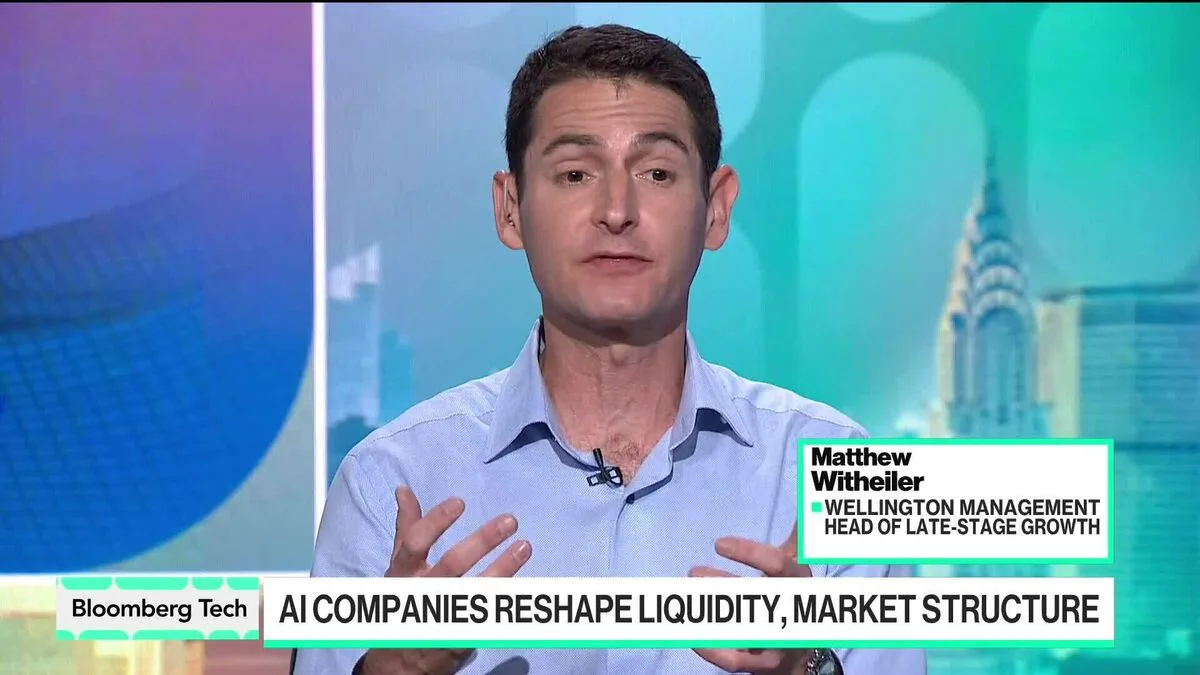
SpaceX going public is not just a headline. It's a liquidity event for an enormous slice of the private tech ecosystem. Wellington Management's Matt Witheiler, Head of Late-Stage Growth, described it directly on Bloomberg Technology as a "distribution event" that will give private markets "the fresh cash it desperately needs."
That framing is precise and worth taking seriously. SpaceX has been one of the most widely held private assets among growth and crossover funds for the better part of a decade. When a position that size converts to liquid capital, it doesn't sit idle. Fund managers redeploy. LPs get distributions and reinvest. The whole ecosystem gets a jolt.
How large a jolt? The company didn't disclose exact figures on the total value unlocked, and it's too early to say with precision how much of that flows back into new private investments versus returning to LPs. But SpaceX's valuation has been reported north of $350 billion in recent secondary transactions, so we're not talking about rounding errors.
Here's where it gets interesting for anyone covering industrial automation. Ankur Crawford, Portfolio Manager at Alger, told "Bloomberg Tech" that "there hasn't been a business like SpaceX before" as markets react to the significance of the AI trade. Her broader point, and it's one I've heard echoed in conversations with hardware-focused VCs, is that investors are now actively looking beyond chips for the next durable theme.
Chips were the obvious first-order bet on AI infrastructure. Nvidia's run made that trade almost too easy to see in hindsight. But the second-order question, basically, where does AI actually do physical work, is starting to attract serious capital attention.
Industrial automation sits squarely in that answer. Robotic arms, vision systems, autonomous mobile robots on factory floors, logistics automation. These are the systems that translate AI inference into physical output. From my time in hardware at Fanuc, I watched this sector get chronically underfunded relative to software, partly because the sales cycles are long, the margins are harder, and the capital requirements are brutal. Patient money matters here in a way it doesn't for a SaaS startup.
If the SpaceX IPO genuinely triggers a redistribution of private capital at scale, automation hardware companies are plausible beneficiaries. Not guaranteed. Plausible.
I want to be careful not to overstate the direct connection here. The Bloomberg reporting focuses on broad private market dynamics, not specifically on robotics investment flows. This is based on limited public commentary from two investors, not a comprehensive survey of where post-SpaceX capital is actually going.
That said, a few data points are worth putting in context:
- Global industrial robot installations hit approximately 541,000 units in 2023, according to the International Federation of Robotics, a record at the time.
- Venture investment in robotics and automation reached roughly $6.8 billion in 2023, down from the 2021 peak but still historically elevated.
- Several large automation players, including those in humanoid robotics and warehouse automation, are reportedly in late-stage fundraising or pre-IPO positioning right now.
The timing of a broad private market liquidity event is not nothing for companies in that pre-IPO window. If funds have fresh capital from SpaceX distributions and are looking for the "next big thing" beyond chips, a well-capitalized automation company with real revenue and production volume becomes a more attractive target.
Look, I've seen enough spec sheets to know that "we're in late-stage discussions" from a startup means almost nothing until a term sheet is signed and the money is in the bank. The real test for any automation company claiming to benefit from this environment is whether they can show production numbers, not just prototypes and press releases.
The honest answer is that the downstream effects of the SpaceX IPO on industrial automation funding are genuinely unclear right now. Capital markets are not a simple pipe where money flows predictably from one sector to the next.
What does seem likely is that the broader narrative around AI's physical infrastructure is getting louder. Crawford's comment about looking "beyond chips" reflects a real shift in investor conversation, even if the dollars haven't fully moved yet. Automation hardware companies that can make a credible case for durable margins, real deployments, and defensible technology are going to find this environment more receptive than the post-2022 correction period was.
The wave of AI-adjacent companies preparing to go public, which Bloomberg notes are watching the SpaceX debut closely, also creates a secondary effect. More IPOs mean more distributions, more recycled capital, more dry powder looking for a home. If the SpaceX debut goes well and sets a positive tone, it probably accelerates that queue.
For the industrial automation sector specifically, the ask is straightforward: be ready. Have your production data clean. Know your unit economics cold. The window where patient capital is actively looking for physical-world AI bets may be opening, and it won't stay open indefinitely.
I'll be watching closely which automation companies move to raise or go public in the next 12 to 18 months. That list will tell us more about where this capital actually lands than any amount of investor commentary on television.