Lingyi iTech Raises $1.1 Billion in Hong Kong IPO, Rejecting Over 100 Investor Orders
The Apple supplier priced its shares at the maximum and still had to turn away demand, which tells you something about where hardware money is flowing right now.
Crédito da imagem: Image via Bloomberg — Technology. Used under fair use for news commentary. · source
HK$8.3 billion. That's what Lingyi iTech Guangdong Co. pulled in from its Hong Kong listing, pricing at the absolute ceiling and, according to people familiar with the matter, rejecting more than 100 investor orders in the process. For context, that's roughly $1.1 billion USD for a company most people outside the electronics supply chain have never heard of.
This is not a software company with a compelling narrative deck. Lingyi iTech makes electronic components and precision parts, the kind of hardware that ends up inside devices you use every day without ever thinking about who built the chassis or the structural assemblies inside. It's an Apple supplier, which matters, and it's Chinese-headquartered, which also matters, given the current state of cross-border capital flows.
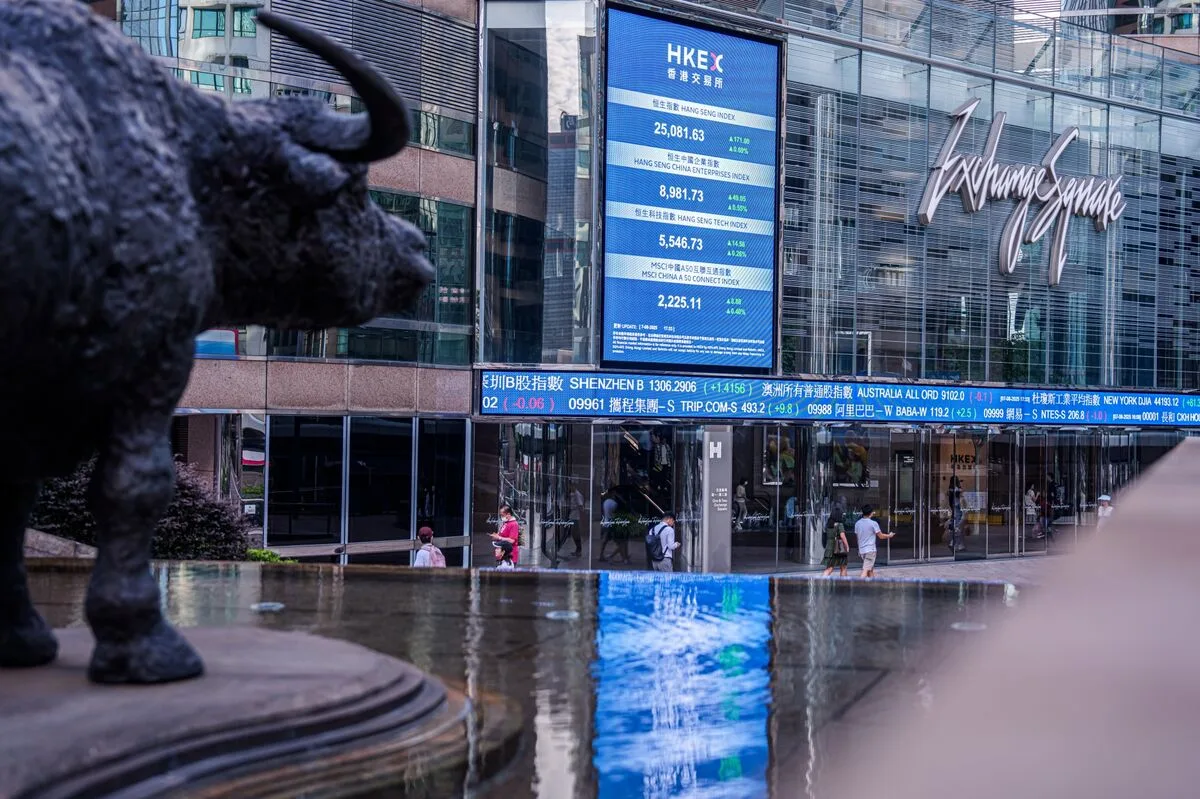
The IPO itself was, by any measure, a strong one. Pricing at the maximum isn't unusual when sentiment is running hot, but rejecting more than 100 orders suggests demand was genuinely outsized, not just marginally oversubscribed. Bloomberg reported the deal closed with that level of rejection, which is the kind of detail that doesn't make it into a press release but tells you a lot about how the book was built. The company began trading in Hong Kong on Friday, June 27, 2026, as part of what Bloomberg separately described as the city's busiest month for listings this year.
I've seen enough spec sheets to know that hardware suppliers tend to be valued on thin margins and high volume, not on the kind of growth multiples that make fintech investors salivate. The fact that this deal commanded maximum pricing suggests investors are either very confident in Lingyi's position within the Apple supply chain, or they're betting on expansion into adjacent categories, or both. It remains unclear exactly which thesis drove the most demand, and the company hasn't disclosed a detailed breakdown of its investor base.
Cobertura relacionada
More in Industrial
Prime Day deals on Echos and Ring cameras are fine, but let's not confuse consumer gadgets with the serious robotics work happening in warehouses.
Robert "Bob" Macintosh · 25 Jun · 3 min
Amazon's CEO made his first India trip and left behind a $13 billion AI commitment and an aggressive quick-commerce expansion. The numbers are real. The execution is the hard part.
James Chen · 25 Jun · 6 min
A wave of arXiv preprints this week tackles one of manipulation's oldest problems: how do you get a robot to learn from imperfect, incomplete, or just plain missing data?
James Chen · 25 Jun · 5 min
Separate research teams have published fault-tolerant control frameworks for legged robots this week, and the approaches are different enough to be worth comparing.