China's AI Spending Surge Is Real, But What It Means for the Factory Floor Is Still Anyone's Guess
Big names at the World Economic Forum in Dalian are bullish on China's AI-driven economy. Bob's been around long enough to know bullish doesn't always mean built.
Crédito da imagem: Image via Bloomberg — Technology. Used under fair use for news commentary. · source
Forty-seven percent. That's the figure that keeps coming up when people talk about how fast Chinese AI investment is compounding right now. Spend enough years watching automation cycles come and go, and you get a nose for when a number is real and when it's a talking point.
I'll be honest, I'm not sure which one this is yet.
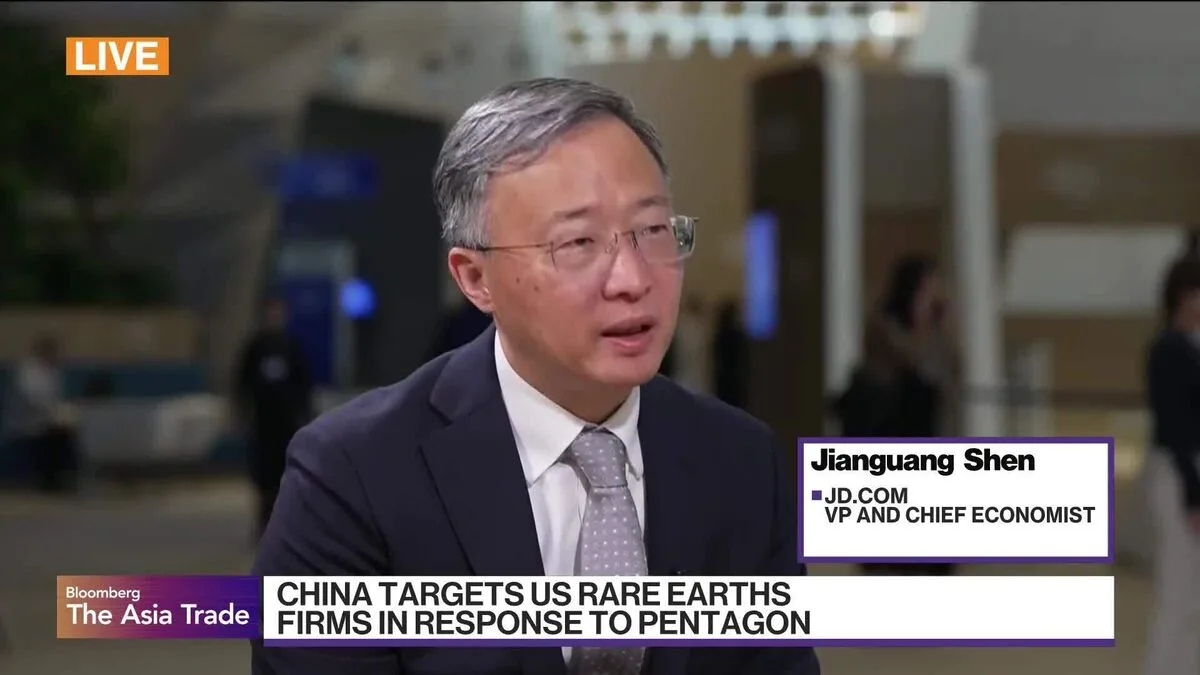
The World Economic Forum held its Summer Davos meeting in Dalian last week, and Bloomberg caught up with a few people worth listening to on the sidelines. Shen Jianguang, VP and Chief Economist at JD.com, was one of them. His read: China is accelerating hard into an AI-driven era, demand is surging, and the macro picture is better than Western headlines suggest. André Hoffmann, Co-Chair of the WEF, was cautiously optimistic about global growth while flagging the usual headwinds, Middle East instability, market jitters, the general background noise of 2026. And Jonathan Zhu from Bain Capital's Greater China operation talked through where he's actually putting money in the Chinese market right now.
None of this is robotics news, strictly speaking. But it's the water that industrial automation swims in, so I pay attention.
What This Actually Means for Factories
When I was at Kuka, we used to watch Chinese GDP forecasts the way farmers watch weather reports. Not because the number itself told you much, but because of what it implied about capex cycles. When Chinese manufacturers felt confident about the next three years, they bought equipment. Big equipment. The kind with our name on it.
Cobertura relacionada
More in Industrial
The Apple supplier priced its shares at the maximum and still had to turn away demand, which tells you something about where hardware money is flowing right now.
James Chen · 25 Jun · 5 min
Prime Day deals on Echos and Ring cameras are fine, but let's not confuse consumer gadgets with the serious robotics work happening in warehouses.
Robert "Bob" Macintosh · 25 Jun · 3 min
Amazon's CEO made his first India trip and left behind a $13 billion AI commitment and an aggressive quick-commerce expansion. The numbers are real. The execution is the hard part.
James Chen · 25 Jun · 6 min
A wave of arXiv preprints this week tackles one of manipulation's oldest problems: how do you get a robot to learn from imperfect, incomplete, or just plain missing data?