What GPT-Rosalind Actually Represents for Computational Biology
The coverage focused on drug discovery timelines. The more significant development is what this signals about AI systems reasoning over biological complexity.
By
·22 May 2026·6 min de leitura
Most of the coverage of OpenAI's GPT-Rosalind announcement has centered on the company's claims about accelerating drug discovery pipelines. This framing, while not incorrect, misses what I believe is the more consequential development: we are witnessing the first serious attempt to build reasoning systems that can operate meaningfully across the heterogeneous data structures that define modern biology.
Let me be precise about what I mean. Drug discovery acceleration is a well-worn narrative in AI announcements, and frankly, the field has grown somewhat skeptical of such claims after years of overpromising. What distinguishes GPT-Rosalind, at least based on OpenAI's technical documentation, is not the end application but the underlying capability: a model architecture that appears designed from the ground up to reason across genomic sequences, protein structures, pathway databases, and clinical literature simultaneously.
This is the kind of result the computational biology community has been waiting for, though I would want to see substantial independent validation before drawing strong conclusions.
To understand why this matters, one needs to appreciate a fundamental challenge that has plagued computational biology for decades. Biological knowledge is fragmented across radically different representational formats. Genomic data is sequential. Protein structures are three-dimensional graphs. Metabolic pathways are directed networks. Clinical outcomes are statistical distributions over patient populations. And the scientific literature that contextualizes all of this is unstructured natural language.
Cobertura relacionada
More in AI Models
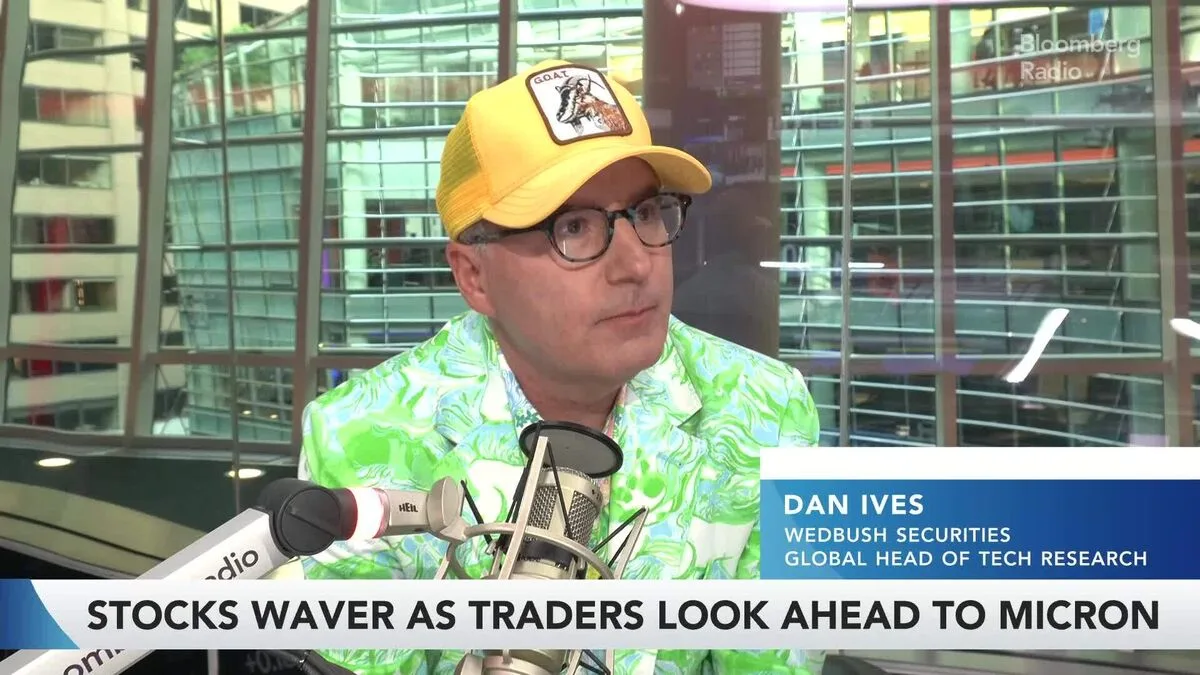
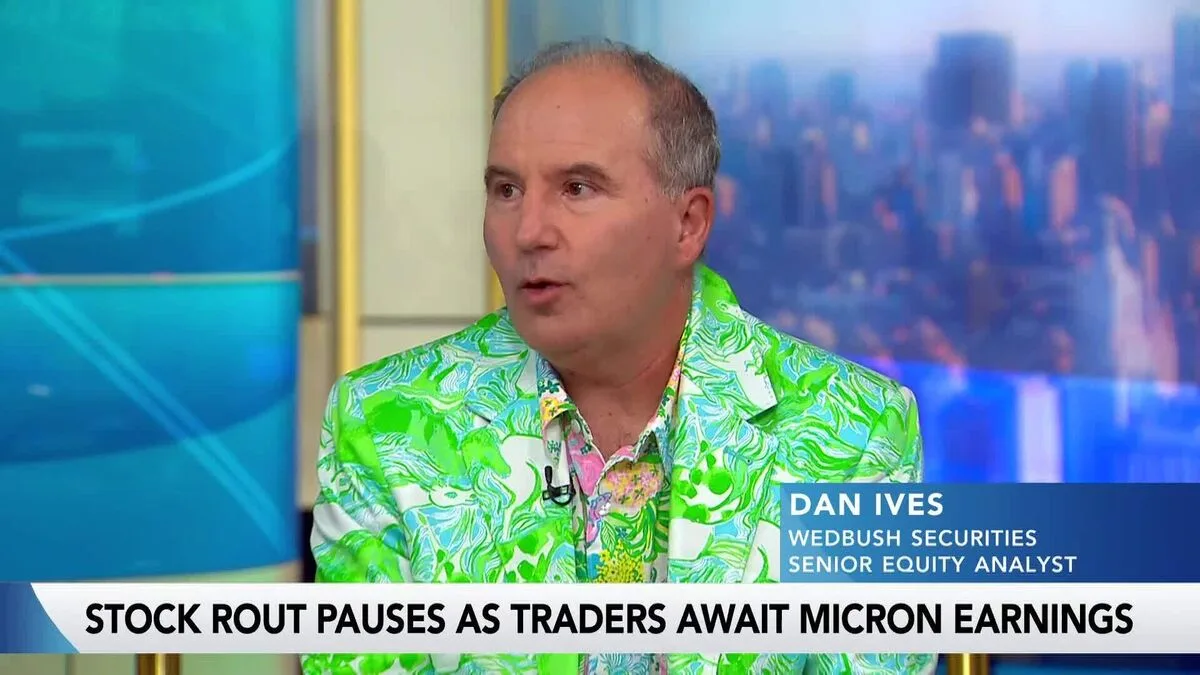
Chipmakers swung wildly this week, from a Tuesday 'chip-wreck' to a Micron-led surge after hours. What's actually going on with AI's hardware backbone?
Sarah Williams · 26 Jun · 5 min
The original Creator Studio was shut down in 2023. Now it's back, rebuilt around an AI assistant that promises to grow your audience and reply to comments in your voice.
Sarah Williams · 26 Jun · 5 min
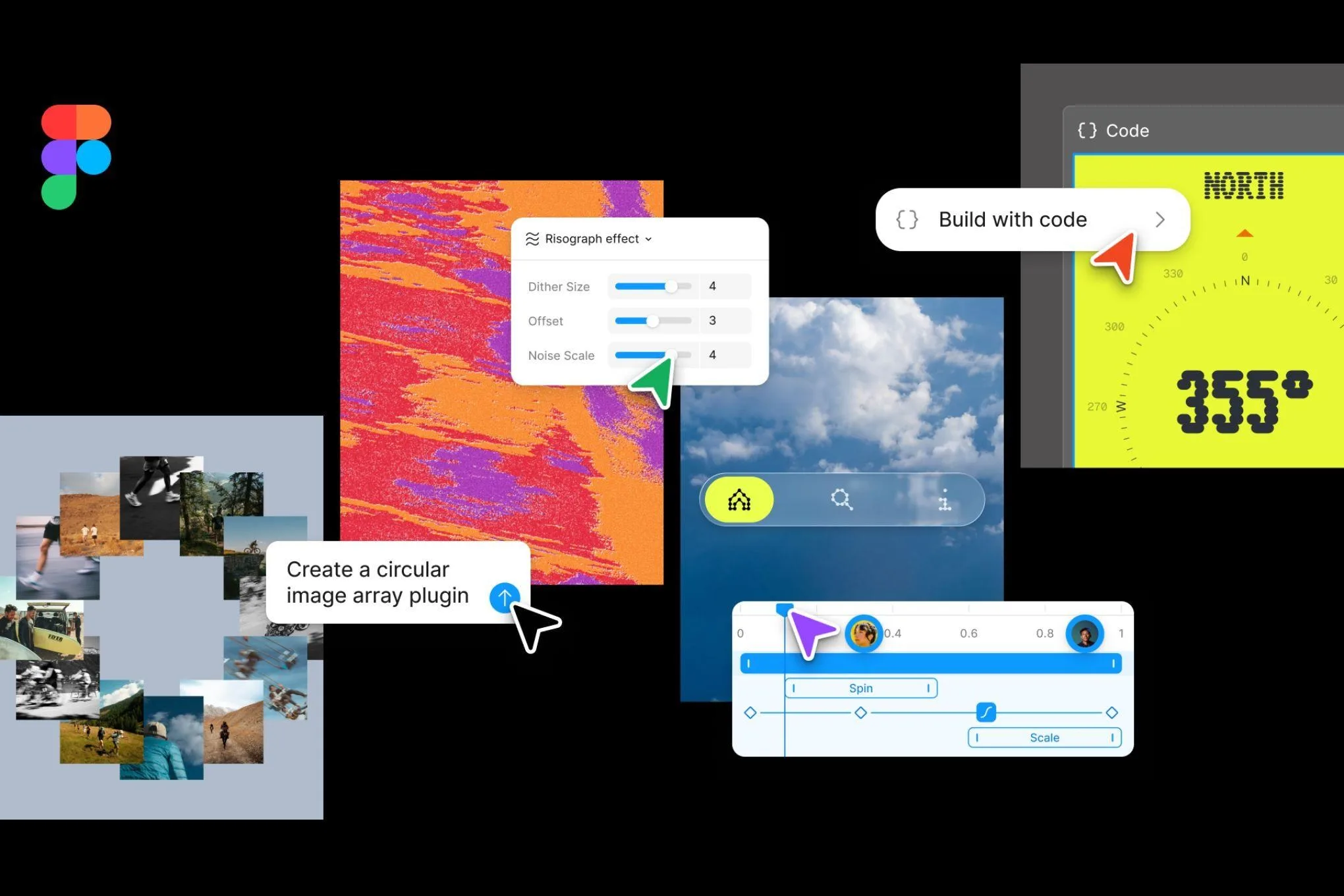
At its annual Config conference, Figma announced coding layers, AI-generated motion graphics, and a reimagined canvas that blurs the line between design and full-stack development.
Sarah Williams · 26 Jun · 5 min
Everyone talks about chips and models. The memory bottleneck is the part of the AI buildout that keeps getting underestimated, and Micron's latest earnings make that case hard to ignore.
In our lab, we have found that the most time-consuming aspect of any systems biology project is not the analysis itself but the integration work: translating insights from one representational domain into another, ensuring that the assumptions underlying different data types remain compatible, and maintaining coherence as you move up and down levels of biological organization.
Previous AI systems for biology have largely operated within single domains. AlphaFold revolutionized protein structure prediction but does not reason about how those structures function in cellular contexts. Language models trained on biomedical literature can synthesize findings but struggle with quantitative genomic analysis. The promise of GPT-Rosalind, if it delivers, is a system that can move fluidly between these domains.
OpenAI's accompanying announcement about early experiments with GPT-5 in scientific research provides some context for how they are thinking about this capability more broadly. The examples span mathematics, physics, biology, and computer science, suggesting that the company views cross-domain reasoning as a general capability rather than something specific to life sciences.
The key technical claims, as I understand them from the available documentation, include:
Native handling of multiple biological data formats within a single reasoning chain, including sequence data, structural coordinates, and pathway representations
Integration with established biological databases and the ability to query them dynamically during inference
Uncertainty quantification that propagates through multi-step biological reasoning, which is critical given the inherent noise in experimental data
The capacity to generate testable hypotheses that span multiple levels of biological organization
I should note that these are claims from OpenAI's materials, and the extent to which they hold up under rigorous evaluation remains unclear. The company has not yet released the kind of detailed benchmarking against established computational biology methods that would allow for proper assessment.
What I find most interesting, actually, is not the drug discovery framing but the potential implications for basic research. The bottleneck in much of modern biology is not generating data; we are drowning in data. The bottleneck is generating coherent hypotheses that integrate observations across scales and testing them efficiently. If GPT-Rosalind can genuinely assist with hypothesis generation that respects the constraints of multiple biological domains simultaneously, that would represent a meaningful capability.
I know several researchers who have been exploring similar integration challenges using more traditional computational approaches, and the consensus has been that the problem is fundamentally hard because biological systems violate the assumptions underlying most machine learning methods. Biological causation is context-dependent, operates across vastly different timescales, and involves feedback loops that make simple input-output modeling inadequate. Whether a large language model architecture, even one specifically adapted for scientific reasoning, can capture this complexity is an open question.
The honest answer is: we do not know yet. OpenAI's announcement materials are, predictably, optimistic. But announcements are not peer-reviewed publications, and the history of AI in biology is littered with systems that performed impressively on benchmarks but failed to generalize to real research workflows.
There are also legitimate concerns about how such systems might reshape scientific practice in ways that are not entirely positive. If researchers come to rely heavily on AI-generated hypotheses, do we risk a kind of intellectual convergence where the field pursues only the directions that the models suggest? In our lab, we have found that some of our most productive research directions emerged from hunches that would have been difficult to justify algorithmically. The messy, intuitive aspects of scientific reasoning are not bugs to be optimized away.
That said, I am cautiously optimistic about the trajectory this represents. The fact that a major AI lab is investing seriously in biological reasoning, rather than treating biology as just another domain for general-purpose models, suggests a recognition that the life sciences pose distinct challenges. The integration problem I described earlier is not going to be solved by simply scaling up existing architectures. It requires genuine engagement with the structure of biological knowledge.
The drug discovery applications will likely receive the most attention, for obvious commercial reasons. Pharmaceutical companies have been eager adopters of AI tools, and the potential to compress development timelines is enormously valuable. But I would encourage readers to pay attention to the less flashy applications in basic research. If GPT-Rosalind can help a graduate student identify relevant literature across subfields they would not have thought to search, or suggest experimental controls that account for confounds in unfamiliar domains, those incremental improvements could compound significantly over time.
The question I keep returning to is whether systems like this will augment scientific reasoning or begin to replace it. The optimistic view is that they function as sophisticated tools, extending human cognitive capabilities in the same way that microscopes extended human perception. The pessimistic view is that they become black boxes that generate plausible-sounding outputs without the kind of understanding that allows scientists to know when to trust the results and when to be skeptical.
I suspect the reality will be somewhere in between, and the outcome will depend heavily on how the research community chooses to integrate these tools into practice. The systems that prove most valuable will likely be those that make their reasoning transparent and allow researchers to interrogate the chain of inference. Black-box hypothesis generation, no matter how accurate on average, will struggle to earn the trust of working scientists.
For now, GPT-Rosalind represents a promising direction, though it is too early to say whether it will deliver on its potential. The computational biology community should engage critically with the system as it becomes more widely available, testing it against the hard cases that expose the limitations of current methods. That is how we will learn whether this is a genuine advance or another entry in the long list of AI announcements that promised more than they delivered.
I will be watching the independent evaluations closely. And I suspect many of my colleagues will be as well.