The Robot Brain's New Trick: Knowing When to Stop and Think
Three new papers tackle the same unglamorous problem: how do you get a robot to act smoothly without constantly second-guessing itself?
By
·4 June 2026·6 min de leitura
Here's the thing about robot control that the press releases never mention: it's basically a scheduling nightmare. When should a robot commit to its next move? When should it pause and reconsider? Get this wrong and you've got either a jittery mess that replans every millisecond or a bulldozer that plows through changed circumstances because it already decided what to do.
I've been reading through three recent papers that all circle this same problem from different angles, and honestly, this is the kind of unsexy foundational work that actually matters. Not another demo of a robot folding laundry (call me when it can fold my laundry), but the nitty-gritty of execution timing.
Modern robot policies, particularly the flow-based and diffusion models that everyone's excited about, work by predicting chunks of actions at once. Think of it like, instead of deciding each step individually, the robot plans out the next several moves as a sequence. This is called action chunking, and it makes movements smoother and more coherent.
But here's the rub: how many actions should you execute before replanning? Too few and you're wasting computation, constantly regenerating predictions you could've just followed. Too many and you're committed to a plan that might've made sense three seconds ago but doesn't anymore because, I don't know, someone moved the coffee cup you were reaching for.
The standard approach has been to just pick a number and stick with it. Execute 8 actions, replan, execute 8 more. This is, to put it charitably, not great. Predictable motions through open space don't need constant babysitting, but the moment you're trying to thread a needle or make contact with something, suddenly that fixed horizon looks pretty dumb.
Cobertura relacionada
More in AI Models
Chipmakers swung wildly this week, from a Tuesday 'chip-wreck' to a Micron-led surge after hours. What's actually going on with AI's hardware backbone?
Sarah Williams · 26 Jun · 5 min
The original Creator Studio was shut down in 2023. Now it's back, rebuilt around an AI assistant that promises to grow your audience and reply to comments in your voice.
Sarah Williams · 26 Jun · 5 min
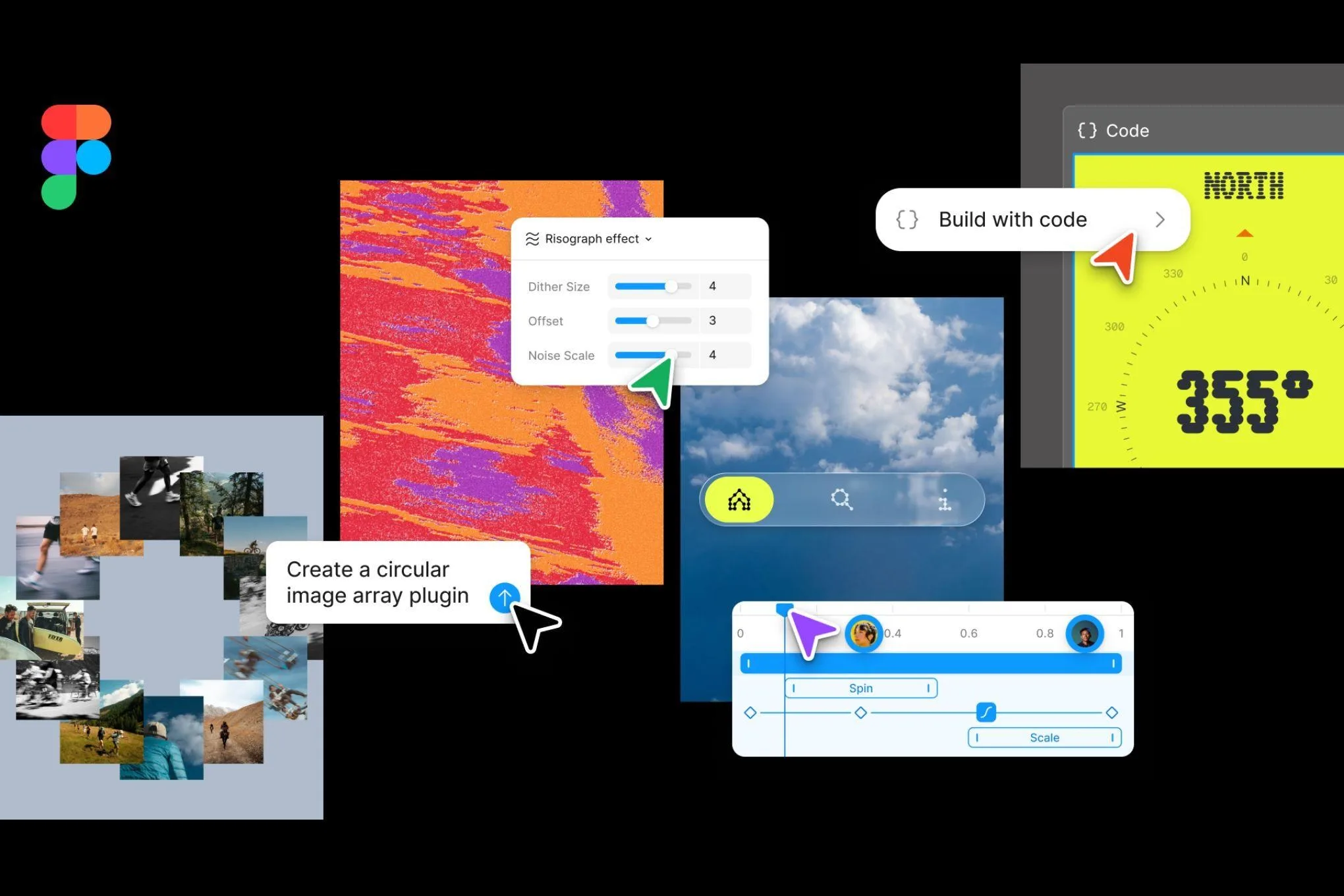
At its annual Config conference, Figma announced coding layers, AI-generated motion graphics, and a reimagined canvas that blurs the line between design and full-stack development.
Sarah Williams · 26 Jun · 5 min
Everyone talks about chips and models. The memory bottleneck is the part of the AI buildout that keeps getting underestimated, and Micron's latest earnings make that case hard to ignore.
This is where the first paper gets interesting. Researchers from (I'm assuming) somewhere with good funding looked at what happens inside flow-based policies during the denoising process, which is the iterative refinement that turns noise into actual action predictions. They noticed something that seems obvious in retrospect: when the robot is predicting easy, predictable motions, those predictions stay stable across denoising steps. When it's predicting tricky stuff, the predictions wobble around more.
arXiv has the full paper on what they call DVAC (Denoising-Variance Adaptive Chunking), and the results are genuinely solid. On the LIBERO benchmark, they pushed success rates from 94.75% to 98.00% while reducing replanning frequency by 43%. That's not nothing! You're getting better performance with less computation, which is the rare win-win that usually turns out to be too good to be true. Whether it holds up across more diverse real-world conditions remains to be seen, obviously.
The basic idea is: measure variance in your predictions, execute the stable prefix where you're confident, and replan before you'd commit to the wobbly uncertain stuff. It's test-time only, meaning you don't need to retrain anything. You just bolt it onto your existing policy.
The second paper takes a more radical position. The authors argue that flow-matching policies, the continuous diffusion approach that's become popular, are structurally the wrong tool for asynchronous execution. Their paper on DiscreteRTC makes the case that discrete diffusion, where actions are generated by iteratively unmasking rather than continuous denoising, is just naturally better suited for real-time control.
Here's why this matters: in the real world, you can't stop time while you think. The robot needs to act while it's planning its next moves. This is called asynchronous execution, thinking while acting, and it requires what they call inpainting, generating new actions while keeping your already-committed actions frozen.
With flow-matching, this inpainting is bolted on through inference-time corrections. It works, sort of, but it's hacky. With discrete diffusion, inpainting is the native operation. The model already knows how to fill in missing pieces because that's literally what unmasking is.
The practical upshot: DiscreteRTC claims 65% higher success rate on a real-world hockey defense task compared to flow-matching approaches, with only about 70% of the computation. And here's the kicker, it requires zero additional lines of code to enable async inpainting. The capability is just there because of how the architecture works.
Now, I should note that hockey defense is a pretty specific task, and I'd want to see this validated across a much broader range of scenarios before declaring victory. But the architectural argument is compelling.
The third paper takes a completely different angle on the same underlying tension. This one's about multi-agent path finding (MAPF), the problem of coordinating multiple robots moving around a shared space without crashing into each other. Think warehouse logistics, which is where a lot of the actual money in robotics is.
The CADENCE study did something refreshingly empirical: they built a 7x7 test cell with seven differential drive robots, generated 120 plans across 15 scenarios, and ran each plan four times. That's 480 actual hardware trials, which is more real-world validation than you see in a lot of papers.
Their question was simple: what features available before execution can actually predict how long the plan will take in the real world? The standard metric everyone uses is Sum of Costs (SoC), basically the total path length for all robots. But SoC is, it turns out, incomplete.
What predicted execution time better? Something they call "primitive motion burden," which captures stuff like how many turns the plan requires, how many start-stop transitions, how many consecutive moves. These are the unglamorous details that SoC abstracts away but that matter enormously when rubber meets floor. Adding primitive motion features reduced prediction error by roughly 50-60% compared to SoC alone.
Interestingly, interaction-aware features (how much robots have to coordinate with each other, dependency chains, crowding) helped less than you might expect. The authors found the gains were smaller and less uniform. This suggests that, at least for their setup, the execution gap is mostly visible in the offline plan before any robot starts moving. The coordination overhead is already baked into the motion primitives.
I've seen this movie before, honestly. Remember when everyone was obsessed with getting self-driving cars to perceive the world better, and then it turned out that perception was maybe 30% of the problem and the rest was decision-making, edge cases, and regulatory nightmares? We might be in a similar phase with robot learning.
The flashy demos get attention. Robot folds towel! Robot makes coffee! But the actual deployment challenges are these boring execution timing problems. When do you replan? How do you act while thinking? What actually predicts real-world performance?
All three of these papers are chipping away at the same gap between simulation success and real-world reliability. DVAC gives you adaptive replanning without retraining. DiscreteRTC argues for architectural changes that make async execution natural. CADENCE tells you which plan features actually matter for warehouse robots.
None of this is revolutionary, and I'm using that word deliberately because I'm tired of everything being called revolutionary. This is incremental, careful, empirical work. The kind of work that, in five years, might be so standard that nobody remembers it was ever a research problem.
Or it might turn out that these specific approaches don't scale, and we'll need something else entirely. That's how research works! But what do I know, I've just been watching this field for longer than some of these researchers have been alive.
If you want to argue about any of this, my email's on the about page. I actually read it, unlike certain messaging platforms that shall remain nameless.