Crédito da imagem: Image via Bloomberg — Technology. Used under fair use for news commentary. · source
I've seen this movie before. A dominant platform feels the ground shift under its feet, watches a new technology category explode around it, and responds by bolting that technology onto the thing it already owns. Microsoft did it with the browser. Google did it with social. Facebook did it with mobile, badly, then recovered. Now Tencent is doing it with AI, and the battlefield is WeChat, which is less a messaging app than it is a country within a country for a billion-plus users in China.
According to Bloomberg, Tencent has started testing a new AI assistant inside WeChat as part of a broader push to keep pace with rivals in China's increasingly frantic AI race. And separately, Bloomberg also reports that Tencent is preparing to launch an AI agent, powered by DeepSeek no less, inside its enterprise communication product, the one that competes with Slack in Chinese corporate environments. Two fronts. Consumer and enterprise. At the same time.
Here's the thing about WeChat that people outside China sometimes underestimate: it's not like WhatsApp or iMessage or even Line. It's where Chinese users pay bills, order food, book doctors, run businesses, and yes, chat with their friends and family. The super app model, which Western tech companies have been trying and mostly failing to replicate for fifteen years, actually works there. WeChat is infrastructure.
So when Tencent says it's testing an AI assistant inside WeChat, it's not really saying "we built a chatbot." It's saying "we're going to make AI a native layer of the infrastructure 1.3 billion people already depend on." That's a fundamentally different proposition than anything OpenAI or Anthropic can offer, at least in that market. Those companies are selling a product. Tencent is embedding a capability into something people can't easily leave.
Cobertura relacionada
More in AI Models
Chipmakers swung wildly this week, from a Tuesday 'chip-wreck' to a Micron-led surge after hours. What's actually going on with AI's hardware backbone?
Sarah Williams · 26 Jun · 5 min
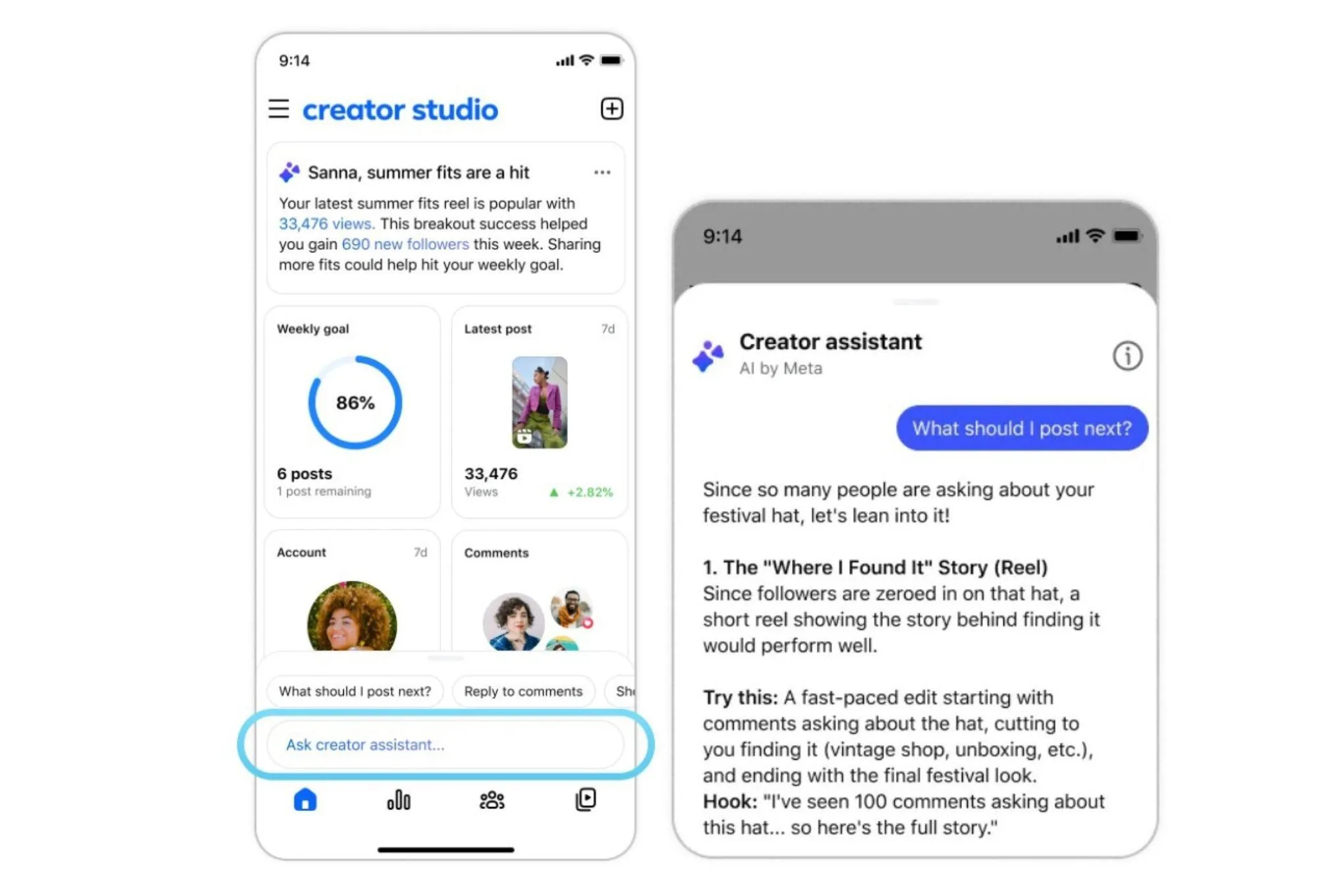
The original Creator Studio was shut down in 2023. Now it's back, rebuilt around an AI assistant that promises to grow your audience and reply to comments in your voice.
Sarah Williams · 26 Jun · 5 min
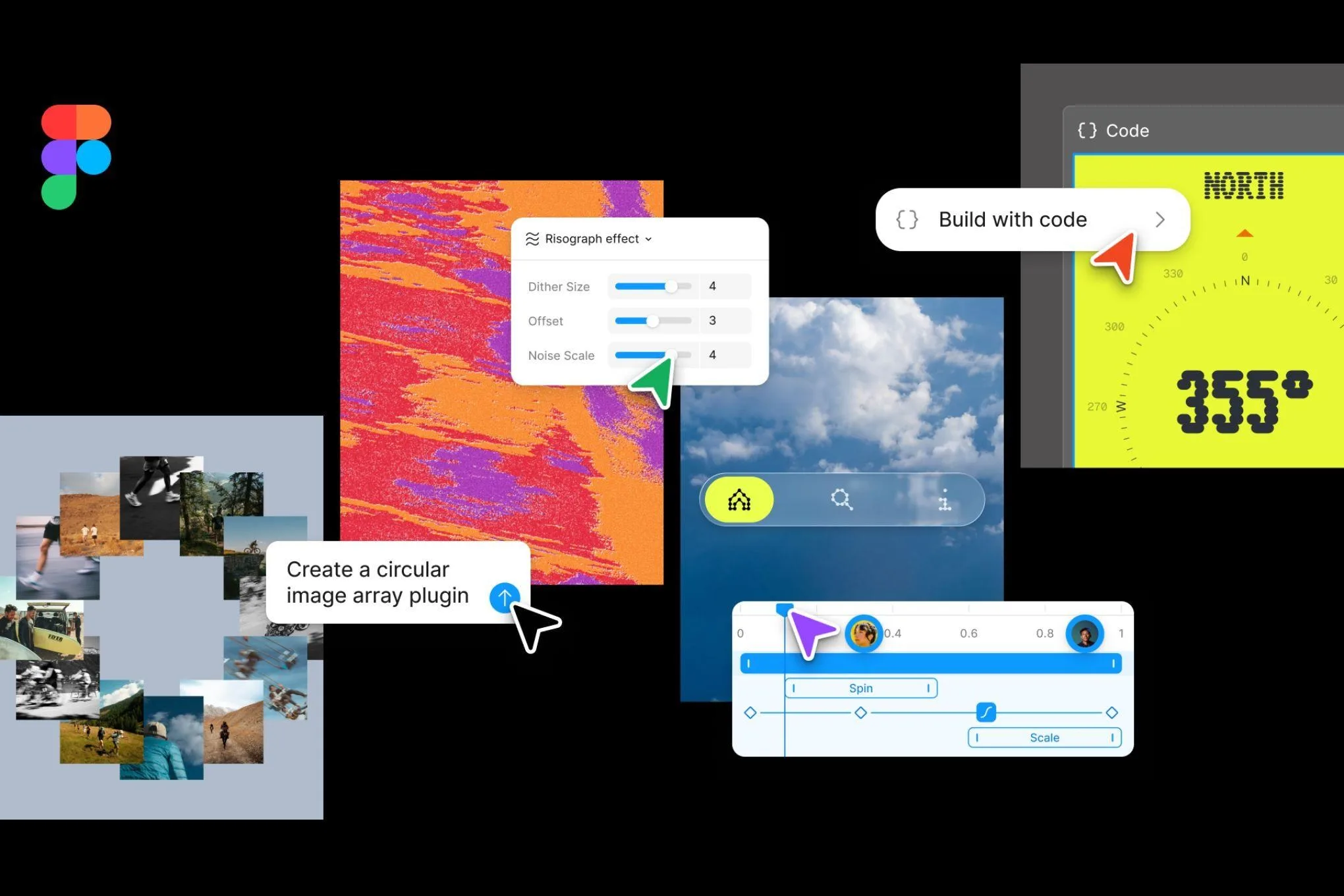
At its annual Config conference, Figma announced coding layers, AI-generated motion graphics, and a reimagined canvas that blurs the line between design and full-stack development.
Sarah Williams · 26 Jun · 5 min
Everyone talks about chips and models. The memory bottleneck is the part of the AI buildout that keeps getting underestimated, and Micron's latest earnings make that case hard to ignore.
The DeepSeek angle on the enterprise side is interesting, and I'll admit it raises questions about... well, multiple things. DeepSeek emerged earlier this year as a genuinely impressive open-weight model out of a Chinese AI lab, and it rattled a lot of assumptions about who could build frontier-level AI and at what cost. Tencent apparently decided that powering its enterprise agent with DeepSeek was the right call, at least for testing purposes. Whether that's a sign of DeepSeek's technical quality, a cost calculation, a political alignment, or all three, it's too early to say.
What it does signal is that Tencent isn't betting everything on its own internal model research. That's a pragmatic call. Build what you're best at, which in Tencent's case is distribution and user relationships, and license or integrate the model layer from whoever's doing it best. Smart, honestly.
I want to push back a little on the framing of "catching up" that keeps appearing in coverage of Chinese tech companies and AI. Catching up to whom, exactly? To OpenAI? That's one way to look at it. But the Chinese AI race has its own internal logic that doesn't map cleanly onto the Western narrative.
The companies competing in China, Tencent, Alibaba, Baidu, ByteDance, Huawei and a dozen well-funded startups, aren't primarily competing for the same users as OpenAI. They're competing with each other, for Chinese users, inside a regulatory environment that is different in every meaningful way from what governs Silicon Valley. The goal isn't to build the smartest model in the world by some international benchmark. The goal is to lock Chinese consumers and enterprises into your ecosystem before someone else does.
That's the "high-stakes battle" Bloomberg describes, and that framing is exactly right. This is less about technological supremacy and more about distribution, habit formation, and the switching costs that come with deep integration. This is the self-driving car hype cycle all over again, in a sense, where the actual technology is interesting but the real story is always who controls the deployment layer and who gets to tax the transaction.
WeChat already has distribution that would make any Western platform CEO weep with envy. Adding AI to that isn't a moonshot. It's a moat-deepening exercise. Tencent doesn't need to win the global AI race. It needs to make WeChat stickier than it already is, which is saying something, because WeChat is already extraordinarily sticky.
For autonomous systems and robotics folks, this might seem a bit far afield. But I'd argue it's directly relevant to anyone thinking about AI deployment at scale. What Tencent is doing is a master class in one specific thing: don't try to build a new distribution channel when you already own one.
The robotics industry, to put it bluntly, has a distribution problem. Lots of companies building impressive hardware and software, not many with a clear path to the kind of scale that makes unit economics work. The platforms that will win in the long run are the ones that figure out how to embed AI capabilities into something people or businesses are already using every day, whether that's a warehouse management system, a hospital scheduling platform, or yes, a super app.
Tencent's WeChat play is a reminder that the most powerful AI strategy isn't always building the best model. Sometimes it's figuring out where the users already are, and meeting them there, with something useful enough that they don't bother looking for alternatives.
Now, I'm not saying Tencent's going to pull this off cleanly. Testing an AI assistant inside a super app with a billion users is genuinely complicated, and it remains unclear how much of WeChat's user base will actually engage with an AI layer versus treating it the way most people treat the AI features Microsoft has been shoving into Office, which is to say, largely ignoring them. Adoption is hard. Behavior change is hard. The history of platform-native AI features is, so far, pretty mixed.
And there's a regulatory dimension here that I don't have enough sourcing to fully unpack, so I'll just flag it: AI in China operates under a set of government requirements around content, data handling, and model registration that have no equivalent in the US or EU. How Tencent navigates those requirements, especially with a model like DeepSeek that comes from a third party, is an open question. The company didn't disclose specifics on that front, at least not in what's been reported publicly.
But the strategic logic is sound. Big platform, captive users, embed AI, deepen lock-in. Call me old-fashioned, but that's just what dominant platforms do when they sense a transition happening. It worked for Microsoft with Office 365. It worked for Google with search. It'll probably work for at least some of the Chinese giants doing it now.
The kids building standalone AI apps should probably be paying attention.