OpenAI's Stargate Expansion: Infrastructure Play or AI Governance Experiment?
The Norway announcement reveals something more interesting than another data center, but the research community should be asking harder questions about what 'community-first AI' actually means.
By
·24 May 2026·6 min de leitura
Most coverage of OpenAI's Stargate Norway announcement focused on the obvious: it's their first European data center under the "OpenAI for Countries" program, it's big, it signals geopolitical ambition. What the coverage largely missed is that Stargate isn't primarily an infrastructure story. It's an experiment in AI governance methodology, and the details we have so far are frustratingly thin.
To be precise, OpenAI is proposing something genuinely novel here: locally tailored deployment plans shaped by community input, energy needs, and workforce priorities. This is not how AI infrastructure typically gets built. The standard playbook involves finding cheap power, negotiating tax incentives, and announcing job numbers. OpenAI appears to be attempting something more participatory. Whether they can actually execute on that vision remains unclear.
Stargate, as OpenAI describes it, is their "overarching infrastructure platform" and represents a core piece of their long-term strategy. The Norway announcement is the first European implementation under a broader "OpenAI for Countries" initiative, which suggests we should expect similar announcements in other regions.
What distinguishes Stargate from conventional hyperscaler expansion (think Google, Microsoft, or Amazon building data centers globally) is the explicit framing around community integration. OpenAI's announcement emphasizes "community-first" approaches, though the company hasn't published detailed methodology for how community input will actually shape technical and operational decisions.
Cobertura relacionada
More in AI Models
Chipmakers swung wildly this week, from a Tuesday 'chip-wreck' to a Micron-led surge after hours. What's actually going on with AI's hardware backbone?
Sarah Williams · 26 Jun · 5 min
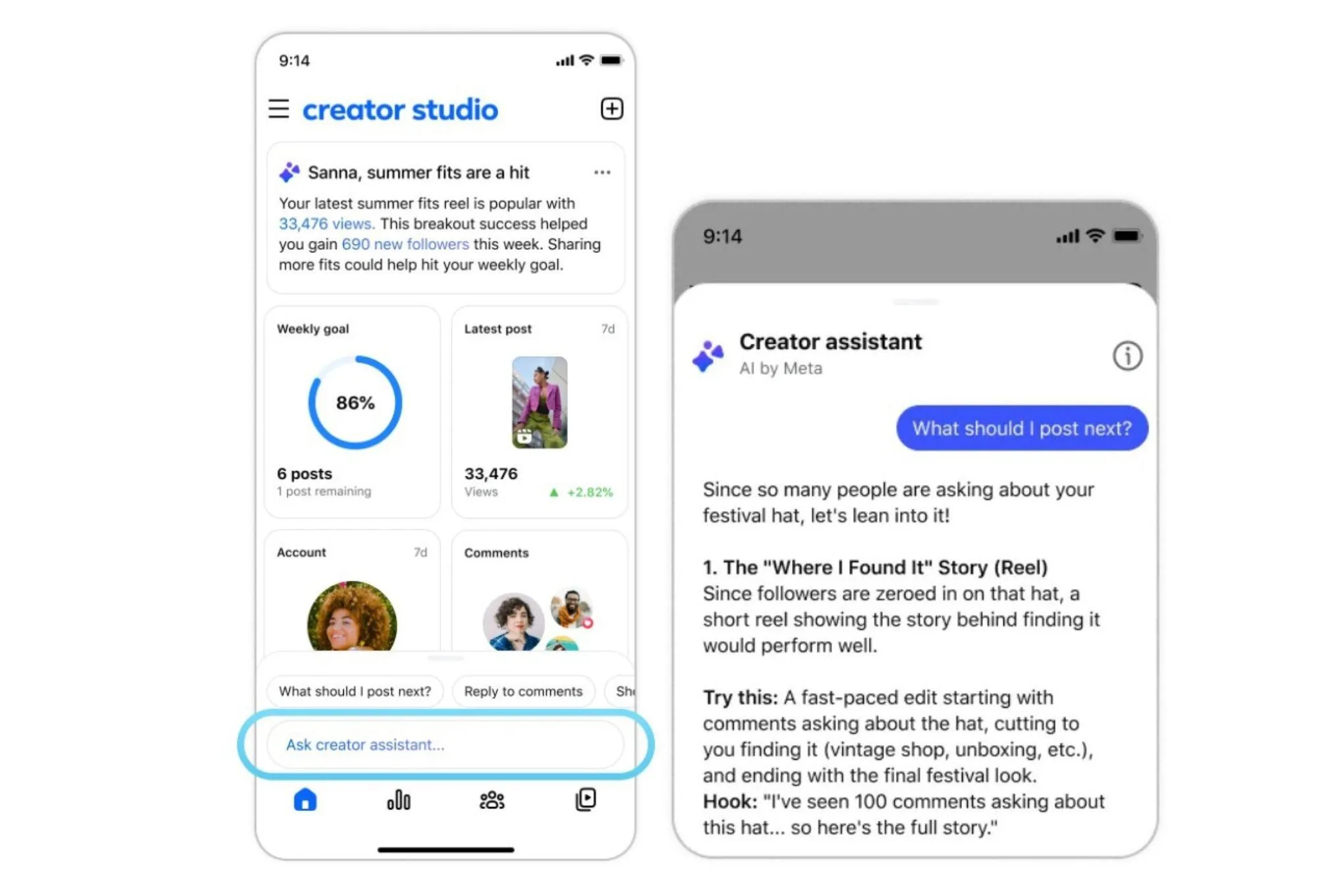
The original Creator Studio was shut down in 2023. Now it's back, rebuilt around an AI assistant that promises to grow your audience and reply to comments in your voice.
Sarah Williams · 26 Jun · 5 min
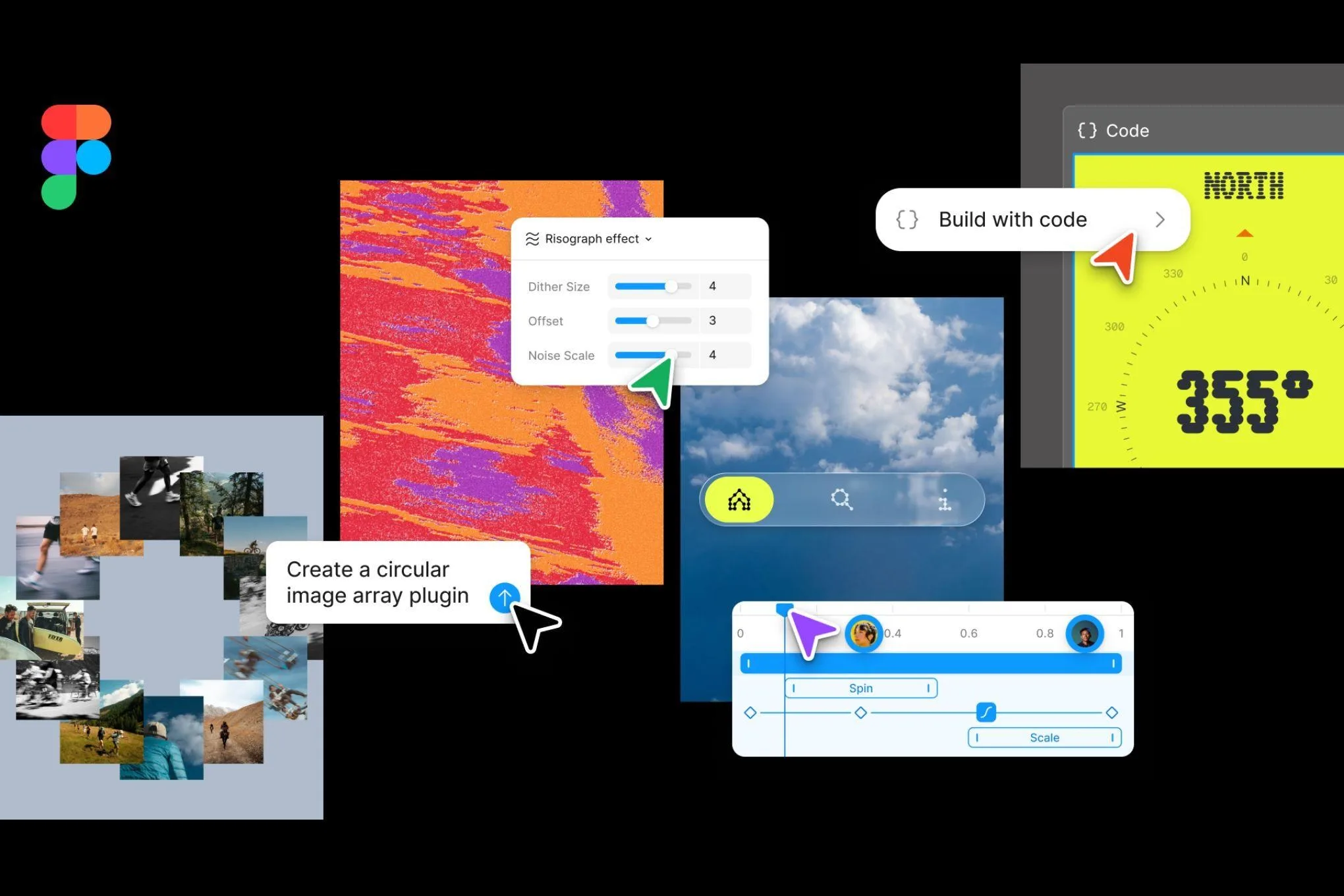
At its annual Config conference, Figma announced coding layers, AI-generated motion graphics, and a reimagined canvas that blurs the line between design and full-stack development.
Sarah Williams · 26 Jun · 5 min
Everyone talks about chips and models. The memory bottleneck is the part of the AI buildout that keeps getting underestimated, and Micron's latest earnings make that case hard to ignore.
I should note that we're working with limited public information here. OpenAI hasn't released specifics on capacity, timeline, energy sources, or the governance structures that would make "community input" meaningful rather than performative.
Let me distinguish between what's genuinely novel and what's incremental over existing approaches.
Genuinely new: The explicit commitment to letting local priorities shape infrastructure deployment. Traditional data center development treats community engagement as a PR exercise or regulatory hurdle. OpenAI is framing it as a design input. If they follow through, this would represent a meaningful departure from industry norms.
Incremental: The geographic expansion itself. Every major AI company is racing to build compute capacity in politically friendly jurisdictions. Norway offers clean energy (primarily hydroelectric), a stable regulatory environment, and proximity to European markets. The strategic logic is straightforward.
Unclear: Whether the "community-first" framing will translate to substantive differences in how the facility operates. It's too early to say whether this is genuine institutional innovation or sophisticated positioning.
Here's where I start getting, well, pedantic (I know I'm being picky here, but this matters). OpenAI's announcement uses phrases like "locally tailored plans shaped by community input" without specifying:
Who counts as "community" for input purposes
What decisions are actually subject to community influence
What mechanisms exist for ongoing accountability
How conflicts between community preferences and operational requirements get resolved
These aren't minor details. The participatory AI governance literature (see Sloane et al., 2022 on "Participation is not a Design Fix for Machine Learning") has extensively documented how "community input" processes can become extractive rather than empowering. Companies collect feedback, claim legitimacy, then proceed with predetermined plans.
I'm not suggesting OpenAI is doing this. I genuinely don't know. But the absence of methodological specificity in their public communications makes it impossible to evaluate their approach against established best practices in participatory design.
Norway's appeal for AI infrastructure is obvious: abundant hydroelectric power means lower carbon intensity than fossil-dependent grids. OpenAI's framing around "energy needs" as a community consideration suggests awareness that data centers can strain local grids and compete with other users for clean power.
Actually, the research shows this is a real tension. A 2023 analysis from the International Energy Agency found that data centers globally consumed roughly 460 TWh in 2022, approximately 2% of total electricity demand. AI workloads are significantly more energy-intensive than traditional computing, and projections suggest substantial growth.
What we don't know: how large Stargate Norway will be, what its expected energy consumption looks like, whether it will require grid upgrades, and how energy allocation decisions will factor in community input. The company didn't disclose exact figures on any of these points.
The announcement mentions "workforce priorities" as another dimension of community-shaped planning. This could mean several things:
Training programs for local workers
Hiring commitments
Supply chain localization
Educational partnerships
Data center jobs are a mixed bag. Construction phases create temporary employment. Operations require relatively few workers but those positions tend to be well-compensated. The broader economic impact depends heavily on whether facilities catalyze related industries or remain isolated technical installations.
Norway has a strong technical education system and existing expertise in energy-intensive industries. The workforce integration question is less about capability and more about whether Stargate creates meaningful economic linkages or operates as an enclave.
It's worth noting that OpenAI's "OpenAI for Countries" framing is doing political work. At a moment when AI governance is fragmenting along national and regional lines (the EU AI Act, various national AI strategies, US export controls), OpenAI is positioning itself as a partner to governments rather than a force to be regulated.
This is strategically sensible. It's also worth being clear-eyed about. "Community-first" infrastructure development serves OpenAI's interests by building political capital, securing favorable operating conditions, and potentially influencing how AI governance frameworks develop in participating countries.
None of this is inherently problematic. Companies pursue their interests. But analysis that treats the community framing purely at face value misses the strategic logic underneath.
Several things remain unclear, and I'd want to see answers before drawing strong conclusions:
Methodological transparency: Will OpenAI publish their community engagement methodology? What frameworks are they using? Have they consulted with researchers who study participatory design?
Accountability mechanisms: How will communities know if their input actually shaped decisions? What recourse exists if commitments aren't met?
Replicability: Is the Norway approach a genuine template for future Stargate deployments, or a pilot that may not generalize?
Evaluation: How will success be measured? By whom? On what timeline?
Comparison cases: How does this compare to other attempts at community-integrated infrastructure development? (There's relevant work on community benefit agreements in other industries that could inform assessment.)
If OpenAI is serious about community-first AI infrastructure, a few things would signal genuine commitment:
Published methodology. Not marketing language, but actual documentation of how community input processes work.
Independent evaluation. Commit to third-party assessment of whether community engagement was meaningful.
Binding commitments. Community benefit agreements with enforcement mechanisms, not just aspirational statements.
Ongoing governance. Structures for community input that persist beyond the planning phase into operations.
Transparency on trade-offs. Honest communication about where community preferences conflicted with operational requirements and how those conflicts were resolved.
The sample size here is small (one announced project, limited public detail). It hasn't been replicated yet. We're evaluating a stated intention, not demonstrated practice.
Why does this matter beyond one data center in Norway?
AI infrastructure is going to be built somewhere. The question is whether that building happens to communities or with them. OpenAI is, at minimum, articulating a different vision than "find cheap power and favorable regulations." Whether they can operationalize that vision is an open empirical question.
The research community should be watching this closely. Not to celebrate or condemn prematurely, but to document what actually happens. If Stargate Norway produces genuine innovations in participatory infrastructure development, those innovations could inform practice elsewhere. If it produces sophisticated PR with minimal substantive community influence, that's also worth knowing.
For now, I'd characterize the Stargate expansion as interesting and underdetermined. The framing is novel. The execution remains to be seen. The details that would let us evaluate the approach against established best practices in participatory design are, so far, missing.