NVIDIA's Physical AI Push: What's Actually New and What's Marketing
Jensen Huang is betting big on 'physical AI' as the next frontier, but separating genuine technical advances from rebadged infrastructure requires some careful parsing.
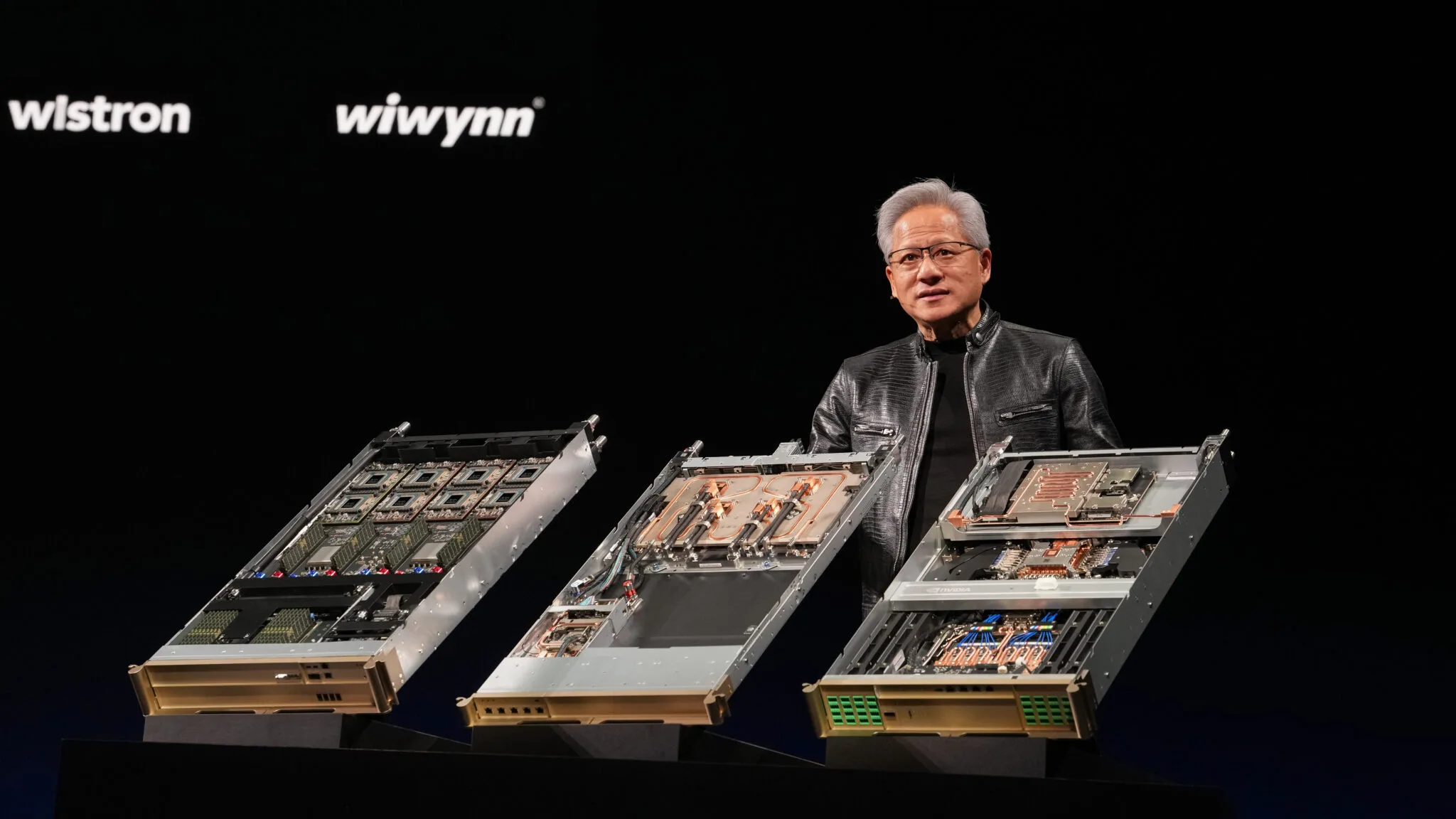
Crédito da imagem: Image via NVIDIA Blog — AI & Robotics. Used under fair use for news commentary. · source
Think of NVIDIA's current strategy like a construction company that made its fortune selling hammers, suddenly realizing it could also sell the nails, the wood, the blueprints, and the land itself. That's essentially what Jensen Huang laid out at GTC Taipei during COMPUTEX 2026, though the company would prefer you focus on the grander narrative about "physical AI" transforming every industry.
To be precise, NVIDIA announced several things simultaneously: new open models and datasets for robotics developers (released through Hugging Face), expanded partnerships with Google Cloud, and what Huang described as a "brand new" $200 billion market opportunity in CPUs for AI agents. It's a lot to parse, and I suspect that's somewhat intentional.
NVIDIA has been using the term "physical AI" for roughly 18 months now, though the concept itself isn't new. It refers to AI systems that interact with the physical world, whether through robots, autonomous vehicles, or industrial automation. The framing is clever because it positions NVIDIA's existing robotics and simulation tools (Isaac Sim, Omniverse) as part of a coherent vision rather than a collection of products searching for customers.
The company's thesis is straightforward: training AI models to operate in physical environments requires massive simulation capabilities, which requires massive compute, which requires NVIDIA hardware. It's a compelling flywheel if you buy the premise that simulation-to-real transfer will actually work at scale. (I'm not entirely convinced yet, but more on that later.)
Cobertura relacionada
More in AI Models
Chipmakers swung wildly this week, from a Tuesday 'chip-wreck' to a Micron-led surge after hours. What's actually going on with AI's hardware backbone?
Sarah Williams · 26 Jun · 5 min
The original Creator Studio was shut down in 2023. Now it's back, rebuilt around an AI assistant that promises to grow your audience and reply to comments in your voice.
Sarah Williams · 26 Jun · 5 min
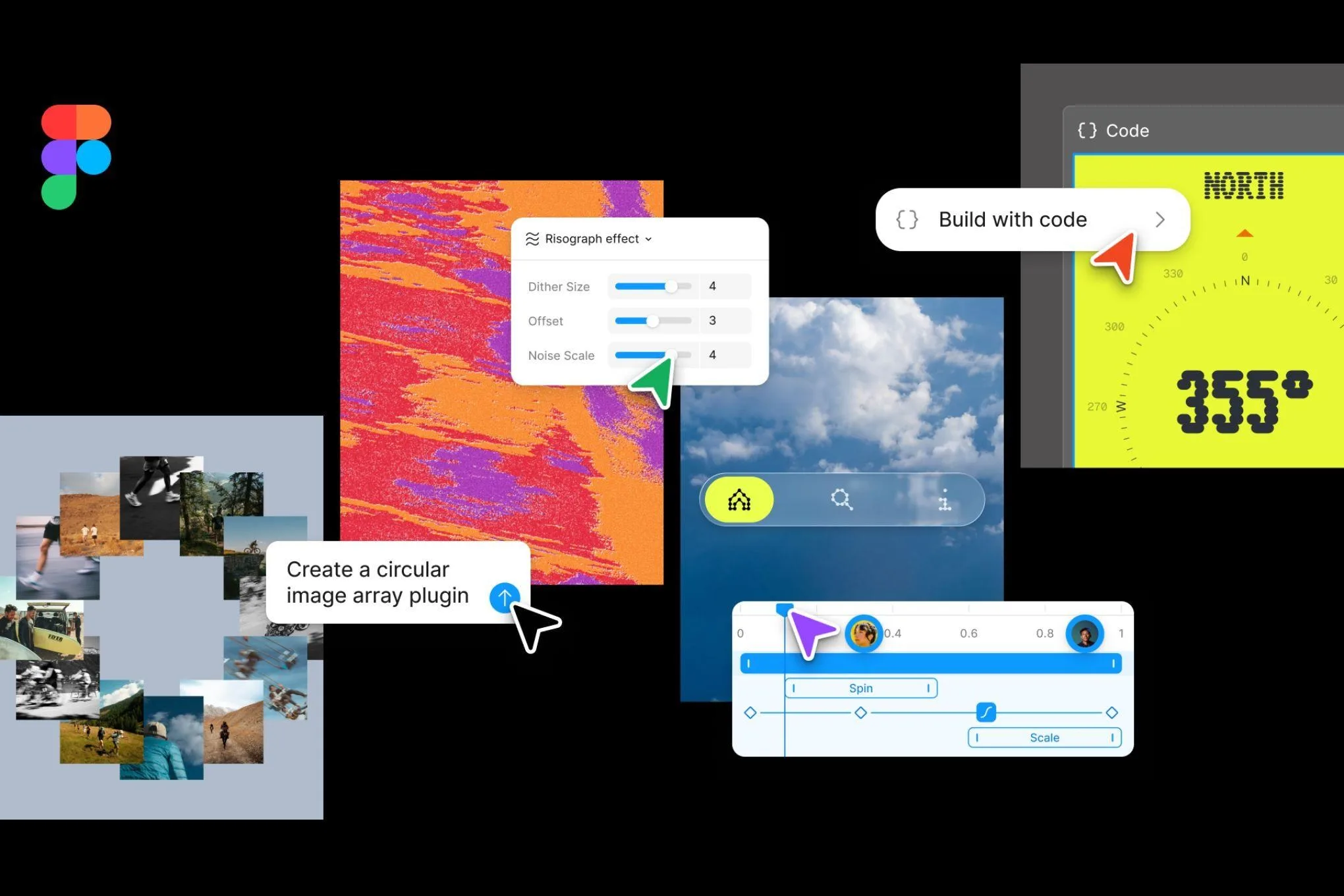
At its annual Config conference, Figma announced coding layers, AI-generated motion graphics, and a reimagined canvas that blurs the line between design and full-stack development.
Sarah Williams · 26 Jun · 5 min
Everyone talks about chips and models. The memory bottleneck is the part of the AI buildout that keeps getting underestimated, and Micron's latest earnings make that case hard to ignore.
The most substantive announcement, at least for researchers and developers, is NVIDIA's release of new open models and datasets specifically designed for physical AI applications. These were published through Hugging Face, which represents a notable shift toward openness from a company that has historically kept its best tools proprietary.
It's worth noting that "open" here means different things depending on which assets you're looking at. Some models appear to be fully open-weight with permissive licenses, while others come with restrictions on commercial use or require NVIDIA hardware to run efficiently. The details matter, and I'd want to see the actual license terms before celebrating this as a triumph for open science.
What I can say is that releasing pre-trained models for robotics manipulation and navigation tasks is genuinely useful. Training these models from scratch requires resources most academic labs simply don't have. If the models are good (and that's a big if, since I haven't had time to evaluate them), this could accelerate research in ways that matter.
Huang's assertion that CPUs for AI agents represent a "brand new" $200 billion market deserves some scrutiny. TechCrunch reported this figure, but the methodology behind it remains unclear. Market sizing exercises for nascent technologies are notoriously unreliable (I know I'm being picky here, but these numbers often become gospel despite being essentially made up).
The logic seems to be: AI agents will proliferate, agents need compute, compute means CPUs and accelerators, therefore NVIDIA captures some portion of agent-related spending. It's not wrong exactly, but it conflates potential market size with addressable market size with NVIDIA's likely share. These are very different numbers.
What's more interesting to me is the implicit acknowledgment that GPUs alone won't power the agentic future. CPUs matter for inference at the edge, for orchestration logic, for the unglamorous plumbing that connects models to actions. NVIDIA acquiring this capability (presumably through ARM-based designs) makes strategic sense even if the $200 billion figure is optimistic.
The networking announcements received less attention but may matter more in the near term. NVIDIA's Spectrum-X Ethernet fabric, now with what they're calling MRC (the blog post doesn't fully explain this acronym, which is frustrating), is positioned as essential infrastructure for "gigascale AI" deployments.
This is where NVIDIA's strategy becomes clear. The company isn't just selling chips; it's selling the entire stack needed to build what it calls "AI factories." Networking, storage, cooling, orchestration software, simulation environments, training frameworks, inference optimization. If you're a hyperscaler or enterprise building AI infrastructure, NVIDIA wants to be your only vendor.
The Google Cloud partnership announced at Google I/O (and referenced in the GTC materials) fits this pattern. NVIDIA and Google Cloud are jointly supporting over 100,000 developers through curated learning paths and hands-on labs. It's ecosystem lock-in disguised as education, though to be fair, the education itself appears to be useful.
The optimistic read on NVIDIA's physical AI push is that the company is genuinely accelerating robotics research by releasing tools and models that would otherwise remain locked inside well-funded labs. Open weights on Hugging Face, simulation environments that don't require building your own physics engines, pre-trained perception models that work out of the box. These lower barriers to entry.
The pessimistic read is that NVIDIA is creating dependency relationships that will be difficult to escape. Train your models on Isaac Sim, optimize for NVIDIA inference, deploy on NVIDIA edge devices. The open models might be a loss leader designed to pull developers into a proprietary ecosystem.
I suspect the truth is somewhere in between. NVIDIA's interests and the research community's interests partially align: both want physical AI to work, both benefit from better simulation tools, both need more training data. The divergence comes later, when commercialization happens and NVIDIA wants its cut.
Several things remain unclear from the announcements, and I'd want to see more before drawing strong conclusions:
Sim-to-real transfer quality: NVIDIA has been promising that models trained in simulation will work in the real world for years now. The evidence is mixed. Some tasks transfer well (basic manipulation, navigation in controlled environments), others don't (anything involving deformable objects, novel materials, or adversarial conditions). The new models and datasets may help, but this hasn't been demonstrated at scale yet.
Competitive positioning: How do NVIDIA's open models compare to alternatives from Google DeepMind, Meta's robotics research, or academic efforts like the Open X-Embodiment dataset? I only found limited comparative benchmarks, and NVIDIA's own materials don't address this directly.
Actual adoption: Developer communities and learning paths sound impressive, but how many of those 100,000 developers are building production systems versus completing tutorials? The company didn't disclose metrics that would help answer this.
Hardware requirements: Some of the announced capabilities appear to require NVIDIA's latest hardware to run efficiently. If the "open" models only work well on $40,000 GPUs, they're not really accessible to most researchers.
If NVIDIA is serious about advancing physical AI research (rather than just selling more hardware), a few things would help:
First, independent benchmarks. Let academic researchers evaluate the new models on standardized tasks without NVIDIA's involvement in the testing. The company's internal benchmarks are, well, optimistic by design.
Second, clearer licensing. The current mix of open-weight and restricted models creates confusion. Pick a license and stick with it, or at least provide a clear matrix of what's allowed.
Third, documentation of failures. Every robotics researcher knows that most sim-to-real transfers fail initially. Publishing the failure cases, not just the successes, would be more useful than polished demos.
NVIDIA's GTC announcements fit a pattern that's been developing for several years. The company is transitioning from a hardware vendor to a platform company, and physical AI is the latest domain where it's attempting this expansion. The strategy has worked in data center AI, where NVIDIA's CUDA ecosystem created switching costs that competitors still struggle to overcome.
Whether the same playbook works for robotics remains to be seen. The physical world is messier than the data center, and the customers are more diverse (ranging from automotive OEMs to warehouse operators to academic labs). Locking in this market will be harder than locking in cloud providers.
For now, I'd characterize NVIDIA's physical AI push as ambitious and partially substantive. The open models are genuinely useful if they work as advertised. The infrastructure announcements are mostly repackaging of existing products. The market size claims are marketing. And the long-term implications for research independence are worth watching carefully.
The $200 billion market may or may not materialize. What's certain is that NVIDIA is positioning itself to capture as much of it as possible, whether that means selling hardware, software, or (increasingly) both.