Google's AI Search Overhaul Is Driving Users to DuckDuckGo, and I've Seen This Movie Before
App installs for the privacy-focused search engine jumped 30% after Google replaced blue links with AI agents. History suggests this won't end how Google expects.
Crédito da imagem: Image via TechCrunch — AI. Used under fair use for news commentary. · source
DuckDuckGo app installs are up 30% following Google's I/O 2026 announcement that it would replace traditional search results with AI agents. That's the headline, and it's a big one.
Now, call me old-fashioned, but I remember when Google was the scrappy alternative. Back in the late 90s, AltaVista and Yahoo were cluttered messes, and Google showed up with a clean white page and ten blue links that actually worked. Users fled to it in droves. The incumbents didn't see it coming because they were too busy congratulating themselves on their portal strategies. I covered that transition, and what I'm watching now feels eerily familiar, just with the roles reversed.
The backlash has been swift and, frankly, predictable. Google unveiled its new Search experience at I/O 2026, and the pitch was ambitious: instead of giving you links to click, AI agents would do the work for you. Find the answer, book the reservation, compare the products. No more hunting through pages of results. The future of search, they called it.
Users called it something else. "Force-fed" was the term TechCrunch used, quoting frustrated searchers who just wanted to find a website, not have a conversation with a chatbot. And that 30% spike in DuckDuckGo installs? That's not a rounding error. That's a signal.
I've been covering tech long enough to know that user revolts don't always translate into lasting market shifts. Remember when everyone was going to leave Facebook after Cambridge Analytica? How'd that work out. But this feels different, and I'll tell you why: Google isn't just adding a feature people don't want, they're removing something people actively use. The blue links aren't supplemented by AI, they're replaced by it. That's a much harder sell.
Cobertura relacionada
More in AI Models
Chipmakers swung wildly this week, from a Tuesday 'chip-wreck' to a Micron-led surge after hours. What's actually going on with AI's hardware backbone?
Sarah Williams · 26 Jun · 5 min
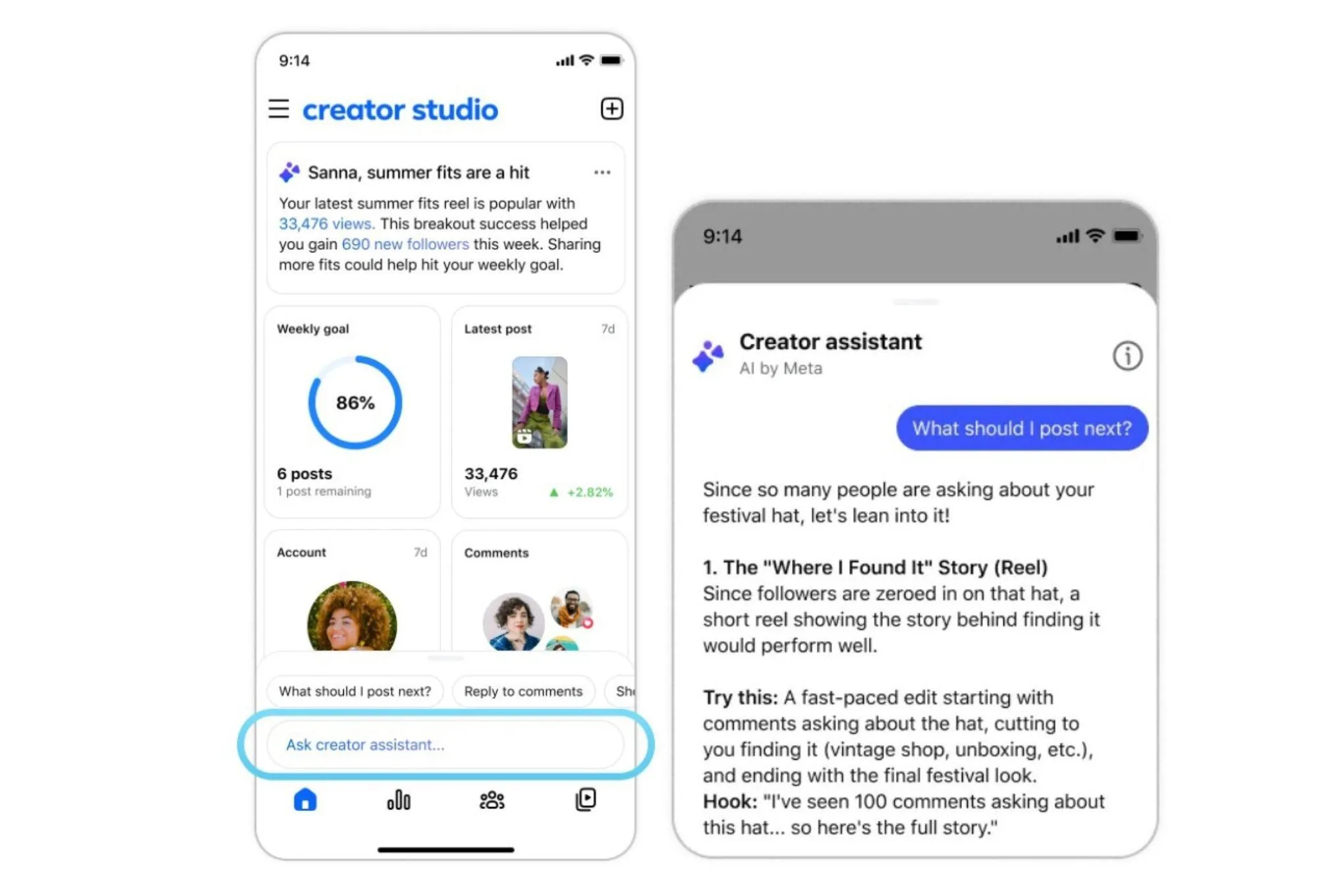
The original Creator Studio was shut down in 2023. Now it's back, rebuilt around an AI assistant that promises to grow your audience and reply to comments in your voice.
Sarah Williams · 26 Jun · 5 min
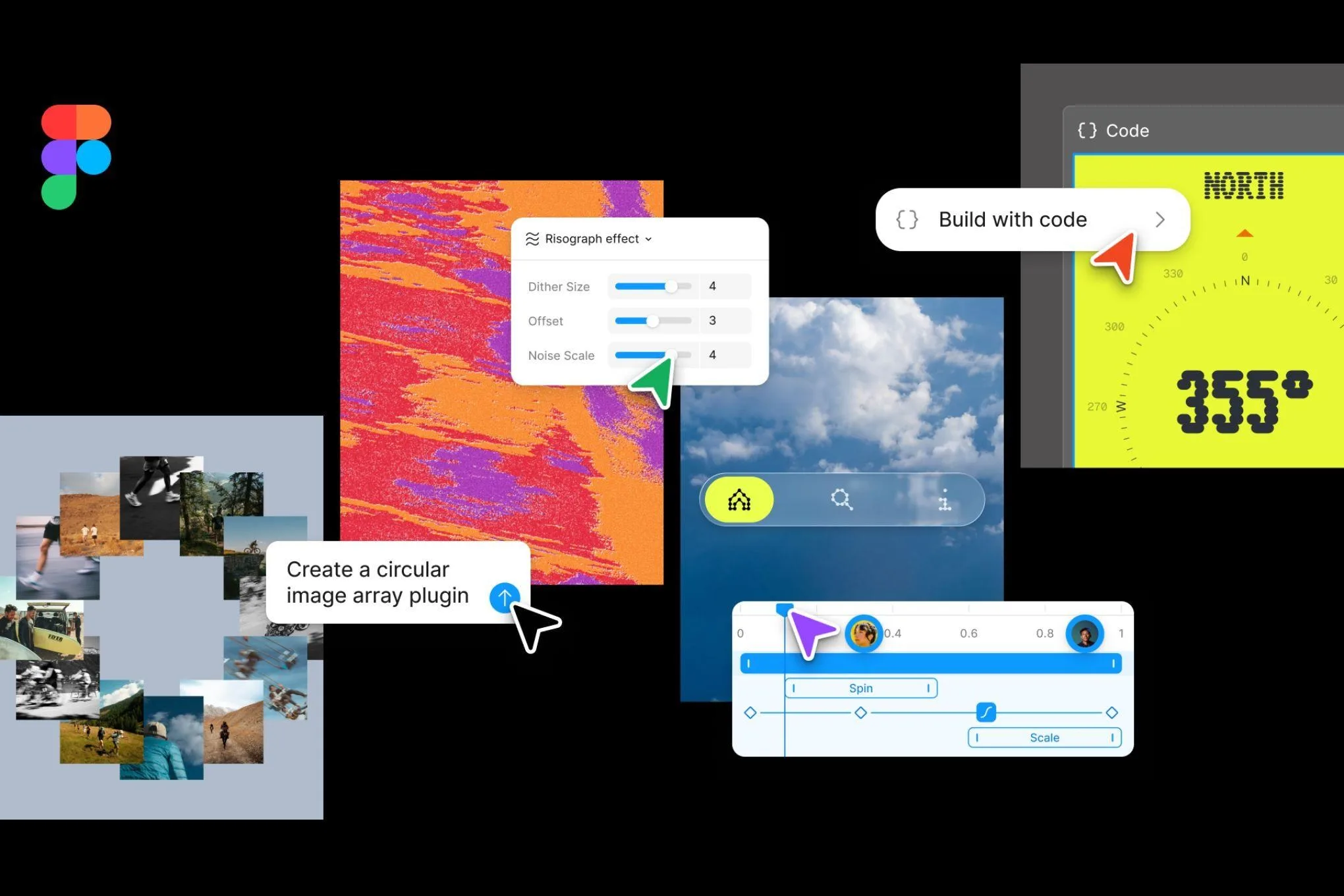
At its annual Config conference, Figma announced coding layers, AI-generated motion graphics, and a reimagined canvas that blurs the line between design and full-stack development.
Sarah Williams · 26 Jun · 5 min
Everyone talks about chips and models. The memory bottleneck is the part of the AI buildout that keeps getting underestimated, and Micron's latest earnings make that case hard to ignore.
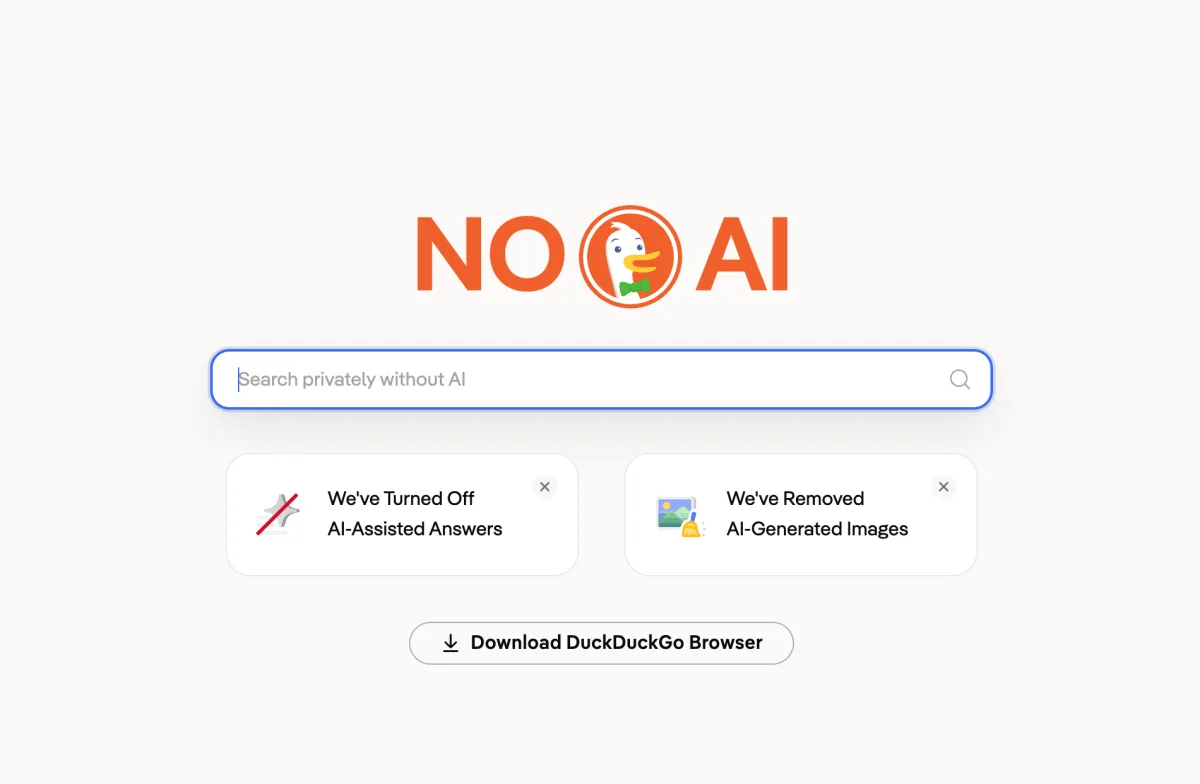
DuckDuckGo's pitch is almost comically simple in this context. According to ZDNet, the company is positioning itself as an "AI-free alternative" to Google's new approach. No chatbots, no agents, no synthesized answers of uncertain provenance. Just search results. Links to actual websites written by actual humans (or at least, that's the idea). It's the kind of value proposition that would have sounded absurd five years ago, back when every company was racing to slap AI onto everything. Now it's a competitive advantage.
The irony here is thick enough to cut with a knife. Google spent years building the most sophisticated AI capabilities on the planet, and now a significant chunk of users are fleeing specifically because of those capabilities. It's like if Ford invented the car and then everyone bought horses because they missed the smell.
But here's where I'll hedge, because I've been wrong before. We don't actually know if this 30% spike represents a permanent shift or a temporary tantrum. DuckDuckGo's market share is still tiny compared to Google's dominance (we're talking low single digits globally, though the company doesn't disclose exact figures). A 30% increase from a small base is still a small number. And Google has weathered user complaints before. Remember when they killed Google Reader? People were furious! I was furious! And then we all just, sort of, moved on.
What's different this time, maybe, is that search is Google's core product. It's not a side project they're sunsetting. It's the thing. And they're fundamentally changing how it works at a moment when trust in AI-generated content is, let's say, not at an all-time high. The timing seems questionable.
I keep thinking about the young founders I talk to who are building products right now. So many of them have internalized the assumption that AI is always additive, that more intelligence equals more value. And sometimes that's true! But sometimes users just want a tool that does what they expect, reliably, without surprises. A hammer doesn't need to learn your preferences. It just needs to hit nails.
Google's bet is that users will eventually prefer the AI approach once they get used to it. That the initial resistance is just friction, and friction fades. They might be right. They have more data on user behavior than anyone, and they're not stupid. But I've seen this pattern before with other tech transitions, and the companies that assume users will adapt to whatever they're given are often the companies that get disrupted.
The privacy angle matters here too, though it's not the whole story. DuckDuckGo has always pitched itself on privacy, on not tracking your searches or building advertising profiles. That message resonates with a certain audience, but it's never been enough to seriously threaten Google's dominance. What's interesting about this moment is that privacy concerns are combining with a separate complaint: users who simply don't want AI-generated answers, regardless of privacy implications. They want to find websites and read them. They want to evaluate sources themselves. They want, basically, the internet as it existed before everything became a chatbot.
Is that nostalgia? Maybe. But nostalgia is a powerful force, and Google seems to have underestimated it.
So what happens next? Honestly, it's too early to say. The 30% install spike is real, but whether those users stick with DuckDuckGo or drift back to Google once the novelty wears off remains unclear. Google could also adjust course, maybe offering a "classic" search mode for users who prefer the old approach (though that would be an awkward admission that the new approach isn't universally beloved). Or they could double down, betting that the AI-native generation will eventually outnumber the complainers.
What I do know is that the assumption that AI makes everything better is being tested right now, in real time, with real users voting with their app downloads. And the early returns suggest that assumption might be wrong, or at least incomplete.
I've covered three major tech verticals in my career, and the pattern is always the same: incumbents get complacent, they assume users will follow wherever they lead, and then they're surprised when users don't. Google isn't complacent exactly, they're aggressive, they're innovative, they're spending billions on AI. But aggressive innovation in the wrong direction is still the wrong direction.
DuckDuckGo probably isn't going to kill Google. Let's be realistic here. But this moment, this 30% spike, this user revolt against being "force-fed" AI whether they want it or not, it matters. It's a data point that suggests the AI-everywhere thesis has limits. And limits are something the tech industry has never been good at recognizing until they slam into them.
If you want to argue about this, my email's on the about page. But I think I'm right on this one.