AI is now solving math problems humans couldn't crack for decades. I've seen this movie before.
DeepMind and OpenAI both dropped major mathematical breakthroughs this month, and everyone's losing their minds. But let's talk about what this actually means.
By
·25 May 2026·5 min de leitura
Two major AI labs announced solutions to mathematical problems that have stumped researchers for decades, in the same month. That's not a coincidence, it's a race.
Google DeepMind says it found new solutions to the Navier-Stokes equations, a set of problems in fluid dynamics that mathematicians have been wrestling with since the 1800s. Meanwhile, OpenAI claims GPT-5 helped UCLA Professor Ernest Ryu crack a key question in optimization theory. Both announcements landed within weeks of each other, and both come with the same breathless framing: AI is revolutionizing mathematics!
Call me old-fashioned, but I've been covering tech long enough to know that when two companies announce similar breakthroughs at the same time, what you're watching isn't science, it's marketing. That doesn't mean the results aren't real. It means we need to be careful about what we're actually celebrating here.
The DeepMind blog post describes a new method for finding solutions to partial differential equations, specifically the Navier-Stokes equations that govern fluid flow. These equations are famously difficult, one of the Clay Mathematics Institute's Millennium Prize Problems involves proving whether smooth solutions always exist for them.
DeepMind's approach uses neural networks to search for solutions in ways that would take humans much longer to explore manually. The company claims this could help mathematicians, physicists, and engineers tackle problems that have resisted traditional methods.
Cobertura relacionada
More in AI Models
Chipmakers swung wildly this week, from a Tuesday 'chip-wreck' to a Micron-led surge after hours. What's actually going on with AI's hardware backbone?
Sarah Williams · 26 Jun · 5 min
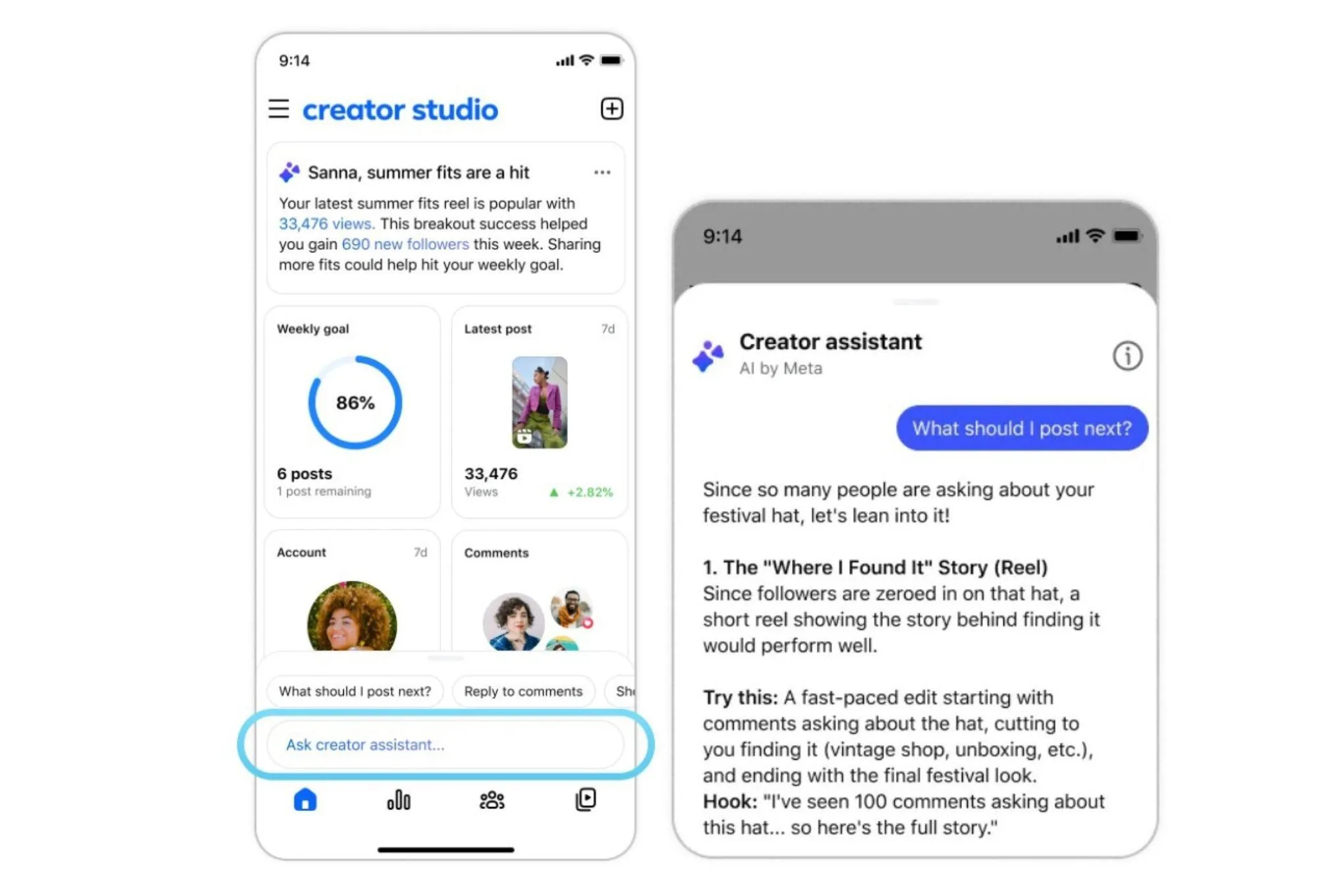
The original Creator Studio was shut down in 2023. Now it's back, rebuilt around an AI assistant that promises to grow your audience and reply to comments in your voice.
Sarah Williams · 26 Jun · 5 min
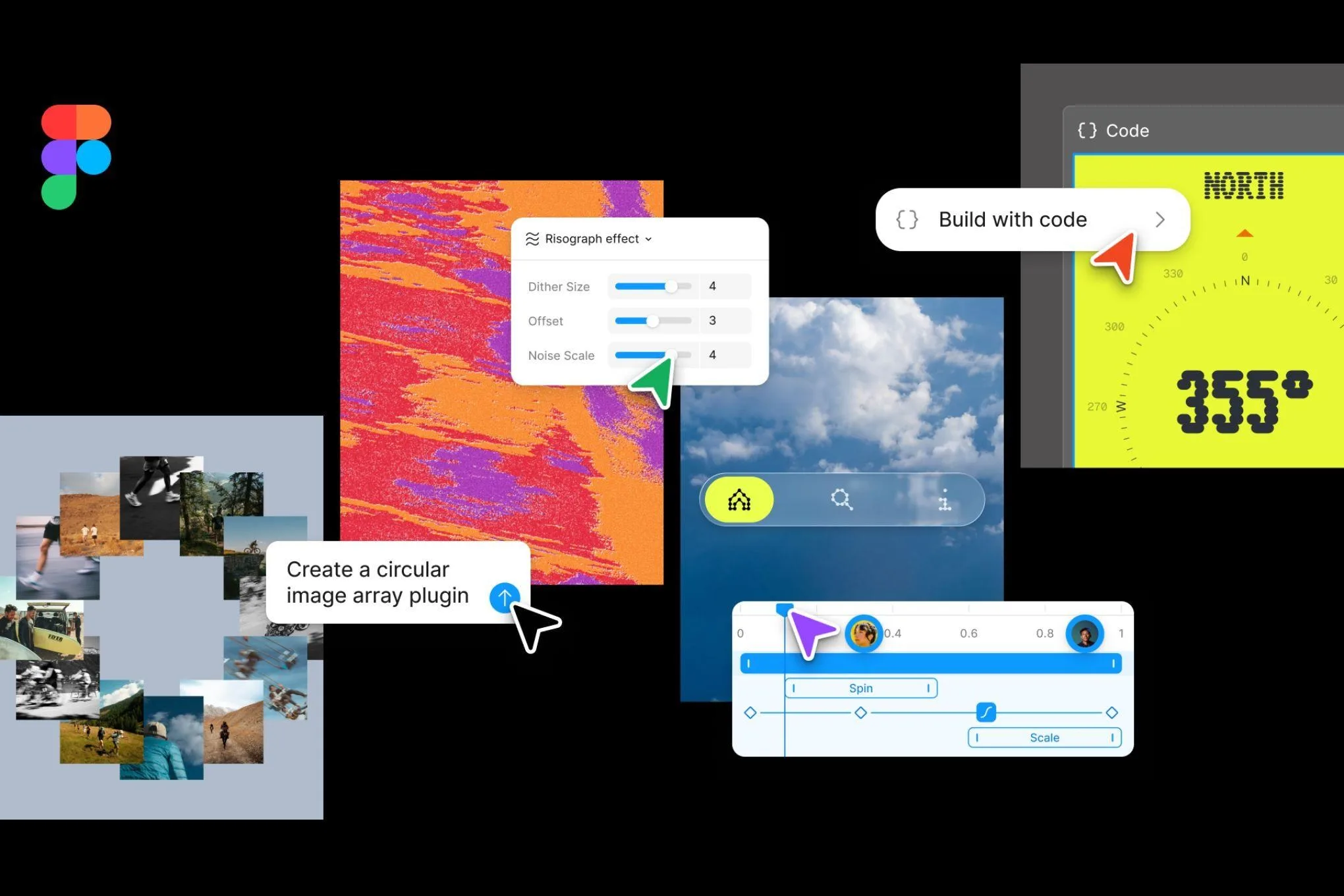
At its annual Config conference, Figma announced coding layers, AI-generated motion graphics, and a reimagined canvas that blurs the line between design and full-stack development.
Sarah Williams · 26 Jun · 5 min
Everyone talks about chips and models. The memory bottleneck is the part of the AI buildout that keeps getting underestimated, and Micron's latest earnings make that case hard to ignore.
Here's what remains unclear: how generalizable this method actually is. DeepMind's announcement focuses on specific cases, not a general solution to Navier-Stokes (which would be worth a million dollars and a Fields Medal). The company is careful with its language, but the headlines aren't. There's a big difference between "AI finds new solutions to century-old problem" and "AI solves century-old problem," and most coverage I've seen blurs that line.
Over at OpenAI, the framing is even more aggressive. They're positioning GPT-5 as a collaborator in mathematical discovery, with Professor Ryu's optimization theory work as the proof point.
I couldn't find details on exactly what question was solved or how the collaboration worked, which is frustrating. The announcement reads more like a press release than a research paper. We don't know yet whether GPT-5 contributed genuine mathematical insight or served as a very sophisticated search tool that helped Ryu explore possibilities faster. Those are different things!
This is the self-driving car hype cycle all over again, by the way. Remember when every AV company was announcing "full autonomy" breakthroughs in 2016? We're still waiting on most of those. The pattern is the same: a real technical advance gets wrapped in language that implies something much bigger.
Look, I'm not saying these results are fake or unimportant. AI-assisted mathematical research is genuinely interesting, and if these tools help mathematicians explore solution spaces faster, that's valuable. The history of mathematics is full of tools that changed what humans could accomplish, from calculators to computer algebra systems to proof assistants.
But here's what bothers me. The framing from both companies suggests AI is "doing mathematics" in the way humans do it, with creativity, intuition, and understanding. That's a much stronger claim than "AI helps mathematicians search for solutions faster," and it's not clear the evidence supports it.
I've seen this pattern in every tech vertical I've covered. The actual capability is real but narrow. The marketing implies something transformative and general. And the press, which doesn't have time to dig into the technical details, amplifies the marketing version.
Some argue these breakthroughs represent a genuine shift in how mathematics gets done, that AI systems are developing something like mathematical intuition. Others counter that we're watching very sophisticated pattern matching, impressive but fundamentally different from human mathematical reasoning. I honestly don't know which camp is right, and I'm skeptical of anyone who claims certainty either way.
What I do know is that DeepMind and OpenAI are locked in a competition that incentivizes bold announcements. Both companies need to justify massive investments. Both need to show progress to retain talent and attract customers. Both have PR teams that understand the news cycle.
This doesn't make them dishonest, but it does mean we should read their announcements with appropriate skepticism. When a company tells you its product just solved a century-old problem, your first question should be: what exactly did they solve, and what does "solve" mean in this context?
I only found two sources on this (the company blogs themselves), and neither provides the kind of technical detail that would let me evaluate the claims independently. That's a limitation I want to be upfront about. The peer-reviewed papers, if they exist, haven't been published yet.
If these methods are as powerful as claimed, we should see more mathematical breakthroughs in the coming months and years. That's the testable prediction. If AI is genuinely accelerating mathematical discovery, the results will accumulate.
If, on the other hand, we get a lot more announcements but not a lot more verified breakthroughs, then we're in hype territory. I've watched enough tech cycles to know that the proof is always in the pudding, not the press release.
The young founders I talk to are incredibly excited about AI-assisted research, and I get it. The possibility that AI could help humans solve problems we've struggled with for decades is genuinely thrilling. But possibility and reality are different things, and right now we're heavy on the former and light on the latter.
I'll be watching this space closely. And if you want to argue about any of this, my email's on the about page. I still prefer it to the comments section, but what do I know.