Snowflake's $6 Billion AWS Deal: What It Means for Industrial Automation's Compute Future
A cloud data company just locked in five years of Amazon chips, and if you're running robots, you should be paying attention.
画像クレジット: Image via source article. Used under fair use for news commentary. · source
Six billion dollars. That's what Snowflake just committed to Amazon Web Services over the next five years, mostly for AI compute and CPU chips. When I saw that number, I'll be honest, I had to read it twice.
Now, I know what you're thinking. Bob, Snowflake is a data analytics company. What's this got to do with robots? Bear with me.
The numbers
According to TechCrunch, Snowflake signed this deal specifically to secure chips for AI usage. That's not general cloud compute. That's AI workloads, the same kind of workloads that are increasingly driving everything from predictive maintenance to real-time path planning in warehouse automation.
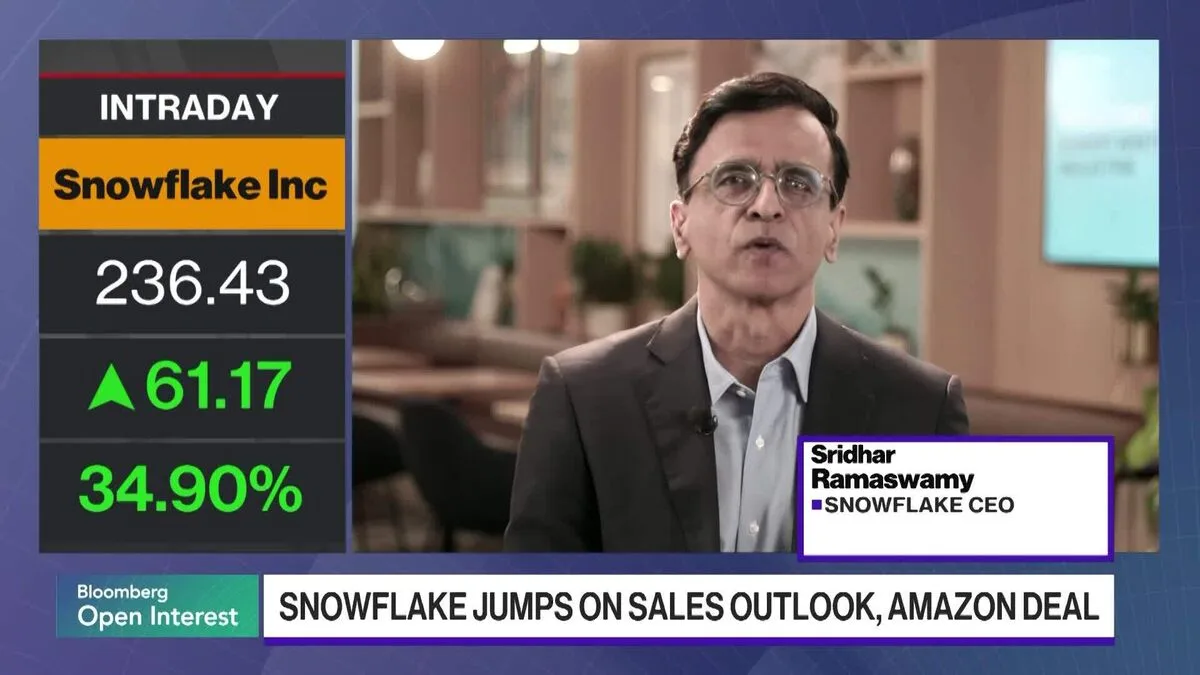
Snowflake's stock jumped on the news, and CEO Sridhar Ramaswamy told Bloomberg that the deal secures their compute needs for the foreseeable future. Five years is a long time in this industry. When I was at Kuka, our planning horizons were maybe 18 months, tops. The idea of locking in compute capacity half a decade out would've seemed, well, a bit mad.
But here's what's changed. AI compute is becoming as critical as floor space. Maybe more critical.
So what
Look, here's the thing. The big cloud providers (Amazon, Microsoft, Google) are in an arms race for AI chips. Nvidia's been the obvious winner, but Amazon's been quietly building out their own silicon. Their Trainium and Inferentia chips aren't getting the press that Nvidia's H100s get, but they're real, they're deployed, and apparently they're good enough that Snowflake just bet six billion on them.
関連記事
More in Industrial
The Apple supplier priced its shares at the maximum and still had to turn away demand, which tells you something about where hardware money is flowing right now.
James Chen · 25 Jun · 5 min
Prime Day deals on Echos and Ring cameras are fine, but let's not confuse consumer gadgets with the serious robotics work happening in warehouses.
Robert "Bob" Macintosh · 25 Jun · 3 min
Amazon's CEO made his first India trip and left behind a $13 billion AI commitment and an aggressive quick-commerce expansion. The numbers are real. The execution is the hard part.
James Chen · 25 Jun · 6 min
A wave of arXiv preprints this week tackles one of manipulation's oldest problems: how do you get a robot to learn from imperfect, incomplete, or just plain missing data?