HK$8.3 billion. That's what Lingyi iTech Guangdong Co. pulled in from its Hong Kong listing, pricing at the absolute ceiling and, according to people familiar with the matter, rejecting more than 100 investor orders in the process. For context, that's roughly $1.1 billion USD for a company most people outside the electronics supply chain have never heard of.
This is not a software company with a compelling narrative deck. Lingyi iTech makes electronic components and precision parts, the kind of hardware that ends up inside devices you use every day without ever thinking about who built the chassis or the structural assemblies inside. It's an Apple supplier, which matters, and it's Chinese-headquartered, which also matters, given the current state of cross-border capital flows.
The IPO itself was, by any measure, a strong one. Pricing at the maximum isn't unusual when sentiment is running hot, but rejecting more than 100 orders suggests demand was genuinely outsized, not just marginally oversubscribed. Bloomberg reported the deal closed with that level of rejection, which is the kind of detail that doesn't make it into a press release but tells you a lot about how the book was built. The company began trading in Hong Kong on Friday, June 27, 2026, as part of what Bloomberg separately described as the city's busiest month for listings this year.
I've seen enough spec sheets to know that hardware suppliers tend to be valued on thin margins and high volume, not on the kind of growth multiples that make fintech investors salivate. The fact that this deal commanded maximum pricing suggests investors are either very confident in Lingyi's position within the Apple supply chain, or they're betting on expansion into adjacent categories, or both. It remains unclear exactly which thesis drove the most demand, and the company hasn't disclosed a detailed breakdown of its investor base.
The Apple connection is the obvious anchor here. Being a named supplier to Apple is not a guarantee of anything, but it does provide a baseline of revenue visibility that most hardware manufacturers don't have. Apple's supply chain relationships tend to be sticky, at least until they aren't, and the company has a well-documented habit of qualifying multiple suppliers for the same components before leaning on one or two. Where Lingyi sits in that hierarchy, and how concentrated its Apple revenue actually is, is something investors will want to watch closely in the first few earnings reports post-listing.
The broader context is worth noting too. Hong Kong's IPO market has had a complicated few years, with deal volume swinging dramatically based on regulatory sentiment, geopolitical friction, and the general mood around Chinese equities in international markets. A $1.1 billion deal pricing at maximum and turning away orders is a meaningful data point for the health of that market, even if it's not a signal you can extrapolate too broadly from a single transaction. This is based on limited public data; the full order book details haven't been disclosed.
What makes this interesting from an industrial hardware perspective is the category Lingyi operates in. Precision electronic components and structural assemblies sit at the intersection of consumer electronics and, increasingly, industrial automation. The same manufacturing capabilities that produce tight-tolerance parts for smartphones translate reasonably well to robotics components, EV battery enclosures, and other hardware categories that are attracting serious capital right now. Whether Lingyi is actively pursuing those adjacencies isn't something the available reporting makes clear, but it's the kind of question that should be on analysts' lists.
Look, a company raising over a billion dollars at maximum price with demand left on the table is objectively a successful IPO. The real test, as it always is in hardware, is what the next two or three years of production volume and margin trajectory look like once the listing enthusiasm fades and the quarterly numbers start coming in. Hardware businesses don't get to coast on narrative. The financials either hold up or they don't.
From my time in hardware engineering, the companies that list well and then underperform almost always have the same story: the IPO captures a moment of peak customer concentration or a favorable commodity cycle, and then the underlying business turns out to be more commoditized than the prospectus implied. I'm not saying that's Lingyi's situation. I'm saying it's the question worth asking before the trading debut excitement settles down.
A few specifics worth keeping track of:
- Funds raised: HK$8.3 billion (approximately $1.06 to $1.1 billion USD depending on the exchange rate at settlement)
- Pricing: At the maximum of the marketed range
- Orders rejected: More than 100, per people familiar with the matter
- Trading debut: Friday, June 27, 2026, Hong Kong Stock Exchange
- Primary business: Electronic components and precision device manufacturing
- Key customer relationship: Apple supply chain
The company didn't disclose exact figures on revenue concentration, customer mix, or the specific components it supplies to Apple, which is pretty standard for a listing prospectus but leaves a meaningful gap in the public picture.
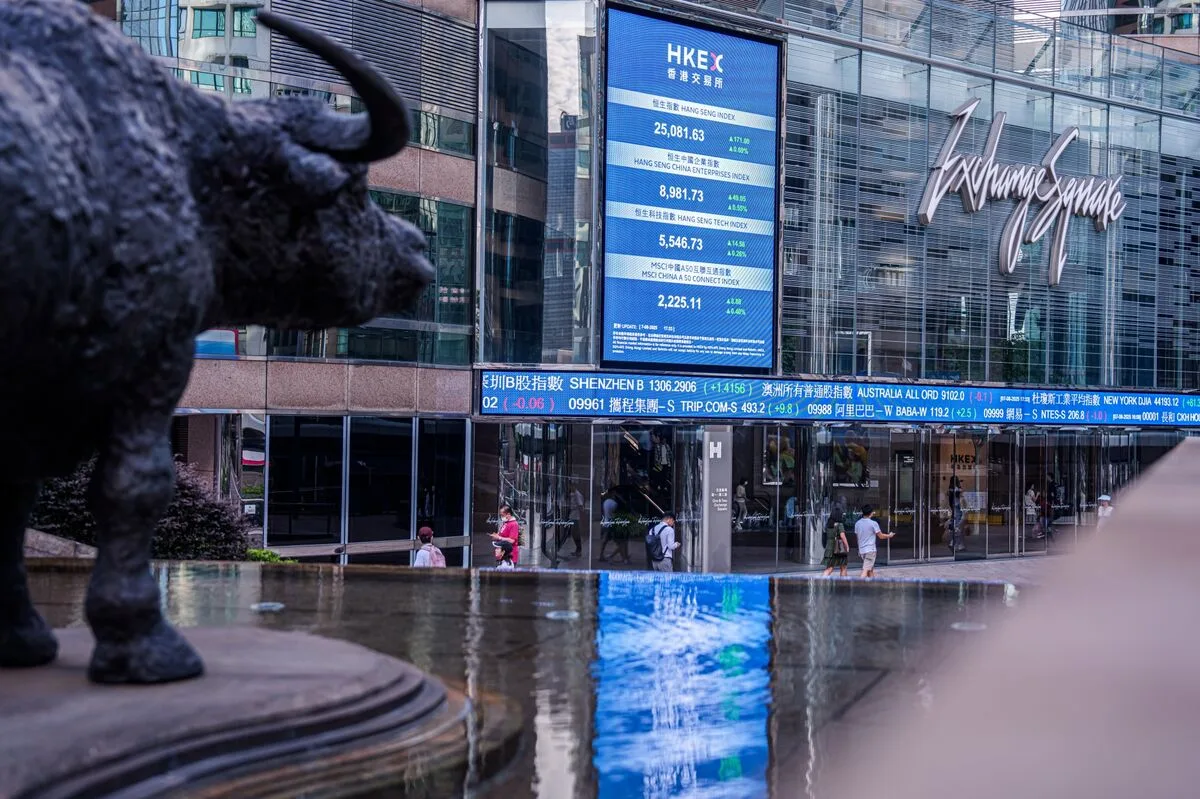
The Hong Kong market angle is also worth a sentence or two. The city has been working hard to reclaim its position as a viable listing venue for Chinese technology and hardware companies, after a period where regulatory uncertainty and geopolitical headwinds pushed some issuers toward other exchanges or delayed listings entirely. A deal of this size pricing at maximum, in what Bloomberg describes as the market's busiest month this year, suggests the window is open, at least for now. Whether it stays open depends on factors well outside any single company's control.
For industrial automation watchers specifically, Lingyi isn't a robotics company in any direct sense. But the capital flowing into precision hardware manufacturers, and the appetite institutional investors are showing for that category, is a signal worth tracking. The supply chain for the next generation of industrial robots runs through companies like this, whether or not they ever get mentioned in the same breath as the humanoid startups that dominate the headlines.
The stock starts trading Friday. We'll see what the market makes of it when the opening orders clear.