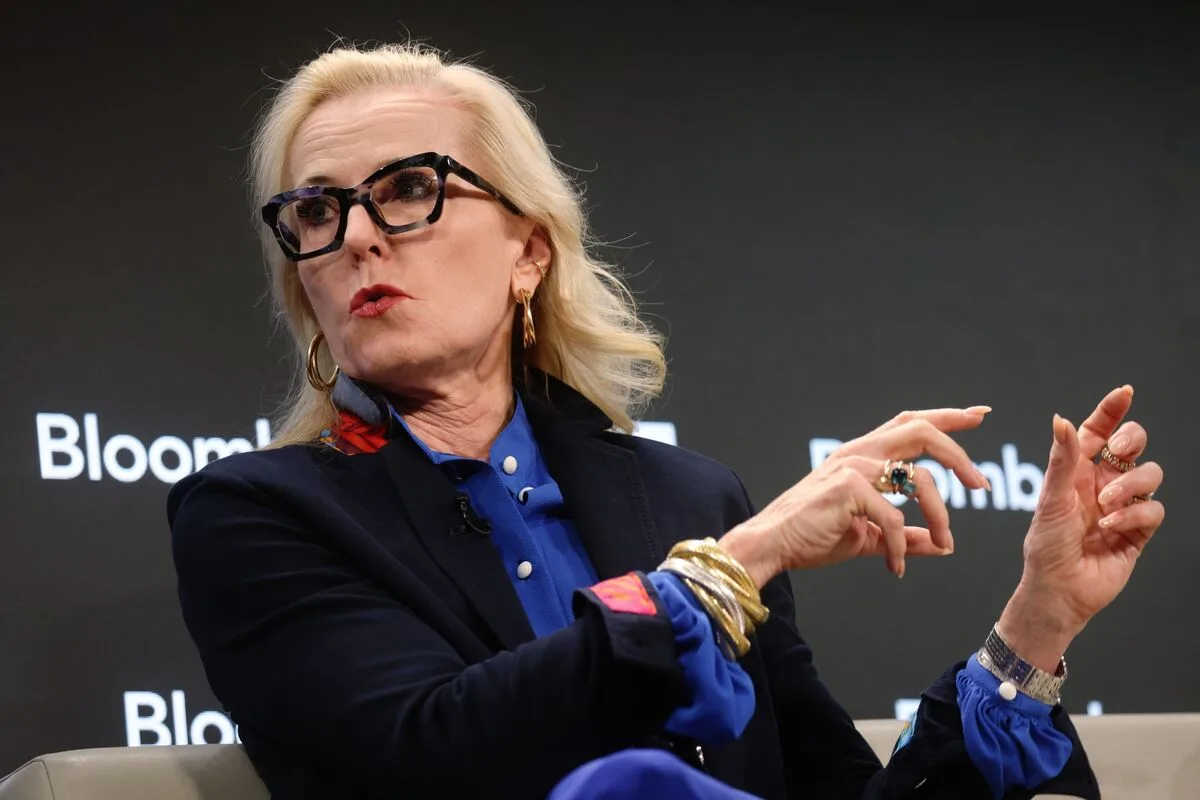
Goldman Sachs is telling its clients that AI investment isn't a bubble. It's a "fundamental, generational" force reshaping markets and the broader economy. That's according to Christina Minnis, who runs the bank's global alternatives origination group, speaking at the Bloomberg Global Credit Forum in New York earlier this week.
The quote itself isn't surprising. Investment banks have been bullish on AI for two years now. What's worth examining is what "generational" actually means when you're trying to build physical systems, not just train language models.
Let's start with what Minnis actually said. In her Bloomberg interview, she described the AI investment boom as filtering through to the economy at large. That's a significant claim. It suggests Goldman sees AI capital moving beyond the hyperscalers and into sectors where returns are messier and timelines are longer. Sectors like, say, industrial automation.
From my time in hardware, I've seen enough investment cycles to know that "generational" can mean two very different things. It can mean a sustained multi-decade shift in how capital gets allocated. Or it can mean a lot of money chasing a theme until the next shiny thing appears. The difference matters enormously if you're trying to build robots.
The numbers tell a more complicated story. Venture funding for robotics companies hit roughly $6.8 billion globally in 2025, according to PitchBook data from earlier this year. That sounds impressive until you realize AI software companies raised over $40 billion in the same period. Hardware is capital-intensive, slow to scale, and unforgiving of mistakes. Software is none of those things. Investors know this.
So when Goldman calls AI a generational force, they're mostly talking about the parts of AI that don't require factories. Language models. Enterprise software. Cloud infrastructure. The stuff that scales without welding.
That's not to say robotics won't benefit. It clearly will. But the pathway is indirect. AI improvements in perception, planning, and manipulation are making robots more capable. Those capabilities eventually attract capital. Eventually.
Here's where I get skeptical. The phrase "filtering through to the economy at large" is doing a lot of work in Minnis's statement. What does that mean in practice? More warehouse automation? Faster deployment of autonomous vehicles? Increased adoption of collaborative robots on factory floors?
We don't know yet. Goldman didn't release specifics, and the Bloomberg interview was short on details about which sectors would see the most impact. That's frustrating if you're trying to figure out where the money actually goes.
Look, I've seen enough spec sheets and investor decks to know that "generational" is a word people use when they want to sound confident without being specific. It's a hedge dressed up as conviction.
What we can say with some confidence is that the physical AI sector (robots, autonomous systems, hardware that actually does things in the world) remains underfunded relative to its potential. The gap between AI capabilities and deployed robotics is still enormous. Most manufacturing facilities in the US run equipment that's 15 to 20 years old. Warehouse automation penetration is still in the single digits globally. There's a lot of room to grow.
But growth requires capital with patience. And patience is not Wall Street's defining characteristic.
The real test of whether this is truly generational will come in the next 18 to 24 months. If we see sustained investment in robotics hardware companies (not just AI software firms with "robotics" in their pitch decks) then Minnis might be right. If the money stays concentrated in foundation models and enterprise SaaS, then "generational" was just marketing.
A few things to watch. First, keep an eye on industrial automation M&A. If large players like Fanuc, ABB, or Rockwell start acquiring AI-native startups at premium valuations, that's a signal that the capital is flowing downstream. Second, watch for new manufacturing capacity. Robots require factories to build them. If companies are breaking ground on new facilities, that's real commitment. Press releases are cheap. Concrete is not.
Third, and this is something I think gets overlooked, watch the hiring data. Are robotics companies able to attract talent away from pure software firms? Compensation data and LinkedIn job postings will tell you more about where the industry is headed than any Goldman Sachs commentary.
The broader context matters here. We're in a period where AI hype is at peak volume. Every company is an AI company now, at least according to their investor relations pages. That makes it harder to separate signal from noise. When an investment bank says AI is generational, they're not wrong exactly. But they're also not being particularly helpful.
What would be helpful is specificity. Which AI applications are generating real returns? Which sectors are seeing actual productivity gains? What's the timeline for physical AI systems to reach cost parity with human labor in specific applications?
Those are the questions that matter for robotics. And those are the questions that a two-minute interview at a credit forum doesn't answer.
So where does this leave us? Goldman's bullishness on AI is noted. It's probably correct in the broad sense that AI will reshape multiple industries over the coming decades. But for those of us focused on hardware, on the actual robots that will do the work, the generational thesis remains, well, it remains to be proven.
The money is there. The technology is improving. The demand exists. What's unclear is whether the capital will have the patience to fund the slow, difficult, unglamorous work of building physical systems at scale.
I've been in this industry long enough to know that hardware always takes longer than the projections say. Always. If Goldman's clients understand that, and are willing to wait, then maybe this really is generational. If they're expecting software-style returns on hardware timelines, we'll be having a very different conversation in three years.
For now, I'm watching the concrete. Not the commentary.