When AI Agents Fail Together, Who Takes the Blame? New Research Offers a Framework
Researchers from Penn State and Duke have developed a method to trace failures in multi-agent AI systems back to specific agents and moments, which is harder than it sounds.
By
·26 May 2026·読了 8 分
Multi-agent AI systems are, to be precise, a mess. Not in the sense that they don't work (sometimes they work remarkably well), but in the sense that when they fail, figuring out why is genuinely difficult. You have multiple LLM-powered agents passing information back and forth, each making decisions, each potentially introducing errors, and when the whole thing collapses, you're left staring at a tangle of interactions with no clear culprit.
This is the problem that researchers from Penn State University and Duke University have been wrestling with, and their proposed solution, "automated failure attribution," represents what I'd call a genuinely new contribution to how we think about debugging these systems. It's not revolutionary (I know, I know, that word is banned anyway), but it addresses a gap that the field has largely ignored.
Let me back up. Multi-agent systems have become something of a darling in the LLM research community over the past two years. The basic idea is intuitive: instead of asking one large language model to handle a complex task end-to-end, you divide the work among multiple specialized agents. One agent might gather information, another might analyze it, a third might synthesize findings, and so on. The appeal is obvious. Specialization, parallelization, the ability to swap out components.
The problem is equally obvious, though it took the field a while to articulate it clearly. When a single-agent system fails, you know who failed. When a multi-agent system fails, you have what the researchers describe as a challenge of identifying "what went wrong and who is to blame." That phrasing is telling. It's not just about finding the bug; it's about attribution in a system where responsibility is distributed.
関連記事
More in AI Models
Chipmakers swung wildly this week, from a Tuesday 'chip-wreck' to a Micron-led surge after hours. What's actually going on with AI's hardware backbone?
Sarah Williams · 26 Jun · 5 min
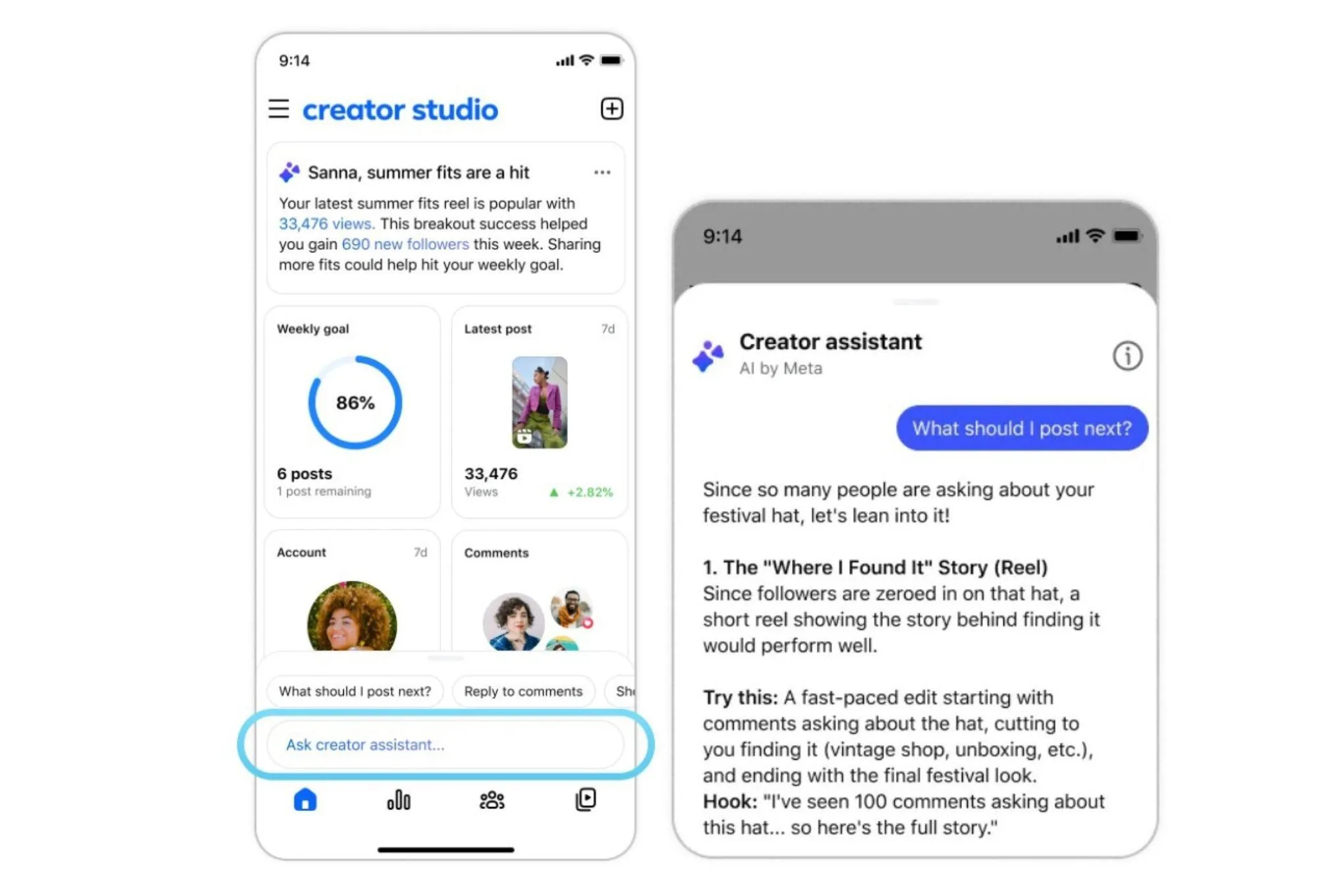
The original Creator Studio was shut down in 2023. Now it's back, rebuilt around an AI assistant that promises to grow your audience and reply to comments in your voice.
Sarah Williams · 26 Jun · 5 min
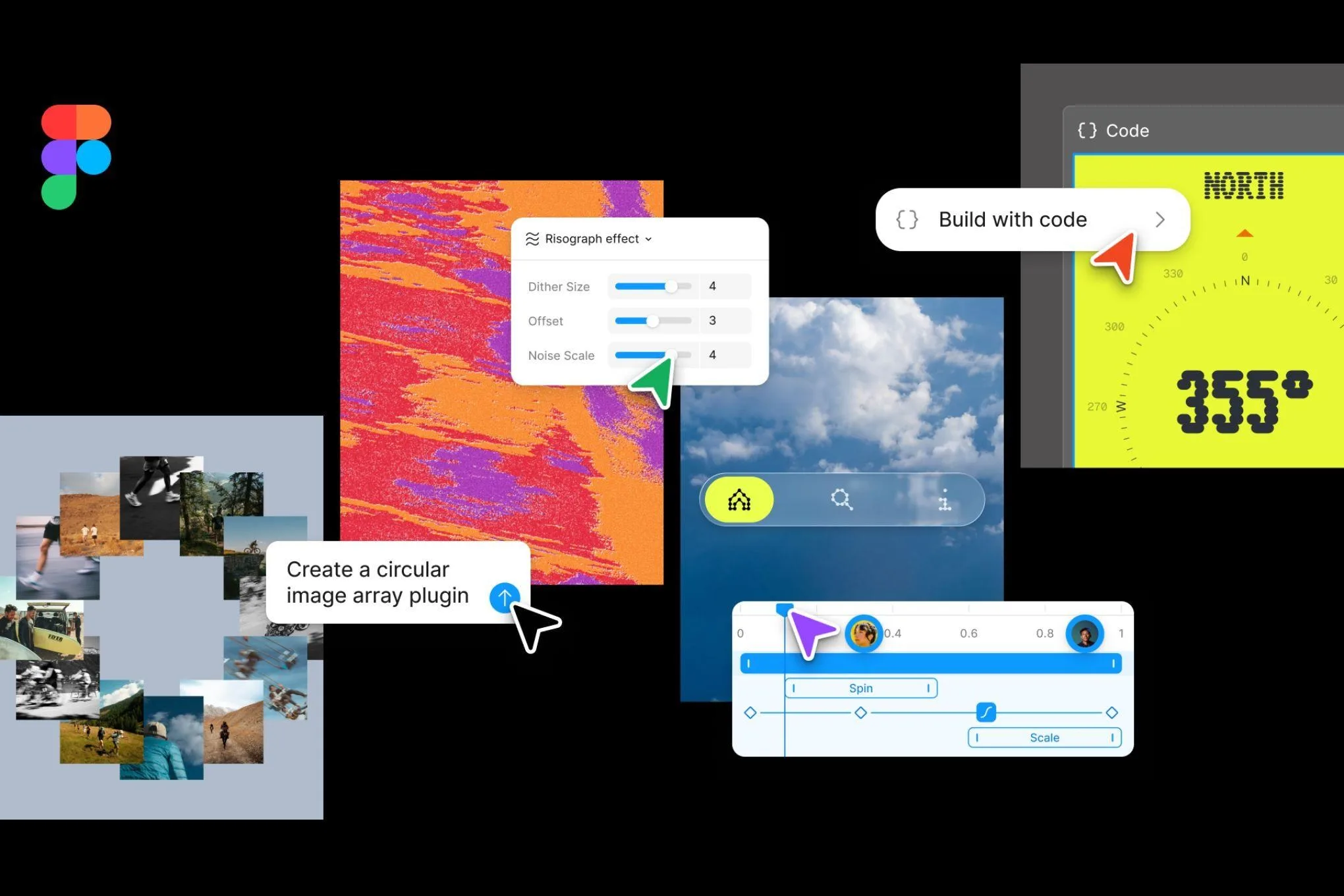
At its annual Config conference, Figma announced coding layers, AI-generated motion graphics, and a reimagined canvas that blurs the line between design and full-stack development.
Sarah Williams · 26 Jun · 5 min
Everyone talks about chips and models. The memory bottleneck is the part of the AI buildout that keeps getting underestimated, and Micron's latest earnings make that case hard to ignore.
It's worth noting that this isn't a purely academic concern. As companies deploy multi-agent architectures in production (and they are, increasingly), the inability to diagnose failures becomes a practical bottleneck. You can't improve what you can't measure, and you certainly can't debug what you can't trace.
The research introduces a framework for automated failure attribution that attempts to transform this problem from, in the researchers' words, "a perplexing mystery into a quantifiable and analyzable problem." The core insight is that you need to track not just whether a system failed, but when in the interaction sequence the failure originated and which agent introduced it.
This is harder than it sounds. Consider a simple three-agent pipeline: Agent A retrieves information, Agent B processes it, Agent C generates a final response. If the final response is wrong, the naive assumption might be that Agent C failed. But what if Agent A retrieved incorrect information that Agent B faithfully processed and Agent C faithfully summarized? The failure originated with A, propagated through B, and manifested in C. A post-hoc analysis of C's output tells you nothing useful.
The framework (I haven't seen the full paper yet, only the descriptions from Synced Review, so I'm working with limited information here) appears to address this by instrumenting the inter-agent communication and applying attribution methods at each handoff point. The details of how they handle ambiguous cases, where multiple agents contribute partial errors that compound, remain unclear from the available sources.
I'm being picky here, but I think the significance of this work extends beyond the immediate use case of debugging failed tasks. There are at least three broader implications worth considering.
First, automated failure attribution is a prerequisite for automated improvement. If you can identify which agent fails and when, you can potentially fine-tune that specific agent or adjust its role in the system. Without attribution, you're stuck with coarse-grained interventions: retrain everything, hope for the best.
Second, this has implications for trust and deployment. In high-stakes domains, you need to be able to explain why a system failed. Saying "the multi-agent system produced an incorrect answer" is not acceptable in medical, legal, or financial contexts. Saying "Agent B misinterpreted the query at step 3, leading to a cascade of errors" is at least a starting point for accountability.
Third, and this is more speculative, failure attribution might inform how we design multi-agent architectures in the first place. If certain agent configurations consistently produce hard-to-attribute failures, that's a signal that the architecture itself is problematic. Conversely, architectures where failures are easily traceable might be preferable even if they're slightly less capable on average.
Actually, the research shows... well, it shows promise, but there's a lot we don't know yet. The available descriptions don't specify the scale of the evaluation. How many agent configurations were tested? How many task types? The sample size matters enormously here, and I haven't been able to find specifics.
There's also the question of what happens when agents interact non-linearly. The simple pipeline I described earlier (A to B to C) is the easy case. What about systems where agents can query each other iteratively, where there are feedback loops, where Agent C might ask Agent A for clarification mid-task? Attribution in those scenarios is a different beast entirely, and it's unclear whether the framework handles them.
Another limitation, and this is somewhat inherent to the approach, is that automated attribution assumes you have ground truth for what counts as a failure. In many real-world deployments, failures are ambiguous. The system produced an answer; was it wrong? Partially wrong? Wrong in a way that matters? The framework can tell you which agent to blame, but only if you can first establish that blame is warranted.
Finally, I'd want to see how this performs across different LLM backends. Multi-agent systems built on GPT-4 might have different failure modes than those built on Claude or open-source models. If the attribution framework is sensitive to these differences, its generalizability becomes questionable.
It's too early to say whether this specific framework will become standard practice, but the problem it addresses is clearly important. The field has spent enormous energy on making multi-agent systems more capable. Less attention has been paid to making them more debuggable, more interpretable, more amenable to systematic improvement.
This work from PSU and Duke is part of a broader shift I've been noticing in the research community. There's growing recognition that capability alone isn't enough. Systems need to fail gracefully, fail informatively, and fail in ways that humans can understand and correct. Automated failure attribution is one piece of that puzzle.
I should note that this research is incremental over prior work on interpretability and debugging in single-agent LLM systems. The novelty is in extending those ideas to the multi-agent setting, which introduces genuine new challenges around distributed responsibility and interaction effects. Whether the framework's solutions to those challenges are robust remains to be seen, but the problem formulation itself is valuable.
If I were reviewing this work (and to be clear, I'm not, I'm just commenting based on secondary sources), I'd push for several things.
First, adversarial evaluation. Can the attribution framework be fooled? If one agent deliberately obscures its contribution to a failure, does the system still correctly attribute blame? This matters for security-conscious deployments where agents might be compromised.
Second, human validation. Does the automated attribution match what human experts would conclude? If the framework says Agent B is responsible but human reviewers consistently blame Agent A, that's a problem. Attribution is only useful if it's accurate.
Third, integration with existing tooling. Researchers and engineers already have debugging workflows for LLM systems. How does this framework fit into those workflows? Is it a standalone tool, a library, an API? Adoption depends on usability.
Fourth, and this is more ambitious, I'd want to see work on automated remediation. Attribution tells you who failed. The next step is automatically fixing the failure, whether through prompt adjustment, agent replacement, or architectural changes. That's a harder problem, but attribution is the necessary precondition.
Multi-agent LLM systems are here to stay. They're being deployed in customer service, research assistance, software development, and dozens of other domains. As these systems become more complex, the problem of understanding their failures becomes more acute.
The PSU and Duke research on automated failure attribution doesn't solve this problem completely. The methodology hasn't been replicated yet, the scale of evaluation is unclear, and there are open questions about generalizability. But it's a serious attempt to address a real gap in the field, and that's worth recognizing.
For practitioners deploying multi-agent systems, the immediate takeaway is straightforward: instrument your inter-agent communication, log everything, and think carefully about how you'll diagnose failures before they happen. The specific framework from this research may or may not fit your use case, but the underlying principle, that attribution should be quantifiable rather than mysterious, is broadly applicable.
For researchers, the work opens up several interesting directions. How do we handle attribution in more complex topologies? How do we validate attribution against human judgment? How do we move from attribution to automated repair? These are hard problems, but they're the right problems to be working on.
The field has spent years asking "can we build multi-agent systems that work?" It's time to start asking "when they don't work, can we figure out why?" This research is a step toward making that question answerable.