The Quiet Revolution in Robot Planning: Why Gradients Might Finally Be Ready for Prime Time
Two new papers suggest we've been solving the wrong problem in model predictive control. I'm cautiously optimistic, but let me explain why the caveats matter.
By
·27 May 2026·読了 7 分
I've been skeptical of gradient-based planning for robots for years. There, I said it. Every time someone pitched me on backpropagating through a learned world model to plan robot actions, I'd nod politely and think about all the ways it tends to fall apart in practice. Gradient-free methods (think evolutionary strategies, random shooting, cross-entropy methods) have dominated real-world robot planning for good reason: they're robust to the messy, non-convex landscapes that learned models create.
But two papers dropped recently that are making me reconsider. Not completely, I should note. I'm not doing a full 180 here. But enough that I think it's worth walking through what's changed and why it matters for anyone building robots that need to plan under uncertainty.
The core problem, if you're not steeped in this stuff: When a robot needs to figure out what to do next, it can either follow a pre-learned policy (fast but inflexible) or plan in real-time using some model of how the world works (flexible but computationally expensive). Model Predictive Control, or MPC, is the planning approach. You simulate forward, see what happens, pick the best action sequence. The question is how you search through possible actions.
Gradient-free methods sample lots of random action sequences and pick the best ones. It's embarrassingly parallel and doesn't care if your model is differentiable. Gradient-based methods, in theory, should be more efficient because they can follow the slope of the objective function directly to good solutions. In practice, they've historically been finicky, getting stuck in local optima or exploding when gradients become unstable.
So what's new?
The first paper, from a team working on what they call Dream-MPC, takes a hybrid approach that I initially thought was just, well, obvious? But the details matter. They generate a small number of candidate trajectories by rolling out a learned policy, then refine each trajectory using gradient ascent through a learned world model. The key innovations are uncertainty regularization (penalizing plans that venture into parts of state space where the model is unreliable) and amortizing optimization across time steps by reusing previously optimized actions.
関連記事
More in AI Models
Chipmakers swung wildly this week, from a Tuesday 'chip-wreck' to a Micron-led surge after hours. What's actually going on with AI's hardware backbone?
Sarah Williams · 26 Jun · 5 min
The original Creator Studio was shut down in 2023. Now it's back, rebuilt around an AI assistant that promises to grow your audience and reply to comments in your voice.
Sarah Williams · 26 Jun · 5 min
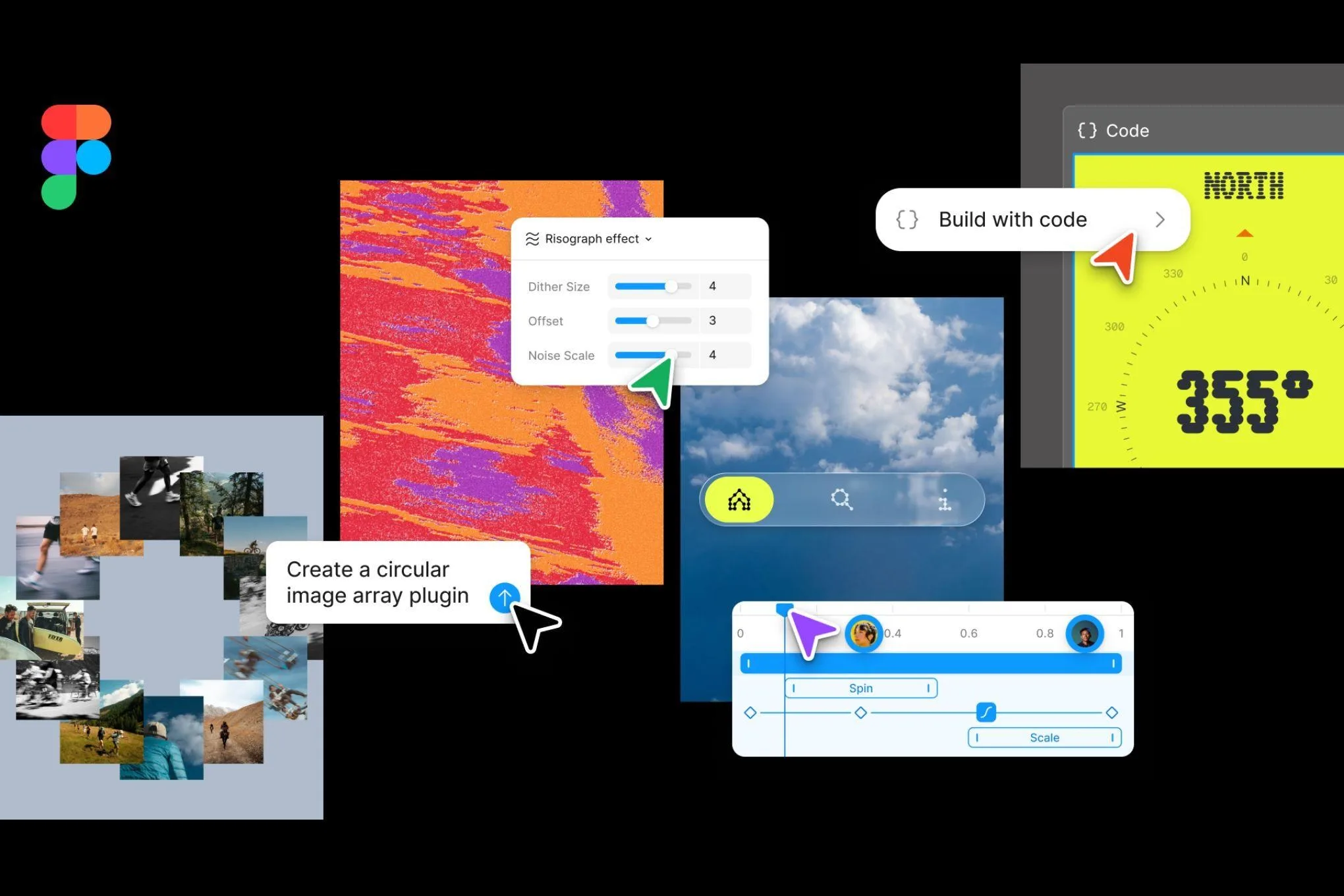
At its annual Config conference, Figma announced coding layers, AI-generated motion graphics, and a reimagined canvas that blurs the line between design and full-stack development.
Sarah Williams · 26 Jun · 5 min
Everyone talks about chips and models. The memory bottleneck is the part of the AI buildout that keeps getting underestimated, and Micron's latest earnings make that case hard to ignore.
I should be honest here: the paper doesn't include verbatim quotes I can share, and I haven't been able to reach the authors yet. So I'm working from the technical content and their reported results, which show improvements on 24 continuous control tasks. That's a decent benchmark spread, though I'd want to see more real hardware before getting too excited.
The thing that caught my attention is the acknowledgment that gradient-based methods have empirically underperformed gradient-free ones. Most papers in this space don't say that part out loud. They just present their gradient-based method and hope you don't ask about the comparison. The Dream-MPC authors seem to have actually grappled with why gradients fail and addressed specific failure modes.
The second paper goes in a different direction entirely, and honestly, it's the more technically ambitious of the two. This one's about differentiable reachability analysis, which is, I think, one of the most important and underappreciated problems in robot learning right now.
Let me back up. When you train a neural network to control a robot, you get something that works most of the time. But "most of the time" isn't good enough when your robot is operating near humans or in safety-critical environments. You want guarantees. Specifically, you want to know: given bounded uncertainty in the initial state and model, what's the set of all possible states the robot could end up in? That's reachability analysis.
The problem is that existing reachability tools are either too slow for real-time planning, too conservative (the guaranteed-safe region is so small it's useless), or non-differentiable (so you can't train your neural network to produce reachability-friendly behaviors). This new framework, built in JAX, claims to solve all three issues simultaneously.
I'm not going to pretend I fully understand the Taylor-model flowpipe construction combined with CROWN-style linear bound propagation. The math is dense. But the practical upshot is that they can compute certified reachable sets fast enough for online planning while maintaining differentiability for training. They tested on systems up to 72 dimensions, which is, tbh, impressive for formal verification methods.
Here's where I start to get excited, and also where my caveats come in.
If you combine these two directions (gradient-based planning that actually works, plus differentiable reachability that's fast enough to use), you get something potentially transformative. Robots that can plan efficiently in real-time while maintaining formal safety guarantees. That's been a holy grail for a while now.
But (you knew there was a but).
First, the Dream-MPC results are on simulated continuous control tasks. The paper mentions they have videos and code available, which is great for reproducibility, but I didn't see extensive hardware validation. Simulation-to-reality transfer remains hard, and gradient-based methods can be particularly sensitive to model mismatch. The uncertainty regularization should help here, but it's an empirical question whether it helps enough.
Second, the reachability paper does include hardware experiments (on manipulation and quadrotor tasks), which is encouraging. But formal verification methods have a history of working beautifully in papers and then hitting unexpected walls when deployed at scale. The 72-dimensional evaluations are a good stress test, but real robotic systems can have even higher effective dimensionality when you account for all the state that matters.
Third, and this is maybe the most important caveat, both papers are solving problems that matter most for a specific slice of robotics: systems where you have a reasonably accurate learned model and bounded uncertainty. That's not all robots. That's not even most robots, depending on how you count. A lot of real-world robotic applications involve contact-rich manipulation, deformable objects, or environments that change in ways your model never anticipated. It remains unclear how well these methods generalize to those messier domains.
So where does this leave us?
I think we're seeing the beginning of a shift in how the field thinks about planning under uncertainty. For years, the conventional wisdom has been that gradient-free methods are more robust and practical, while gradient-based methods are theoretically elegant but brittle. These papers suggest that gap might be closing.
The Dream-MPC approach of starting from a policy prior and refining with gradients feels like the right kind of hybrid. You're not asking gradients to do all the work; you're using them to polish solutions that are already in the right ballpark. That's a more realistic ask.
The differentiable reachability work is, I think, even more significant in the long run. If we can train neural network controllers that are inherently easier to verify, that changes the safety conversation around learned robot behaviors. Right now, the verification people and the learning people often talk past each other. Tools that bridge that gap matter.
You might be wondering whether this means we'll see these methods in production robots anytime soon. I don't know. The timeline for academic methods reaching deployment is notoriously hard to predict. What I can say is that the technical barriers are lower than they were a year ago, and the incentives to solve this problem (robots operating in less controlled environments, closer to humans) are only increasing.
I initially thought this was going to be another case of incremental improvements that don't change the fundamental landscape. After reading both papers more carefully, I'm less sure. The combination of practical gradient-based planning and fast differentiable verification addresses two bottlenecks that have been limiting progress for a while.
One more thing worth noting: both papers are built on JAX, which continues to be the framework of choice for this kind of differentiable-everything research. If you're working in robot learning and you're still on PyTorch or TensorFlow, you might want to think about whether you're missing out on a generation of tools being built elsewhere. That's not a knock on those frameworks; they're great for what they do. But the differentiable simulation and verification ecosystem is developing faster in JAX right now.
Will gradient-based planning become the default for robot MPC? I'm not ready to make that call. The evidence is promising but limited. What I am ready to say is that the arguments against gradient-based methods are weaker than they were, and the arguments for them (efficiency, differentiability for end-to-end training, compatibility with verification) are getting stronger.
I'll be watching what comes out of these research groups over the next year. If the hardware results hold up and the methods generalize beyond their current benchmarks, we might look back at 2025 as when the tide started to turn. Or we might not. That's the thing about research; you don't always know which papers matter until later.
For now, I'm cautiously optimistic. Which, if you know me, is basically effusive praise.