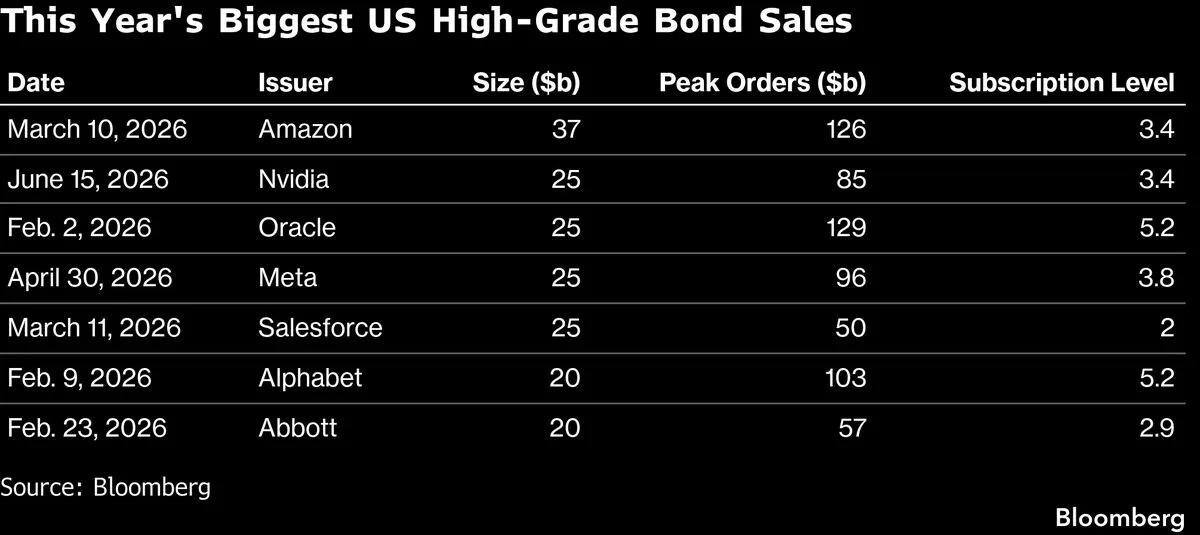
$89 billion. That's how much demand SpaceX attracted for its debut US bond sale, according to people familiar with the matter cited by Bloomberg. The company is looking to raise somewhere between $20 billion and $25 billion across five tranches, which means demand exceeded the lower end of that range by more than four times over.
For context: that's not a rounding error. That's a stampede.
The deal is expected to price on Tuesday, and if it closes at the top of the range, it would be one of the biggest investment-grade bond deals in the US market this year. Coming just weeks after SpaceX made history with what Bloomberg describes as the biggest-ever IPO, the company is now doing something it's never done before in debt markets too.
So why does this matter for those of us covering robotics and embodied AI? Honestly, more than you'd think.
Here's the thing that caught my attention. Debt investors tend to be more conservative than equity investors. They're not buying into a vision of the future; they're buying a promise to get paid back. And yet they lined up in enormous numbers for a company that, by its own projections, is expected to burn significant amounts of cash over the next few years.
That's a real tension. SpaceX is simultaneously one of the most celebrated companies in the world and one that's spending at a rate that would make most CFOs sweat. The bond market is essentially betting that Elon Musk delivers on his promises before the cash runway runs out.
I initially thought this was just a space story, but after reading more closely, it's actually a story about how capital markets are pricing AI and infrastructure ambitions right now. SpaceX isn't just rockets anymore. Bloomberg describes it as a "rocket, satellite and AI conglomerate," which is a phrase that covers an enormous amount of ground. Starlink is a satellite internet business. There are AI components woven through the operation. And the sheer scale of what the company is building, from launch infrastructure to global connectivity, overlaps in real ways with the kind of physical-world AI systems I cover every day.
Embodied AI needs infrastructure. It needs compute, connectivity, and the kind of capital that can sustain long development cycles before products generate meaningful revenue. SpaceX's ability to raise this kind of money, even with a projected cash burn ahead, tells you something about investor appetite for exactly that kind of bet.
You might be wondering why the shortest-dated debt was apparently the biggest draw. Bloomberg's reporting flagged this specifically, noting that SpaceX's shortest-dated paper was the "biggest lure" in the sale. That's a signal worth paying attention to.
When investors reach for shorter maturities, it often means they believe in the near-term story more than the long-term one. They want exposure, but they want to get their money back sooner rather than later. It's a sort of vote of confidence with an asterisk attached.
It remains unclear exactly how SpaceX plans to deploy $20-25 billion, or what the cash burn projections look like in detail. The company didn't disclose those figures publicly, at least not in what's been reported so far. That matters, because the gap between "enormous demand" and "clear path to profitability" is where a lot of these stories eventually get complicated.
Tbh, I find the framing around Musk's "ability to deliver on his promises" the most interesting part of all this. That's Bloomberg's language, and it's doing a lot of work. It's acknowledging that this is, at least in part, a bet on a person, not just a balance sheet. Whether that's reassuring or concerning probably depends on your priors.
For the robotics and embodied AI world specifically, I think there are a few things worth watching.
First, if SpaceX can raise this kind of capital on the back of projected cash burn and a founder-driven narrative, it sets a precedent. Other companies building physical AI infrastructure, whether that's humanoid robot manufacturers, autonomous vehicle platforms, or large-scale compute buildouts, will point to this when they go to markets. Capital is available for ambitious, long-cycle bets right now. That's genuinely useful information.
Second, the Starlink piece of SpaceX's business is increasingly relevant to embodied AI deployment at scale. Reliable, low-latency connectivity in non-urban environments is a real constraint for autonomous systems. If SpaceX uses some of this capital to accelerate Starlink's buildout, that's infrastructure that benefits a lot of adjacent industries.
Third, and I'll be honest that this is more speculative, the AI conglomerate framing is one to watch. SpaceX has been quietly building AI capabilities for years, mostly in service of its own operations. Whether that becomes something more externally facing is an open question, and it's too early to say what role that plays in how the company is pitching itself to bond investors.
What's clear is that the capital markets are not, at this moment, punishing ambition. They're rewarding it, even when the financials are complicated. Whether that holds up over the life of a multi-year bond is a different question entirely.