Nvidia's New Cooling System Cuts Water Inside Data Centers. The Bigger Problem Is Outside.
Nvidia says its Rubin liquid-cooling design has 'eliminated massive amounts of power usage and pretty much all water usage.' That's a real achievement. It's also only part of the story.
画像クレジット: Image via The Verge — AI. Used under fair use for news commentary. · source
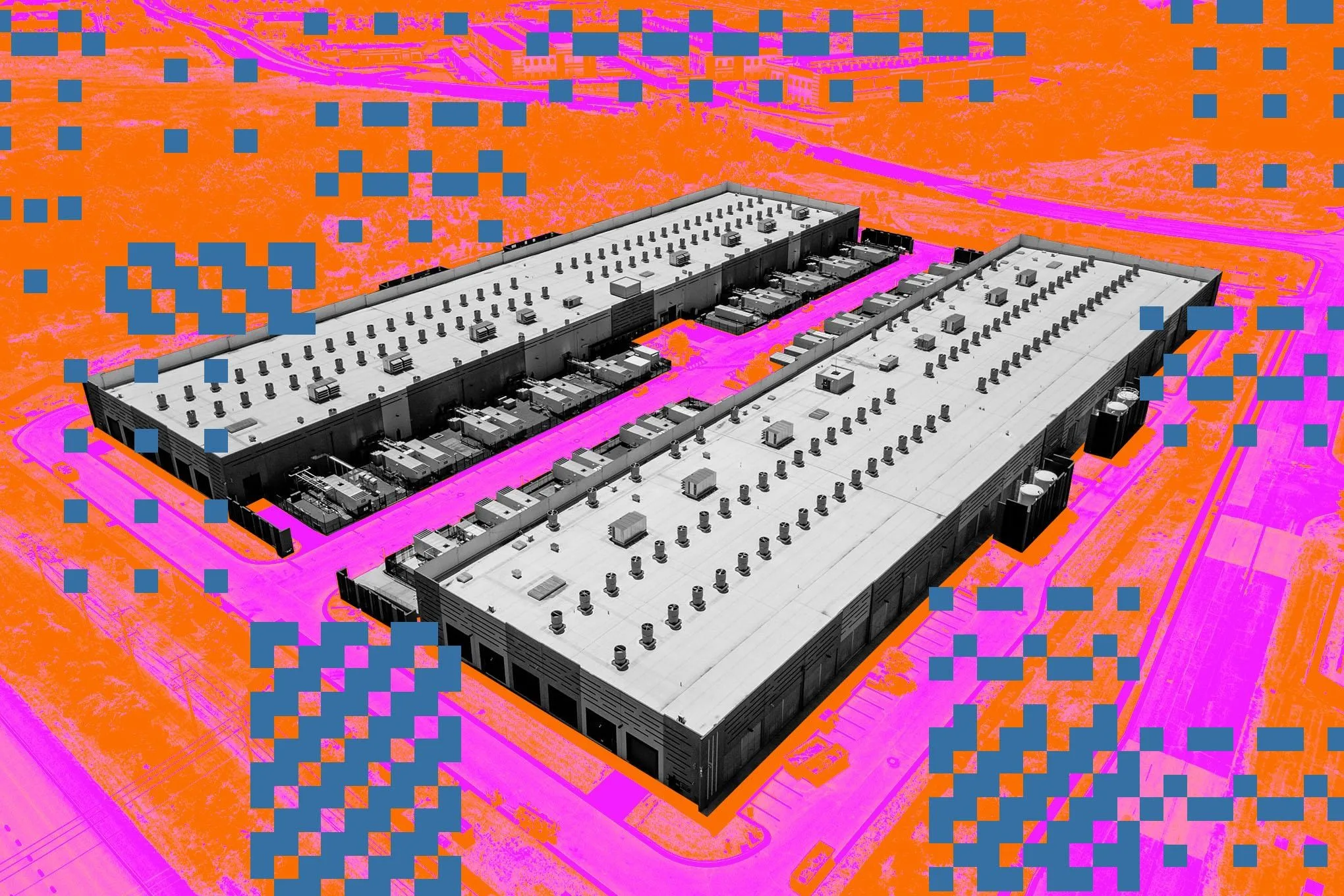
Picture a data center the size of several football fields, humming with GPUs, running hot enough that cooling it is basically its own engineering problem. Now picture the power plant keeping it alive, somewhere upstream, burning fossil fuels and pulling water from a river to cool its own turbines. Nvidia just announced a fix for the first part of that image. The second part? Still very much there.
The announcement came alongside Nvidia's Rubin generation reference design, a fully liquid-cooled data center architecture that the company says has "eliminated massive amounts of power usage and pretty much all water usage." The Verge covered the claim, and honestly, reading it the first time, I felt a flicker of genuine excitement. Liquid cooling is legitimately more efficient than air cooling. Getting water out of the data center itself is a meaningful engineering win.
But then I read the TechCrunch piece, and that flicker got complicated.
What Nvidia actually announced
The core idea is that Rubin-generation data centers run hotter than previous designs, which sounds counterintuitive until you understand what that enables. Running hotter means liquid cooling becomes more effective and air cooling becomes impractical. You're essentially designing the whole system around liquid from the start, rather than bolting it on as a supplement. The result, Nvidia claims, is a dramatic reduction in water consumption inside the facility.
関連記事
More in AI Models
Chipmakers swung wildly this week, from a Tuesday 'chip-wreck' to a Micron-led surge after hours. What's actually going on with AI's hardware backbone?
Sarah Williams · 26 Jun · 5 min
The original Creator Studio was shut down in 2023. Now it's back, rebuilt around an AI assistant that promises to grow your audience and reply to comments in your voice.
Sarah Williams · 26 Jun · 5 min
At its annual Config conference, Figma announced coding layers, AI-generated motion graphics, and a reimagined canvas that blurs the line between design and full-stack development.
Sarah Williams · 26 Jun · 5 min
Everyone talks about chips and models. The memory bottleneck is the part of the AI buildout that keeps getting underestimated, and Micron's latest earnings make that case hard to ignore.
This is genuinely not nothing. Traditional air-cooled data centers use enormous amounts of water in their cooling towers. Some facilities consume millions of gallons per day. If Nvidia's design really does eliminate most of that on-site water use, that matters, especially as AI infrastructure scales up and communities start pushing back hard on data centers being built near their water supplies.
I initially thought the announcement was mostly marketing. After reading more carefully, I think the on-site efficiency claims are probably real. The problem is what's missing from the picture.
The water you don't see
Here's the thing about AI's water footprint that doesn't get talked about enough. Most of it doesn't happen inside the data center. It happens at the power plant.
Fossil fuel power generation, and a lot of nuclear too, uses what's called thermoelectric cooling. Water gets pulled from a source, used to cool the plant, and either evaporated or returned (warmer) to wherever it came from. The more electricity a data center consumes, the more water gets used upstream to generate that electricity. It's indirect, it's invisible from inside the facility, and it's often much larger in volume than whatever the data center itself is using.
TechCrunch makes this point directly, and it's a good one. Nvidia's announcement is specifically about on-site water use. It says nothing about the power generation side of the equation. You can have a perfectly dry data center that's still driving enormous water consumption at a coal plant three states away.
Now, is that Nvidia's problem to solve? You might be wondering that. It's a fair question. Nvidia makes chips and reference designs. It doesn't run power plants. But when the announcement is framed as addressing AI's water problem, that framing is doing a lot of work. It's implying a scope that the actual technology doesn't cover.
What the announcement leaves out
There are at least two other gaps worth flagging.
First, cost. Nvidia's blog post, according to The Verge, doesn't mention what it costs to build a fully liquid-cooled data center compared to a conventional air-cooled one. Liquid cooling infrastructure is expensive. The pipes, the coolant distribution units, the leak detection systems, the specialized racks. All of it adds up. If the efficiency gains are real but the upfront capital cost is significantly higher, that changes the calculus for who can actually build these facilities and how quickly adoption happens.
Second, construction. Building a data center of any kind has its own environmental footprint, water included. Concrete production alone is water-intensive. This doesn't get addressed either, and tbh, it rarely does in these announcements. It's the kind of thing that tends to get waved away as outside scope.
Why this matters for embodied AI specifically
I cover humanoids and embodied AI, so you might wonder why I'm writing about data center cooling. Fair. But here's my honest reasoning: the robots I write about are getting smarter because of the compute behind them. Training the models that let a humanoid recognize a cluttered table and pick up a specific object, or navigate a warehouse without a map, requires massive GPU clusters running for weeks or months. That compute has a physical footprint, and that footprint is growing.
When companies announce that they've solved the environmental impact of AI infrastructure, I think it's worth asking exactly what's been solved and what hasn't. Especially because the scale of compute required for capable embodied AI systems is only going to increase. The more capable we want these robots to be, the more training they need, the more inference they run, the more power and water get consumed somewhere in the chain.
This isn't an argument against building capable AI systems. It's an argument for being precise about what we mean when we say we've addressed the environmental cost.
What Nvidia got right, and where the story goes from here
I want to be clear: liquid cooling as a standard design choice, not an afterthought, is a real step forward. The industry has been slow to move away from air cooling partly because of inertia and partly because of cost. If Nvidia's reference design accelerates that transition, that's genuinely good. Less water evaporating from cooling towers in communities that are already stressed about water supply is a concrete benefit.
But the framing of the announcement, the "pretty much all water usage" language, elides the harder problem. It remains unclear how much of AI's total water footprint is actually on-site versus upstream at power generation. I haven't found a clean number on this, and honestly, I should probably know this better than I do. The research I've seen suggests the upstream figure is substantial, but the exact ratio varies a lot depending on the energy mix of the region.
What would actually address AI's water problem at scale? Renewable energy, mostly. Solar and wind don't use thermoelectric cooling. If data centers run on clean power, the upstream water consumption drops dramatically. Some hyperscalers are making progress on this. Some are not. Nvidia's announcement doesn't touch this dimension at all.
There's also the question of where these data centers get built. Siting a facility in a water-stressed region, even a liquid-cooled one, still puts pressure on local infrastructure and perception. Community opposition to data centers has been growing, and a lot of it is about water. Whether the actual on-site consumption is zero or not, the optics and the real downstream effects on power grids still matter to the people living nearby.
The honest read
Nvidia made a meaningful engineering announcement. The Rubin liquid-cooling design appears to do what it claims for on-site water use. That's worth acknowledging.
But the framing as a solution to AI's water problem is, I think, too broad. It addresses one part of a multi-part problem and doesn't mention the cost tradeoffs involved. That's a pattern in how the industry talks about environmental progress, and it's worth pushing back on, not because the progress isn't real, but because the incomplete framing makes it harder to understand what work is still left to do.
For anyone building or investing in AI infrastructure, the question to ask isn't just "how much water does the data center use?" It's "how much water does the electricity powering the data center use, and where is that electricity coming from?" Until those two questions get answered together, we're only seeing part of the picture.
And given how much compute the next generation of embodied AI is going to need, I'd rather we start asking both questions now.