Neuro-symbolic planning just got a lot more practical, and that matters for industrial robots
Two new papers tackle the unglamorous but critical problem of getting robots to plan complex tasks without choking on computational overhead.
By
·9 June 2026·読了 6 分
Look, I've seen enough spec sheets and demo videos to know that most "breakthrough" planning algorithms die the moment they hit a real factory floor. The gap between a paper's benchmark results and actual deployment is where careers go to stall. So when two papers drop in the same week both claiming to solve long-horizon task planning problems, my default response is skepticism.
But these two deserve a closer look. Not because they promise revolutionary capabilities (they don't), but because they're attacking the right problems in ways that might actually translate to production systems.
The first paper, from researchers publishing on arXiv, addresses something called "exposure bias" in neuro-symbolic planning. The second, also on arXiv, tackles continual learning for multi-robot coordination. Both are fundamentally about efficiency, which is the thing that actually matters when you're trying to get robots to do useful work.
Task planning for robots sounds simple until you try to implement it. A robot needs to figure out a sequence of actions to achieve a goal while respecting constraints: object affordances (you can't pour from an empty cup), spatial relationships (the cup needs to be under the bottle), and sequential dependencies (you have to open the bottle before pouring). The search space explodes combinatorially. A task that takes a human two seconds to reason through can take a planner minutes or hours.
関連記事
More in AI Models
Chipmakers swung wildly this week, from a Tuesday 'chip-wreck' to a Micron-led surge after hours. What's actually going on with AI's hardware backbone?
Sarah Williams · 26 Jun · 5 min
The original Creator Studio was shut down in 2023. Now it's back, rebuilt around an AI assistant that promises to grow your audience and reply to comments in your voice.
Sarah Williams · 26 Jun · 5 min
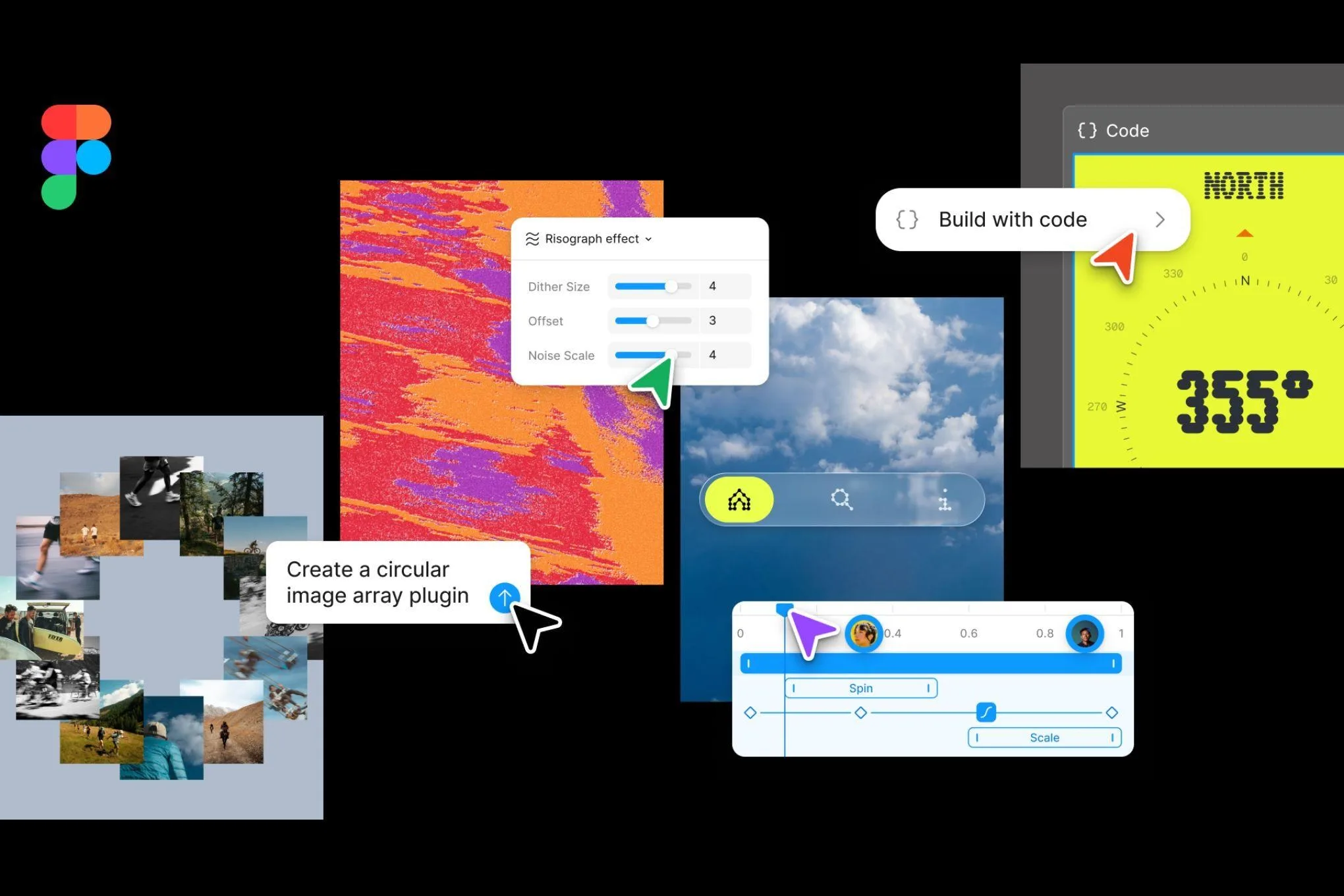
At its annual Config conference, Figma announced coding layers, AI-generated motion graphics, and a reimagined canvas that blurs the line between design and full-stack development.
Sarah Williams · 26 Jun · 5 min
Everyone talks about chips and models. The memory bottleneck is the part of the AI buildout that keeps getting underestimated, and Micron's latest earnings make that case hard to ignore.
Neuro-symbolic approaches try to fix this by using neural networks to prune the search space before the symbolic planner runs. Learn which objects are relevant, ignore the rest, plan faster. Simple in theory.
The problem, and this is where my engineering background makes me nod along, is that these systems are trained on data generated from complete search spaces. But at deployment, they operate in pruned spaces created by their own predictions. The training distribution doesn't match the test distribution. The model makes a mistake, prunes something it shouldn't, and the planner fails in ways it never saw during training.
From my time building hardware, I learned that this kind of train-test mismatch is where systems fall apart. The first paper's contribution is framing this as a bilevel optimization problem: the upper level trains the neural scorer, the lower level actually runs the planner in the pruned space and feeds back what worked.
The clever bit is their "3R strategy" for the lower-level planning: parallel Repair, Restart, and Rollback recovery. When the planner fails because of bad pruning, instead of just recording a failure, the system tries to fix it and uses that feedback for learning. It's adaptive in a way that offline training can't be.
The numbers are solid:
80.04% reduction in failure rate compared to baselines
57.14% reduction in planning time
Validated on a quadruped mobile manipulator in both simulation and real-world tests
That's an ambitious claim on the failure rate reduction. The real test will be whether those numbers hold up across different task distributions, but the methodology is sound.
The second paper tackles a different but related problem: getting multiple quadruped robots to coordinate on tasks that arrive sequentially, without catastrophic forgetting of previously learned skills.
This is a real issue for anyone trying to deploy flexible automation. You train a system to do Task A. Then you need it to learn Task B. Traditional approaches either forget how to do Task A (catastrophic forgetting) or require retraining from scratch on both tasks. Neither is acceptable in production.
The proposed framework, called Conquer, builds a skill library that robots can retrieve from and adapt to new tasks. The key insight is using semantic descriptors to organize skills, so the system can recognize when a new task is similar to something it's seen before.
The architecture handles variable team sizes, which matters because you don't always have the same number of robots available. Their "Self-Allies-Goal" backbone explicitly models each robot's state, teammate context, and task goal separately.
Results from the paper:
95.6% average success rate across continual learning scenarios
Strong forward transfer (new tasks benefit from old skills)
Negligible catastrophic forgetting
Real-world validation on Unitree Go2 quadrupeds
I'd note that 95.6% sounds great until you remember that industrial applications often need 99%+ reliability. But for research demonstrating a new approach, it's a reasonable starting point. The real test is production volume and edge cases.
Neither of these papers is going to ship to a factory next quarter. But they're solving problems that have blocked practical deployment of more flexible automation for years.
The first paper's approach to exposure bias could make learning-based planners actually reliable enough to trust. Right now, most industrial systems use handcrafted planners because learned approaches fail in unpredictable ways. If you can close the train-test gap, you open up a lot more applications.
The second paper's continual learning framework addresses the retraining problem. Every time you add a new product variant or change a process, you shouldn't need to retrain from scratch or risk breaking existing capabilities. A skill library approach, if it works at scale, could make flexible automation actually flexible.
Some limitations worth noting: both papers validate primarily in simulation with limited real-world testing. The quadruped platforms they use are impressive but not representative of, say, a six-axis industrial arm or a mobile manipulator in a warehouse. Generalization remains unclear.
It's also too early to say whether these approaches will compose well. Can you use the first paper's planning improvements inside the second paper's multi-robot framework? The papers don't address this, and integration is often where good ideas go to die.
What I find encouraging about both papers is their focus on practical failure modes rather than benchmark optimization. Exposure bias and catastrophic forgetting are real problems that real systems face. Solving them, even partially, moves the field forward in ways that another 2% improvement on a standard benchmark doesn't.
The neuro-symbolic approach in general seems to be maturing. Five years ago, most papers in this space were proof-of-concept demonstrations. Now we're seeing work on deployment-specific challenges: reliability, efficiency, adaptability. That's a sign the field is getting serious about actually building things.
I'm still skeptical that either approach is ready for production. The failure rate reduction in the first paper is impressive, but I'd want to see it replicated across different task domains. The continual learning results in the second paper are promising, but the task complexity in the experiments is still fairly limited.
Basically, these are good research contributions that point in the right direction. Whether they translate to deployable systems depends on a lot of engineering work that hasn't been done yet. But they're the kind of papers that make me think the field is making real progress, not just publishing for the sake of publishing.
The companies that should be paying attention are the ones trying to build flexible automation systems that can handle product mix changes without constant reprogramming. That's a big market, and these papers are chipping away at the technical barriers that have kept it from growing faster.