画像クレジット: Image via source article. Used under fair use for news commentary. · source
Can you actually leapfrog the most advanced chipmaking technology on the planet without access to the machines that make it possible?
Huawei thinks so. Or at least, that's what they're telling us.
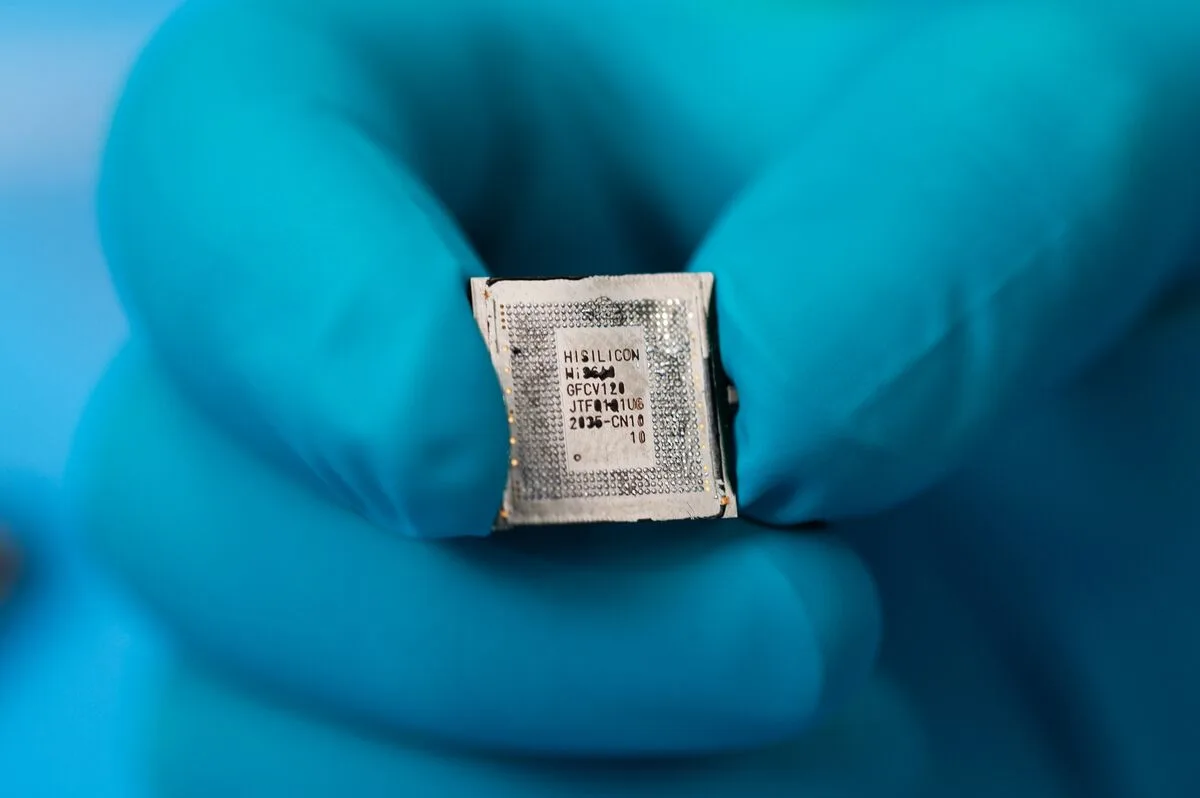
The company announced this week that it's developed a new pathway to shorten the gap with TSMC, the Taiwanese foundry that makes chips for basically everyone who matters (Apple, Nvidia, AMD, the list goes on). The claim is big: Huawei says it can potentially make advanced semiconductors without the cutting-edge equipment that the US and its allies have spent years trying to keep out of Chinese hands.
I initially thought this was just corporate posturing, the kind of vague announcement companies make to keep investors happy. But after digging into what Bloomberg reported, I'm genuinely unsure what to make of it.
Huawei is claiming a "new pathway" without explaining what that pathway is. They're saying they can close the gap with TSMC without saying how big that gap currently is or how much they expect to close it. They're touting a "potential breakthrough" while leaving the word "potential" doing a lot of heavy lifting.
What we do know is the context. Huawei has been cut off from ASML's extreme ultraviolet (EUV) lithography machines since 2019, when the Dutch government blocked exports to China under US pressure. These machines are, tbh, kind of miraculous. They use light with wavelengths of just 13.5 nanometers to etch impossibly tiny patterns onto silicon wafers. Without them, you can't make the most advanced chips. That's been the conventional wisdom, anyway.
関連記事
More in AI Models
Chipmakers swung wildly this week, from a Tuesday 'chip-wreck' to a Micron-led surge after hours. What's actually going on with AI's hardware backbone?
Sarah Williams · 26 Jun · 5 min
The original Creator Studio was shut down in 2023. Now it's back, rebuilt around an AI assistant that promises to grow your audience and reply to comments in your voice.
Sarah Williams · 26 Jun · 5 min
At its annual Config conference, Figma announced coding layers, AI-generated motion graphics, and a reimagined canvas that blurs the line between design and full-stack development.
Sarah Williams · 26 Jun · 5 min
Everyone talks about chips and models. The memory bottleneck is the part of the AI buildout that keeps getting underestimated, and Micron's latest earnings make that case hard to ignore.
Huawei's semiconductor arm, HiSilicon, has been working with SMIC (China's largest foundry) to push the boundaries of what's possible with older deep ultraviolet (DUV) technology. They've made some progress. The Kirin 9000S chip that appeared in Huawei's Mate 60 Pro back in 2023 surprised a lot of analysts who didn't think China could hit 7nm-class production without EUV.
But 7nm is not 3nm. And TSMC is already producing at 3nm, with 2nm coming soon.
I should be clear about something: even if Huawei has made a genuine breakthrough, "shortening the gap" is not the same as "closing the gap."
TSMC's lead isn't just about the current node. It's about yield rates, manufacturing consistency, packaging technology, and the institutional knowledge that comes from being the best at something for decades. You can't replicate that with a clever workaround.
That said, I think it's a mistake to dismiss this entirely. Here's why.
China has thrown enormous resources at semiconductor independence. We're talking hundreds of billions of dollars in government subsidies and investment. They've been recruiting talent aggressively (sometimes through means that have landed people in legal trouble). And they have a massive domestic market that creates demand even for chips that aren't quite as good as what TSMC makes.
The question isn't whether Huawei can match TSMC. It's whether they can get good enough for their needs. And honestly, I'm not sure what "good enough" looks like for them.
You might be wondering why a robotics publication is covering chip manufacturing news. Fair question.
The answer is that advanced chips are the foundation of everything we cover. Humanoid robots need real-time processing for perception and movement. Autonomous systems need edge computing that can handle complex decision-making without cloud latency. The AI models that power modern robotics are hungry for compute in ways that would have seemed absurd five years ago.
If Huawei can produce competitive chips domestically, it changes the calculus for Chinese robotics companies. They wouldn't need to worry about export controls cutting off their access to advanced silicon. They could design systems around domestically produced chips without the performance penalty that currently implies.
This matters for companies like Unitree, which has been making waves with its humanoid robots, or the dozens of Chinese firms working on industrial automation. Right now, the best Chinese robots often rely on foreign chips for their most demanding tasks. That's a vulnerability.
It also matters for the global supply chain. If China develops a parallel semiconductor ecosystem that's good enough for most applications, we could see a bifurcation of the tech world that makes current tensions look quaint.
I want to be honest about the limits of my understanding here.
I don't know what specific technique Huawei is claiming to have developed. The reporting is frustratingly vague on this point. Is it a new lithography approach? A clever use of multi-patterning? Some kind of packaging innovation that lets them combine less advanced chips in ways that approximate more advanced ones? The company isn't saying, and I haven't found anyone who knows.
I also don't know how to evaluate claims like this without independent verification. Huawei has every incentive to oversell its progress. It's under enormous pressure from the Chinese government to deliver on semiconductor independence, and its commercial business depends on projecting technological competence. That doesn't mean they're lying, but it means I'm treating the announcement with skepticism.
The other thing I should acknowledge: chip manufacturing is genuinely not my area of deepest expertise. I cover humanoids and embodied AI. I understand why chips matter for my beat, but the physics and engineering of semiconductor fabrication is, well, it's a lot. If you're an expert and I've gotten something wrong here, I'd genuinely like to know.
The honest answer is that we'll have to wait and see.
If Huawei has made a real breakthrough, we should see evidence in the products they ship. Better performance in Huawei phones and servers. More capable chips in Chinese robotics systems. Maybe even exports to countries that aren't aligned with US export controls.
If this is mostly hype, we'll see that too. Vague announcements that never translate into shipping products. Continued reliance on older technology. A gap with TSMC that stays roughly where it is.
I think the most likely outcome is somewhere in between. China will continue making incremental progress on chips. That progress will be real but slower than they'd like. The gap with TSMC will shrink, but not disappear. And we'll keep having this conversation every few months when a new announcement drops.
What I'm watching for: any concrete details about what this "new pathway" actually involves. Independent analysis of Huawei chips that shows measurable improvement. And, honestly, whether TSMC and its allies seem worried. If the people with the most to lose start acting nervous, that'll tell us something.
For now, I'm filing this under "interesting if true, but I need more evidence." Which, tbh, is where a lot of semiconductor announcements end up living.