Anthropic's Recursive Self-Improvement Plans and the Export Controls That Just Changed the Equation
The Trump administration blocked foreign access to Anthropic's top models last week. That's worth understanding in context of what Anthropic says it's actually building toward.
画像クレジット: Image via Bloomberg — Technology. Used under fair use for news commentary. · source
Think about what it means to build a system that can improve itself. Not in the metaphorical sense that software gets updated, but in the literal sense that a model becomes an active participant in its own development, identifying its own weaknesses, generating its own training data, rewriting its own architecture. That is what recursive self-improvement means, and it is, to be precise, one of the most contested and consequential research directions in the entire field. It is also, apparently, something Anthropic is preparing for right now.
That detail surfaced last week in a Bloomberg conversation with Jack Clark, Anthropic's co-founder and head of public benefit, and Peter McCrory, the company's head of economics. The two were discussing Anthropic's research posture, the kinds of engineers the company is hiring, and how it thinks about safety in the context of increasingly capable systems. Clark's remarks about recursive self-improvement were not framed as distant speculation. They were framed as something the organisation is actively thinking through, staffing for, and preparing to manage.
This lands in an already complicated week for Anthropic. The Trump administration, also last week, forced the company to block foreign access to its two leading models. The precise scope of that restriction, and which specific models are affected, remains somewhat unclear from public reporting, though TechCrunch has been tracking the downstream competitive implications, asking the reasonable question of who actually benefits when one major frontier lab gets its international distribution constrained. The short answer, probably, is its American competitors. The longer answer involves a lot of variables we do not have clean data on yet.
関連記事
More in AI Models
Chipmakers swung wildly this week, from a Tuesday 'chip-wreck' to a Micron-led surge after hours. What's actually going on with AI's hardware backbone?
Sarah Williams · 26 Jun · 5 min
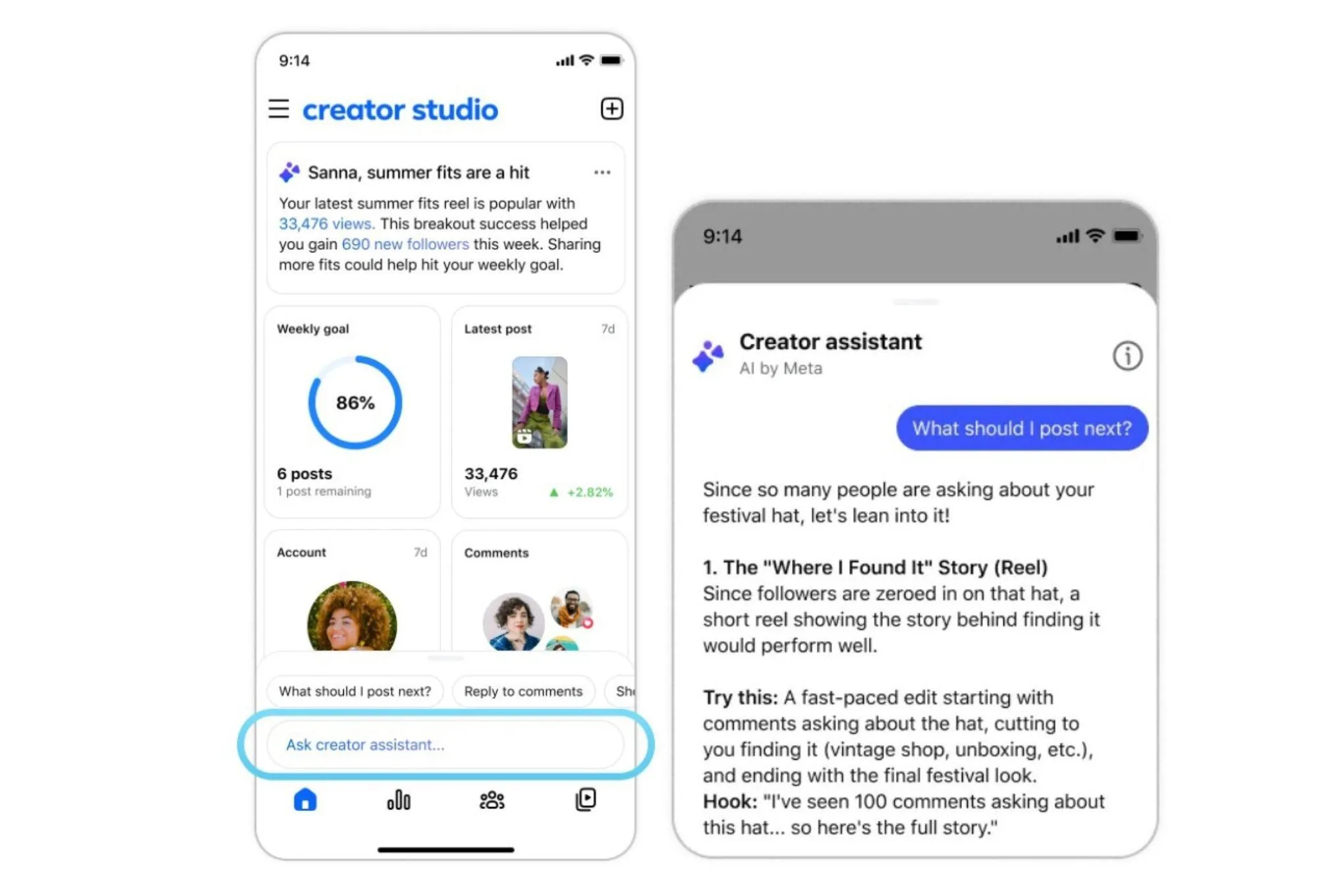
The original Creator Studio was shut down in 2023. Now it's back, rebuilt around an AI assistant that promises to grow your audience and reply to comments in your voice.
Sarah Williams · 26 Jun · 5 min
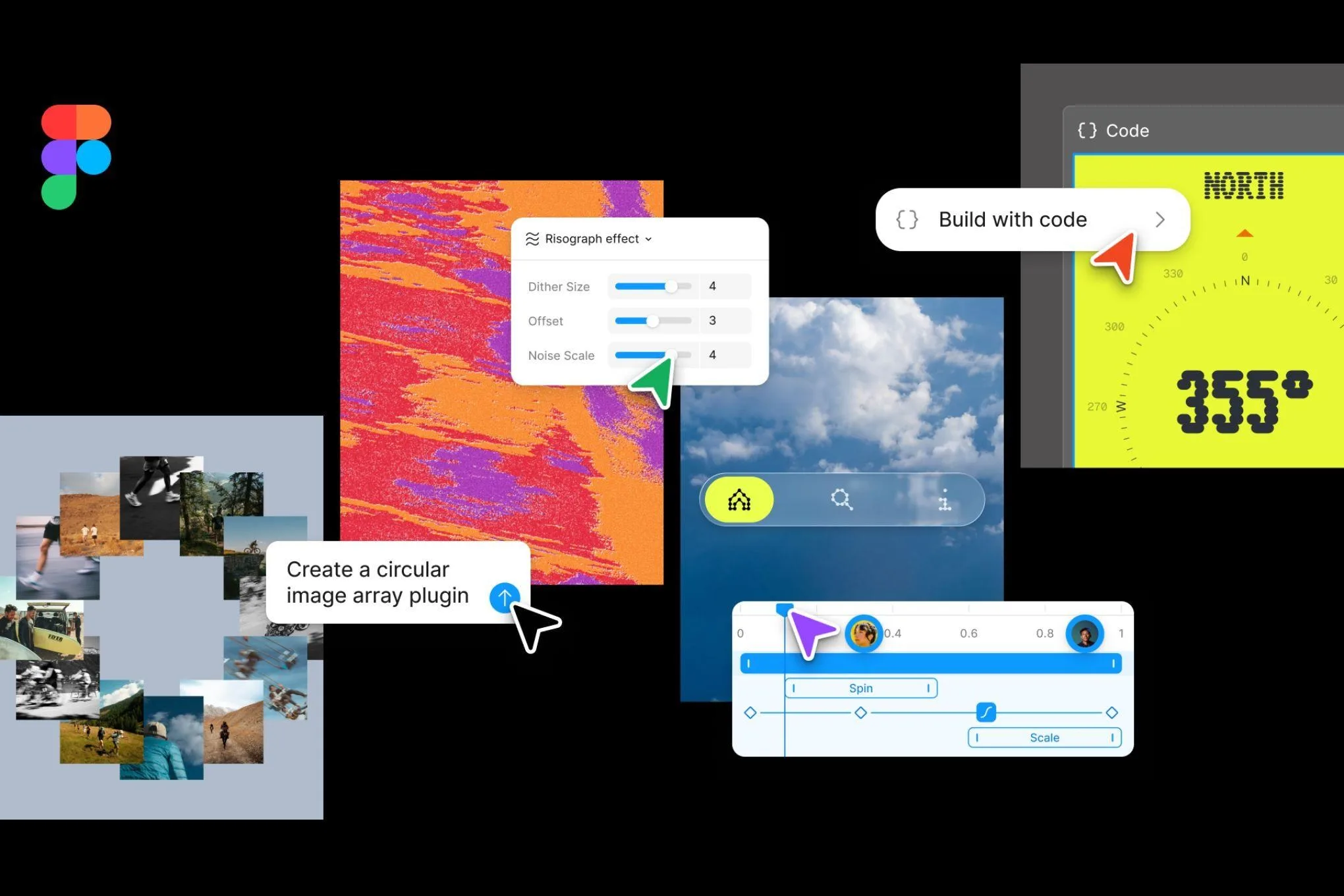
At its annual Config conference, Figma announced coding layers, AI-generated motion graphics, and a reimagined canvas that blurs the line between design and full-stack development.
Sarah Williams · 26 Jun · 5 min
Everyone talks about chips and models. The memory bottleneck is the part of the AI buildout that keeps getting underestimated, and Micron's latest earnings make that case hard to ignore.
But I want to focus on the recursive self-improvement angle, because I think it deserves more careful treatment than it typically gets in coverage of Anthropic.
The concept has a long intellectual history in AI safety literature. I.J. Good's 1965 paper on the "intelligence explosion" is the canonical starting point, and the basic argument has not changed much: if a sufficiently capable system can model its own cognition well enough to improve upon it, and if those improvements themselves increase the system's ability to self-improve, you get a feedback loop with properties that are genuinely difficult to reason about. Eliezer Yudkowsky spent years arguing this was the central risk of advanced AI. More recently, researchers at DeepMind, Redwood Research, and various academic groups have tried to formalise what "recursive self-improvement" would actually look like in practice, with more rigorous definitions and more tractable sub-problems.
What is genuinely new here, or at least newly visible, is that a major frontier lab is apparently treating this not as a far-future thought experiment but as a near-term operational concern. That is a significant shift. A few years ago, even researchers who took these risks seriously tended to treat recursive self-improvement as something that might matter in five to ten years, contingent on a number of capability jumps that had not yet happened. The fact that Anthropic is hiring specifically for this, and framing it as part of current research rather than future planning, suggests the internal timeline has compressed.
It's worth noting that Anthropic occupies an unusual position in the industry because of how explicitly it has built safety concerns into its founding logic. The company was started by former OpenAI researchers, including Dario and Daniela Amodei, who left partly over disagreements about how seriously safety research was being prioritised. Clark himself, according to the Bloomberg conversation, left Bloomberg to enter the early AI industry precisely because he believed the technology was going to be consequential enough to warrant working on directly. The company's stated mission involves something close to a calculated bet: build frontier models, generate the revenue to fund safety research, and try to ensure that if transformative AI arrives, it arrives at an organisation that has been thinking carefully about the risks. Whether that logic holds is a genuine open question, and critics have argued it is a rationalisation for doing the thing you want to do anyway. But it is at least a coherent position, and it is the lens through which the recursive self-improvement preparations should probably be understood.
The economics framing that McCrory brings to this is also interesting and somewhat underreported. Most public discussion of AI risk focuses on existential or near-existential scenarios, but Anthropic apparently has a head of economics specifically tasked with thinking through labor market effects, distributional consequences, and societal disruption. That is not a common organisational structure for a company of Anthropic's size. It suggests the company is trying to model second and third-order effects, not just the direct capabilities of its models. Whether that internal modelling is actually influencing product decisions is harder to assess from the outside, and I would want to see more transparency about what that work produces before drawing strong conclusions.
Now, the export control situation. The Trump administration's decision to force Anthropic to block foreign access to its leading models is, in a narrow sense, a national security measure. The framing is about keeping frontier AI capabilities out of the hands of adversaries, particularly China. That logic is not obviously wrong. If you believe that advanced AI systems confer meaningful strategic advantages, and there are serious people who believe this, then restricting access to the most capable systems is a coherent policy response. The problem is that the policy has significant costs that do not always get equal weight in the framing.
First, there is the competitive distortion problem. Anthropic's models are being restricted, but it is not clear the same restrictions apply with equal force to other American frontier labs, and it is certainly not the case that non-American frontier labs face equivalent constraints. If Anthropic's international customers migrate to alternatives, some of those alternatives will be European or Chinese, which is almost the opposite of the intended effect. TechCrunch raises this point directly, and it is a legitimate concern. The policy may be protecting American strategic interests in a narrow sense while inadvertently accelerating the internationalisation of frontier AI development.
Second, there is the safety research externality. Anthropic's safety research, including whatever work is happening on recursive self-improvement, is at least partially funded by the revenue its models generate. Restricting that revenue has downstream effects on research capacity. I am not saying the export controls are wrong on balance, I genuinely do not know, but the tradeoff between strategic containment and safety research funding is not one I see being discussed with much rigour in the policy conversation.
Third, and I know I am being picky here, but the framing of these restrictions as being about Anthropic's "two leading models" without more specificity about which models and what the exact scope of the restriction is makes it quite difficult to reason carefully about the effects. The company builds multiple systems, including what Bloomberg's source material describes as Mythos, Fable, and Claude, and the capabilities and use cases of those systems vary considerably. A blanket restriction on "leading models" could mean very different things depending on how it is implemented.
What I find most interesting about the conjunction of these two stories, the recursive self-improvement preparations and the export controls, is what they suggest about the current moment in AI development. We are apparently at a point where a major lab is staffing up for recursive self-improvement scenarios while simultaneously having its international distribution constrained by government mandate. Those two facts, sitting next to each other, say something about how quickly the policy environment is trying to catch up with the technical environment, and how imperfect that process is.
The research questions this raises are, actually, multiple and not easy to disentangle. What does it mean to prepare for recursive self-improvement in a safety-conscious way? What specific technical interventions does Anthropic think are relevant? Are those interventions being shared with the broader research community, or are they proprietary? The academic literature on AI safety, including work from researchers like Paul Christiano on iterated amplification and Evan Hubinger on risks from learned optimization, provides some conceptual frameworks, but translating those frameworks into engineering decisions at a frontier lab is a genuinely hard problem and one that the public has very limited visibility into.
On the economics side, the questions are similarly open. Peter McCrory's role at Anthropic is, as far as I can tell from public sources, fairly unusual for a company at this stage. Most frontier AI labs do not have a dedicated head of economics focused on societal impact. What does that function actually produce? Are there internal reports or models that inform product decisions? Does it influence deployment choices? These are questions I would want answered before concluding that Anthropic's economic analysis is anything more than a sophisticated form of public positioning.
It is too early to say how the export control situation resolves, either for Anthropic specifically or for the broader question of how governments regulate frontier AI access. The Trump administration's approach seems to be treating advanced AI models somewhat like advanced semiconductors or military technology, applying export control frameworks that were designed for physical goods to software systems. Whether those frameworks are well-suited to this application is an active debate among policy researchers, and the honest answer is that we do not have good empirical data on whether export controls on AI models actually achieve their intended strategic effects.
What seems clear is that Anthropic is operating in a more constrained and scrutinised environment than it was twelve months ago, and that the constraints are coming from multiple directions simultaneously. Government regulation is tightening. The competitive landscape is intensifying. And internally, the company is apparently wrestling with research problems, recursive self-improvement chief among them, that do not have clean solutions. That combination of pressures is going to be interesting to watch, and I suspect the next year of Anthropic's public statements and research outputs will be more revealing than the last.