Abu Dhabi's MGX Just Raised $50 Billion for AI. I've Seen This Movie Before.
MGX's monster fund is one of the biggest dedicated AI investment vehicles ever assembled. Whether it's smart money or sovereign FOMO is a genuinely open question.
画像クレジット: Image via Bloomberg — Technology. Used under fair use for news commentary. · source
Picture a room full of people with very large checkbooks, nodding seriously at slides about artificial intelligence infrastructure. That's the mental image I keep coming back to when I read about Abu Dhabi's MGX raising close to $50 billion from regional and global investors to accelerate AI spending. Fifty billion dollars. With a B. For a single dedicated AI fund.
I've seen this movie before. Not the exact same film, but the genre. The late nineties broadband buildout. The early 2000s fiber glut that left enough dark cable in the ground to light up a small planet, most of it sitting dormant for years. The first wave of autonomous vehicle investment, where seemingly every sovereign wealth fund and corporate venture arm decided they absolutely had to own a piece of the self-driving future, right before the reckoning came. Big capital chases a narrative, prices get silly, and then reality shows up and everyone acts surprised.
That's not a prediction, by the way. It's a pattern worth keeping in mind.
What MGX actually is, for those who haven't been following Abu Dhabi's tech ambitions.
MGX is an Abu Dhabi state-backed technology investment company, set up in 2024 with a mandate to put Emirati capital to work in AI and advanced technology. It's not a startup. It's not a traditional VC. It's closer to a strategic vehicle for a government that has watched Silicon Valley and Riyadh and Singapore all make aggressive moves in the AI infrastructure race, and has decided it wants a seat at that table, a big one.
According to Bloomberg, the $50 billion came from both regional and global investors, which suggests MGX isn't just recycling Abu Dhabi's own sovereign wealth. They've pulled in outside money, which is a meaningful detail. It means other institutional players, people who presumably did their own due diligence, decided this was worth backing. That's either reassuring or it just means the FOMO is contagious. Probably some of both.
関連記事
More in AI Models
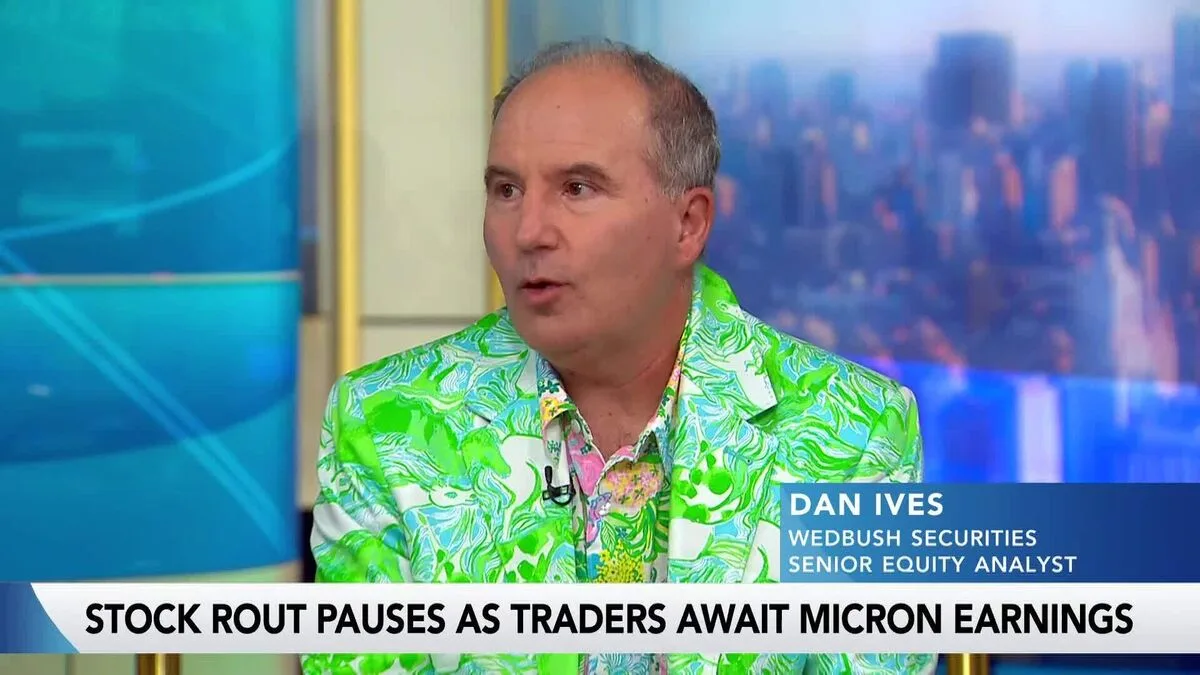
Chipmakers swung wildly this week, from a Tuesday 'chip-wreck' to a Micron-led surge after hours. What's actually going on with AI's hardware backbone?
Sarah Williams · 26 Jun · 5 min
The original Creator Studio was shut down in 2023. Now it's back, rebuilt around an AI assistant that promises to grow your audience and reply to comments in your voice.
Sarah Williams · 26 Jun · 5 min
At its annual Config conference, Figma announced coding layers, AI-generated motion graphics, and a reimagined canvas that blurs the line between design and full-stack development.
Sarah Williams · 26 Jun · 5 min
Everyone talks about chips and models. The memory bottleneck is the part of the AI buildout that keeps getting underestimated, and Micron's latest earnings make that case hard to ignore.
The fund is being described as one of the biggest dedicated AI investment vehicles ever assembled. That framing matters. "Dedicated" is doing a lot of work in that sentence. This isn't a diversified tech fund that happens to have AI exposure. This is a concentrated bet that AI infrastructure, compute, data centers, the whole stack, is going to need enormous capital and that whoever builds it will be in a position of serious leverage for decades.
The bull case is not complicated.
The argument for a fund like this isn't hard to make. AI systems, particularly the large foundation models that underpin everything from chatbots to robotics to drug discovery, are extraordinarily compute-hungry. Training runs that cost tens of millions of dollars are becoming routine. Inference at scale is its own infrastructure challenge. Data centers are being built at a pace that strains power grids and supply chains simultaneously. Someone has to finance all of this, and the returns for whoever controls critical AI infrastructure could be substantial and durable.
Abu Dhabi has advantages here that aren't purely financial. The UAE sits at a geographic and political crossroads. It has energy resources that matter enormously for power-hungry data centers. It has regulatory flexibility that Western governments, increasingly anxious about AI, are struggling to match. And it has a track record, imperfect but real, of using sovereign capital to build long-term strategic positions in sectors it cares about.
So the logic of a $50 billion AI fund, from Abu Dhabi specifically, is not absurd. It's actually sort of coherent.
The skeptical read is also not complicated.
Here's what remains unclear to me, and I'll be honest that I'm working from limited public information since MGX hasn't exactly published a detailed prospectus. We don't know the precise structure of this fund, what the deployment timeline looks like, how returns are expected to flow back to investors, or what governance looks like when a state-backed entity is making calls about where $50 billion goes in a sector that's deeply entangled with national security considerations in multiple countries.
We also don't know how much of this capital will end up in genuinely productive AI infrastructure versus inflated valuations for companies that are, let's be honest, mostly vibes and a pitch deck right now. The AI investment landscape has not been immune to the kind of frothy nonsense that tends to accumulate when very large pools of money are chasing a hot narrative. Some of the young founders raising nine-figure rounds on AI infrastructure plays are brilliant. Some of them are going to be cautionary tales in five years. I genuinely cannot always tell which is which, and I've been doing this a long time.
There's also a geopolitical dimension that's worth flagging even if I'm not the right person to fully unpack it. The US government has been increasingly active in trying to shape where advanced AI chips go and who gets to build AI infrastructure. A $50 billion fund based in Abu Dhabi, drawing on global investors, operating in a space that's become a genuine national security flashpoint, that raises questions about regulatory friction, about export controls, about what happens when a deployment decision bumps up against American or European policy preferences. This raises questions about... well, multiple things that are going to take years to sort out.
Scale as strategy.
One thing I've noticed across multiple tech investment cycles is that scale itself becomes a strategic argument. When you raise $50 billion, you're not just buying assets. You're signaling that you intend to be a defining actor in a space, that you have the capital to outlast competitors, to absorb losses, to wait out cycles. The sovereign wealth funds that made early, patient bets on logistics infrastructure or semiconductor supply chains didn't always pick the right companies, but they ended up with leverage because they were willing to stay in longer than private capital typically can.
MGX appears to be making that kind of bet. Not "we've identified the winning AI companies" but "we're going to be so deeply embedded in AI infrastructure that we'll matter regardless of which specific companies or models win." That's a more defensible thesis than it might look at first glance.
Whether $50 billion is the right number, whether the timing is right, whether Abu Dhabi's particular advantages translate into returns, those are all genuinely open questions. The AI infrastructure buildout could turn out to be exactly as valuable as the bulls think. It could also turn out to be the fiber glut of the 2020s, a massive overinvestment that eventually gets absorbed but leaves a lot of investors holding assets worth a fraction of what they paid.
The part I keep coming back to.
I've been covering technology long enough to know that the moments when everyone agrees something is obviously important are exactly the moments when you need to be most careful about the gap between "this matters" and "this investment will pay off." The internet mattered. Broadband mattered. Mobile mattered. Self-driving cars matter, actually, we're still figuring that one out. AI almost certainly matters.
But mattering and generating returns on a $50 billion fund are not the same thing, and the history of technology investment is littered with people who were right about the technology and wrong about the timing, the structure, or the specific bets.
MGX's fund is a real thing, with real capital, backed by real institutions who presumably know what they're doing. It's one of the largest dedicated AI investment vehicles ever put together, and it signals that sovereign capital from the Gulf is going to be a major force in shaping how AI infrastructure gets built over the next decade. That's worth paying attention to.
Call me old-fashioned, but I'd want to see the deployment strategy before I got too excited. Raising the money is the easy part.