Microsoft Responds to the AI Graduation Boos, and Honestly It's More Interesting Than You'd Expect
College graduates are loudly booing AI hype at commencement speeches. Microsoft's Brad Smith wrote 3,100 words about it. That gap tells you something.
Crédit photo: Image via Bloomberg — Technology. Used under fair use for news commentary. · source
New college graduates are booing AI. Not politely tuning it out, not scrolling through their phones, but actually booing, out loud, at their own graduation ceremonies. That's the story right now, and I think it deserves more than a hot take.
The clips have been spreading for weeks. Former Google CEO Eric Schmidt got an earful at the University of Arizona. A speaker in Florida seemed genuinely caught off guard when students booed at the mention of AI as "the next industrial revolution." These aren't isolated incidents. According to The Verge, the videos speak to a broader societal sentiment: the technology is deeply unpopular even as the companies building it keep insisting everyone should be excited.
Microsoft's response was to publish a blog post. A 3,100-word blog post, written by vice chair and president Brad Smith, addressing the boos directly. I initially thought this was going to be corporate damage control dressed up as empathy. And maybe it still is. But the fact that Microsoft felt compelled to respond at all, at that length, says something worth sitting with.
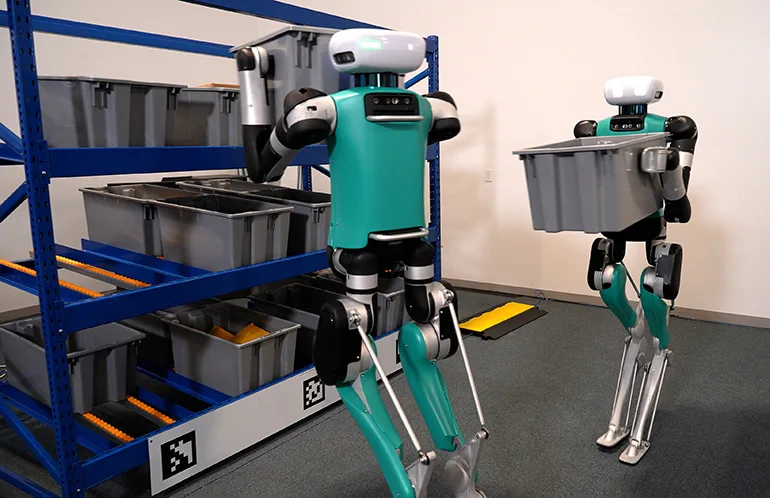
You might be wondering why I'm writing about graduation speeches on a robotics and embodied AI beat. Fair question. Here's my reasoning: the backlash isn't really about AI in the abstract. It's about what AI means for work, for purpose, for the future these graduates are walking into. That's exactly the territory humanoid robots and embodied AI are about to occupy, aggressively, and the cultural friction we're seeing at commencement ceremonies is probably a preview of what's coming when physical robots start showing up on factory floors and in warehouses at scale.
The boos make sense when you think about the timing. These are people who spent four years (and a lot of money) preparing for careers that are now being described, by the very people handing them degrees, as potentially obsolete. The speaker in Florida didn't get booed because students misunderstand AI. They got booed because they understand the pitch perfectly and they're not buying it.
À lire aussi
More in Humanoids
The headlines are celebrating a $2.5B humanoid robotics deal. I'd pump the brakes a little.
Mark Kowalski · 25 Jun · 6 min
Sometimes the sources don't pan out. Here's what happened when I tried to write a humanoids story this week and ended up with Samsung deals instead.
Sarah Williams · 25 Jun · 3 min
Diffusion models are getting good at imagining robot movements, but 'imaginable' and 'physically possible' aren't the same thing. Researchers are starting to close that gap.
Sarah Williams · 25 Jun · 6 min
A batch of fresh robotics research tackles the same underlying problem from different angles: robots that can see but don't really understand where things are.