Google and OpenAI just released benchmarks showing their best models get basic facts wrong 30-40% of the time. That's... not great.
By
·25 May 2026·5 min de lectura
Here's a number that stopped me cold: OpenAI's o1-preview, their most capable reasoning model, gets simple factual questions wrong about 40% of the time.
Forty percent. On questions with clear, verifiable answers.
I've been thinking about this since both Google DeepMind and OpenAI quietly dropped new factuality benchmarks in the past few weeks. The timing feels deliberate, like two companies simultaneously admitting to a problem they've been dancing around. And honestly, the results are worse than I expected.
Let me back up. Google's FACTS Benchmark Suite and OpenAI's SimpleQA are both trying to answer the same question: when you ask an AI a straightforward factual question, how often does it just... make stuff up?
SimpleQA is the simpler of the two (hence the name, I guess). Short questions, single correct answers, stuff you could verify with a quick search. Things like "What year did X happen?" or "Who founded Y company?" The kind of questions where there's no ambiguity, no room for interpretation.
Google's FACTS suite is more comprehensive. It tests across different domains, different question types, different levels of complexity. But the core goal is the same: figure out how much you can actually trust what these models tell you.
The results are, tbh, pretty sobering. Even the best models are hovering somewhere in the 60-70% accuracy range on these benchmarks. That means if you ask a frontier AI model ten simple factual questions, it'll probably get three or four wrong.
Cobertura relacionada
More in AI Models
Chipmakers swung wildly this week, from a Tuesday 'chip-wreck' to a Micron-led surge after hours. What's actually going on with AI's hardware backbone?
Sarah Williams · 26 Jun · 5 min
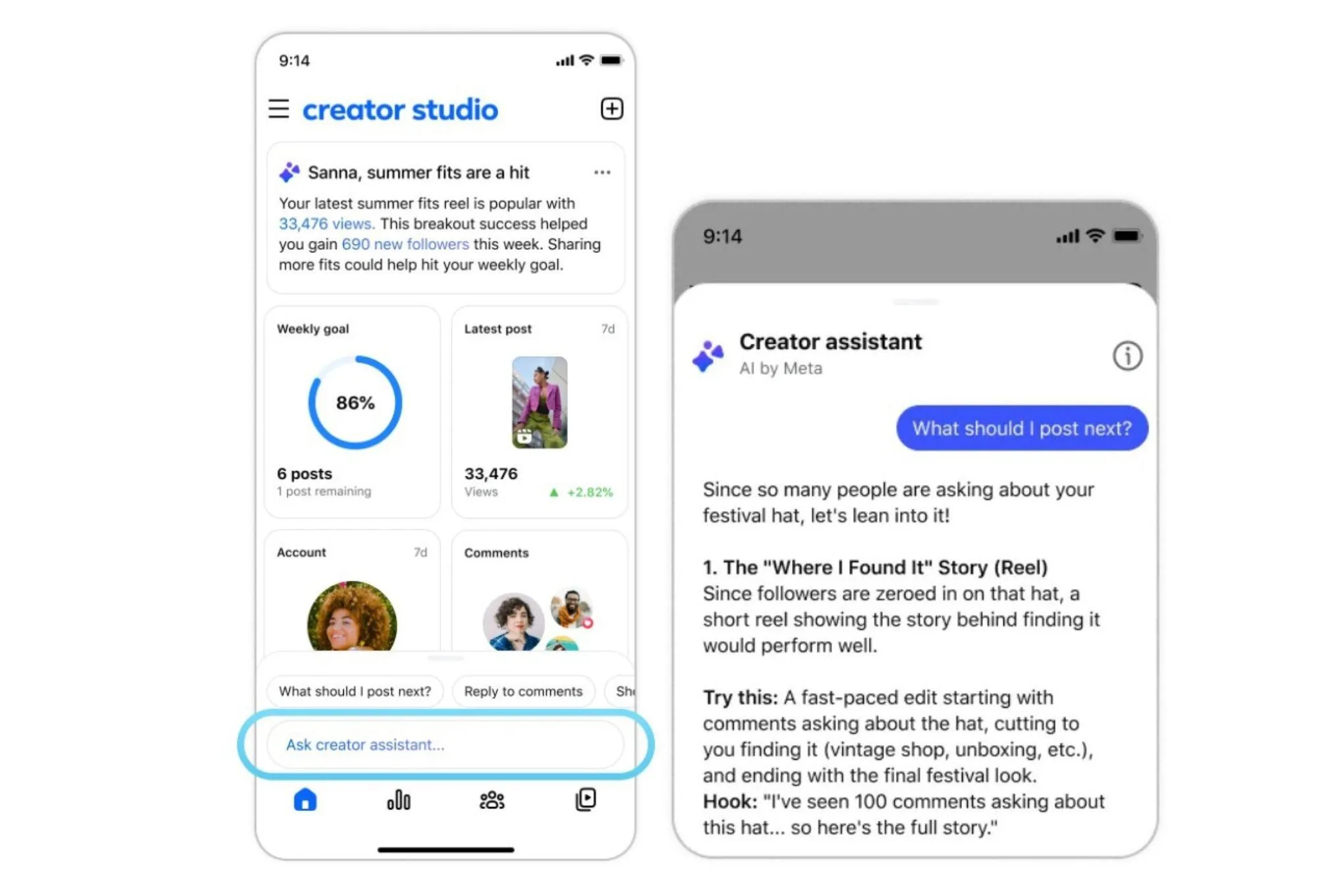
The original Creator Studio was shut down in 2023. Now it's back, rebuilt around an AI assistant that promises to grow your audience and reply to comments in your voice.
Sarah Williams · 26 Jun · 5 min
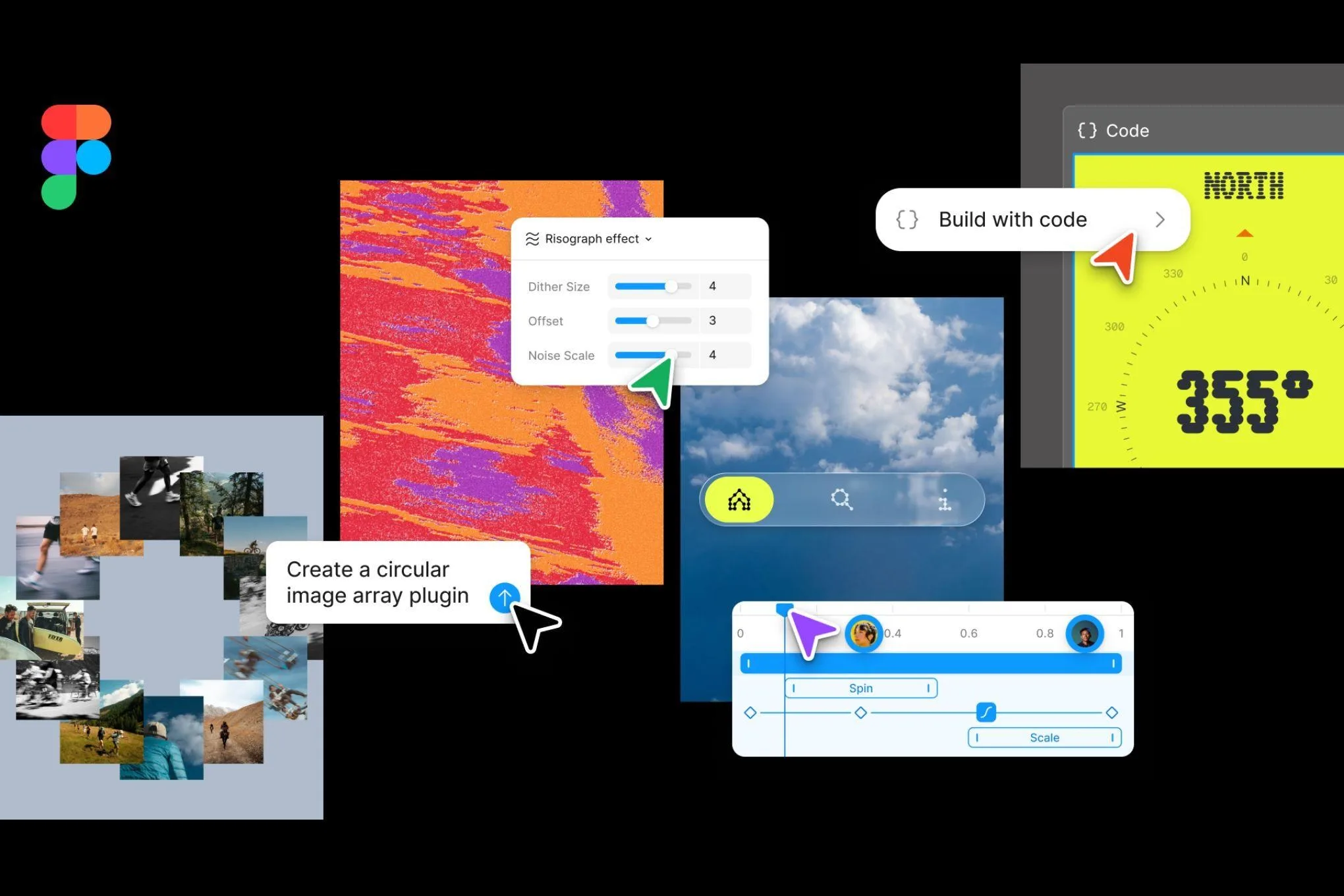
At its annual Config conference, Figma announced coding layers, AI-generated motion graphics, and a reimagined canvas that blurs the line between design and full-stack development.
Sarah Williams · 26 Jun · 5 min
Everyone talks about chips and models. The memory bottleneck is the part of the AI buildout that keeps getting underestimated, and Micron's latest earnings make that case hard to ignore.
You might be wondering why this matters when we've known about hallucinations forever. Fair point. But there's something different about seeing it quantified this precisely. It's one thing to know models sometimes make things up. It's another to see that the error rate on basic facts is comparable to flipping a weighted coin.
Here's what really got me though. It's not just that models get things wrong. It's that they don't know when they're wrong.
OpenAI's benchmark specifically measures what they call calibration, basically whether the model's confidence matches its actual accuracy. A well-calibrated model would say "I'm not sure" when it's likely to be wrong. These models... don't really do that.
They'll state incorrect facts with the same confident tone they use for correct ones. There's no reliable signal that tells you "hey, I'm guessing here." Which means you, the user, have no way to know when to double-check and when to trust.
I initially thought this was a solvable problem. Train the models to be more uncertain, right? But after reading through both papers more carefully, I'm less optimistic. The issue seems baked into how these systems work. They're pattern matchers trained to sound confident because confident-sounding text is what they learned from.
Why are they releasing this now?
This is the part I keep coming back to. Both Google and OpenAI could have sat on these benchmarks. They make their flagship products look, well, unreliable. So why publish?
A cynical read: they're getting ahead of regulation. If you define the problem yourself, you get to control the narrative around solutions. A more charitable read: they genuinely want the research community to work on this.
I think it's probably both? Plus there's a competitive dynamic here. If your competitor releases a factuality benchmark and you don't, it looks like you're hiding something. So everyone releases at once.
What I find interesting is what's not in these benchmarks. Neither one really tests the kind of complex, multi-step factual reasoning that people actually use these models for. They're testing the simplest possible case, and the models are still struggling.
Okay, so what do you actually do with this information?
If you're building products on top of these models, the honest answer is: be very careful about use cases where factual accuracy matters. That sounds obvious, but I see startups every week pitching AI tools for legal research, medical information, financial analysis. Domains where being wrong 30-40% of the time isn't a quirky limitation, it's a liability.
The standard advice is retrieval augmented generation (RAG), where you ground the model's responses in verified documents. That helps. But it's not a complete solution. The model can still misinterpret the documents, or confidently extrapolate beyond what they say.
I should know this better, but I'm genuinely unclear on whether there's a technical path to solving this. The researchers I've talked to seem split. Some think it's a training data problem that more curation could fix. Others think it's fundamental to how transformer architectures work. We probably won't know for a few more years.
The uncomfortable implication
Here's what I keep thinking about. We're deploying these systems at massive scale, into search engines, into productivity tools, into educational software. Millions of people are getting factual information from models that, by their own creators' measurements, are wrong a third of the time.
And the failure mode isn't obvious. The model doesn't crash or throw an error. It just confidently tells you something false, and unless you already know the correct answer, you have no way to tell.
That's... a weird situation to be in. We've never had information sources that were simultaneously this fluent and this unreliable. Books can be wrong, but they're usually consistent. Wikipedia can be wrong, but it shows its sources. These models are neither consistent nor transparent about their uncertainty.
I don't have a clean conclusion here. The benchmarks are useful because they force us to confront the scope of the problem. But they don't tell us what to do about it. For now, I think the answer is just: verify everything important. Which sort of defeats the purpose of having an AI assistant, but here we are.
Maybe the next generation of models will be better calibrated. Maybe we'll figure out training techniques that reduce hallucination. Or maybe we'll just get better at building systems that work around the limitation. It's too early to say which path we're on.
What I do know is that 40% error rates on simple facts isn't good enough for most of the applications people are building. And I'm glad we finally have numbers to point to when making that argument.