Micron's Blowout Quarter Is a Reminder That AI Infrastructure Is Still About Memory
Everyone talks about chips and models. The memory bottleneck is the part of the AI buildout that keeps getting underestimated, and Micron's latest earnings make that case hard to ignore.
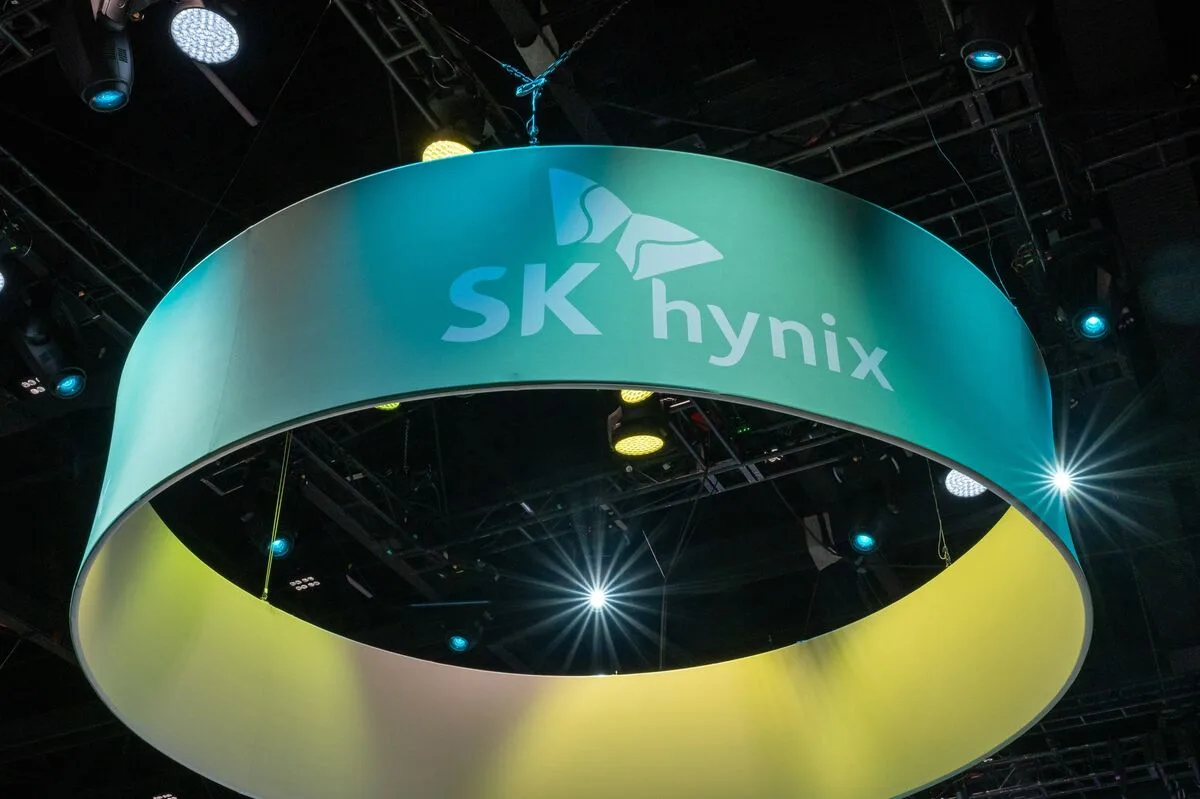
Crédito de imagen: Image via Bloomberg — Technology. Used under fair use for news commentary. · source
Think of it like a library. You can hire the world's fastest research assistant, but if the shelves are disorganised and retrieving any single book takes thirty seconds, the assistant's speed becomes irrelevant. That is, roughly speaking, the memory problem in AI infrastructure. The compute gets the headlines. The memory is what actually throttles the system.
Micron's most recent earnings report, released this week, landed with enough force to prompt serious reassessment of where the AI buildout's real constraints lie. The numbers were strong by any conventional measure, but the more interesting signal is what they say about the broader architecture of AI spending, and which components of that architecture the market has been systematically undervaluing.
Micron Technologies reported quarterly results that Bloomberg characterised as a "gut check moment" for markets, with Dan Ives of Wedbush Securities framing the report as a bellwether for the entire AI capital expenditure cycle. Ives, who serves as global head of tech research and senior equity analyst at Wedbush, argued that Micron's performance would function as a real-time stress test for investor conviction in the AI buildout thesis.
The framing matters. Micron is not an AI company in the way that Nvidia or Anthropic are AI companies. It makes memory chips, specifically DRAM and NAND flash storage, the components that allow systems to hold and rapidly access data during computation. That a memory manufacturer is now being treated as a proxy for AI market health tells you something important about how the infrastructure layer of this buildout is maturing.
Cobertura relacionada
More in AI Models
Chipmakers swung wildly this week, from a Tuesday 'chip-wreck' to a Micron-led surge after hours. What's actually going on with AI's hardware backbone?
Sarah Williams · 26 Jun · 5 min
The original Creator Studio was shut down in 2023. Now it's back, rebuilt around an AI assistant that promises to grow your audience and reply to comments in your voice.
Sarah Williams · 26 Jun · 5 min
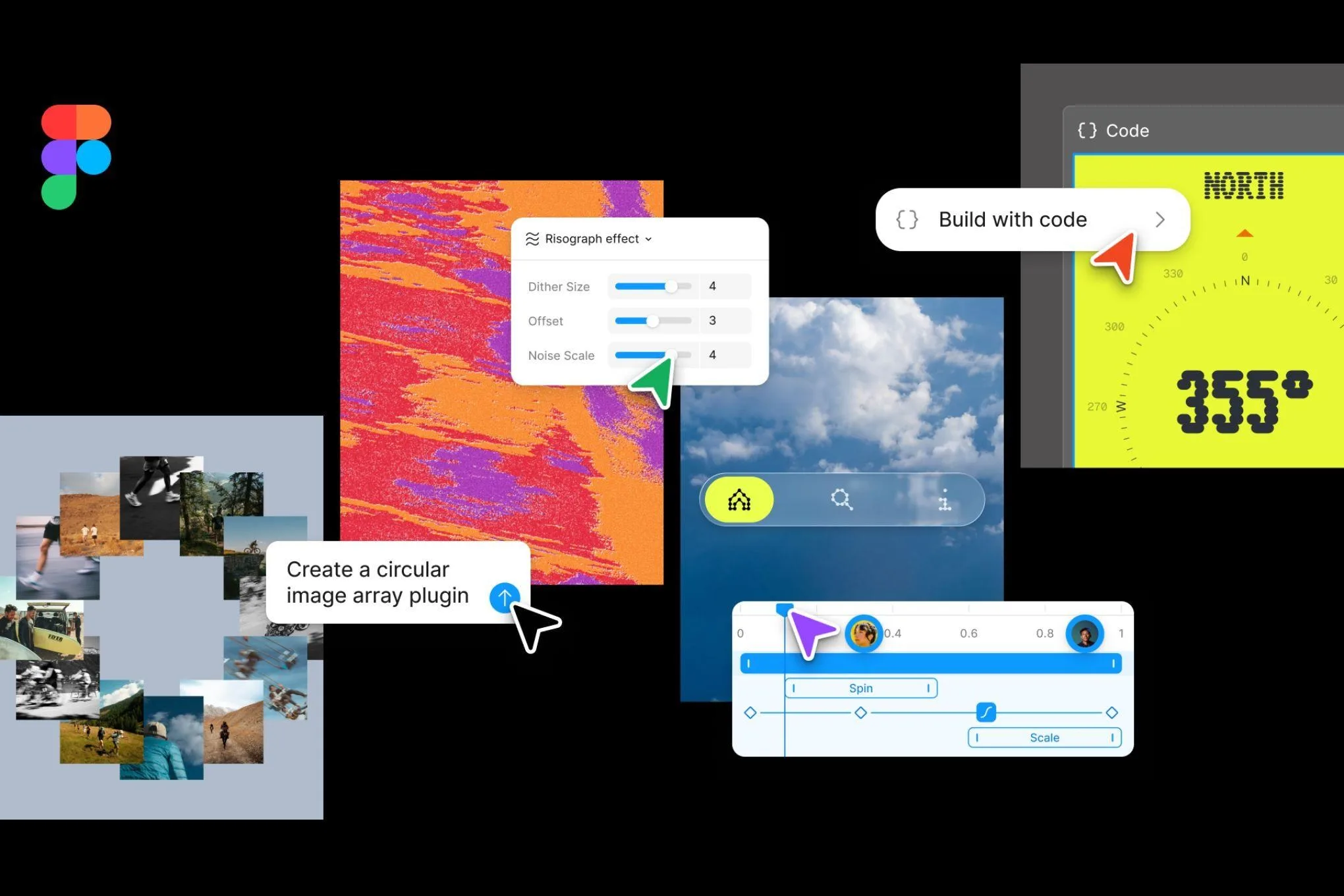
At its annual Config conference, Figma announced coding layers, AI-generated motion graphics, and a reimagined canvas that blurs the line between design and full-stack development.
Sarah Williams · 26 Jun · 5 min
The Korean memory giant wants to list on a US exchange and pull in $29.4 billion to feed AI chip demand. It's a massive bet, and the timing raises some questions.
To be precise, the earnings beat was driven substantially by demand for high-bandwidth memory, or HBM, which is the specialised memory architecture used in high-end AI accelerators. HBM sits directly on the same package as the GPU or TPU die, dramatically reducing the latency and bandwidth constraints that would otherwise limit how fast a model can access the data it needs during inference and training. This is not a peripheral product category. It is central to whether large language models and multimodal systems can actually run at the speeds the industry is promising.
Stephanie Guild, Robinhood's chief investment officer, appeared on "Bloomberg Brief" to break down the Micron results and made a point worth sitting with. Memory chip spending, she argued, is one of those overlooked elements in the AI trade, alongside energy costs and supporting infrastructure, that investors and analysts consistently underweight relative to the headline compute story.
This is not a new observation, but it keeps being true, which suggests something structural rather than a simple information gap. Part of the explanation is narrative. Compute, in the form of GPUs and the model architectures that run on them, is legible to a general audience in a way that memory subsystems are not. Saying "we trained this model on ten thousand H100s" communicates something visceral about scale and ambition. Saying "we provisioned 192 gigabytes of HBM3E per accelerator" does not, even though the second statement is arguably more technically informative about system capability.
There is also a historical pattern here. I know I am being picky here, but the tendency to underestimate memory constraints in computing is almost embarrassingly well-documented. The memory wall, the gap between processor speed and memory bandwidth, was formally described in the 1994 paper by Wulf and McKee, "Hitting the Memory Wall: Implications of the Obvious," and the field has been engineering around it ever since. HBM itself emerged as a direct response to this constraint. That we are still surprised when memory becomes a bottleneck in a new compute paradigm suggests the lesson has not fully landed in the investment and product communities, even if it is well understood in computer architecture research.
Energy costs compound the picture. Guild flagged energy as another underappreciated variable, and this connects to memory in a non-obvious way. HBM is significantly more energy-efficient per bit transferred than conventional DRAM architectures, which means that as AI inference workloads scale, the memory architecture choice has direct implications for data centre power consumption. This is not purely an environmental consideration; at current energy prices and data centre density constraints, it is an operational cost that materially affects the economics of running AI services at scale.
It is worth being honest about what Micron's strong quarter does and does not tell us. The earnings results confirm demand. They do not, by themselves, tell us whether the memory architectures being deployed represent a fundamental advance or an incremental improvement over prior generations.
Actually, the research shows that HBM3E, the current generation being shipped in volume, offers roughly a 50 percent bandwidth improvement over HBM3, which itself was a substantial step up from HBM2E. These are real gains. But the underlying architecture, stacked DRAM dies connected by through-silicon vias, has been in development since at least the early 2010s, with SK Hynix and Micron iterating on successive generations. This is incremental over a well-established trajectory, not a discontinuous innovation.
What may be genuinely new is the rate at which HBM has moved from a niche, high-cost component used in a handful of HPC applications to a volume product that is now central to mainstream AI infrastructure spending. The transition happened faster than most analysts projected, and Micron's results suggest the demand curve has not yet bent. Whether that trajectory continues depends on factors that remain unclear, including how quickly next-generation model architectures evolve, whether inference efficiency improvements reduce per-query memory requirements, and how the competitive dynamics between Micron, SK Hynix, and Samsung play out in HBM supply allocation.
It is too early to say whether Micron's current position in HBM is durable or whether SK Hynix's early lead in HBM3E supply to Nvidia creates a structural advantage that proves difficult to close. This is based on limited publicly available information about supply agreements, and the companies do not disclose the specifics of those arrangements.
Dan Ives framed Micron's quarter as evidence that the AI capital expenditure cycle remains intact, and that public-private partnerships in AI infrastructure will continue to be a meaningful driver of spending. The macro read here is that hyperscalers, Microsoft, Google, Amazon, and Meta, are not pulling back on infrastructure investment, and that the components enabling that investment, including memory, are seeing sustained demand.
This has implications beyond Micron specifically. If memory is a genuine constraint on AI system performance, and the evidence suggests it is, then the companies building AI infrastructure have strong incentives to vertically integrate or secure long-term supply agreements for HBM. We have already seen some movement in this direction, with reports of hyperscalers working directly with memory manufacturers on custom specifications. The degree to which this reshapes the memory industry's structure over the next three to five years is an open question.
It is also worth noting that the energy and infrastructure costs Guild highlighted are not evenly distributed. Data centres in regions with access to cheap, reliable power have a structural cost advantage in running memory-intensive AI workloads. This is one reason the geography of AI infrastructure investment does not simply follow population centres or existing tech clusters. The intersection of power availability, cooling infrastructure, and memory supply chain logistics is shaping where large-scale AI compute actually gets built, and that has downstream effects on labour markets, regulatory environments, and energy grids that are only beginning to be studied seriously.
Micron's earnings are a useful data point, but a single strong quarter is not a research finding. What would actually move my understanding is longitudinal data on HBM utilisation rates across different AI workload types, specifically a breakdown of how much of the memory bandwidth headroom in current HBM3E configurations is actually being used during typical inference runs versus sitting idle due to software or interconnect bottlenecks.
There is a plausible scenario in which the industry is over-provisioning memory relative to current software's ability to exploit it, and a separate scenario in which memory remains the binding constraint for the foreseeable future. These scenarios have very different implications for Micron's medium-term demand outlook, and I have not seen rigorous published analysis that cleanly distinguishes between them. The sample size of publicly available utilisation studies is small, and most of what exists comes from the chip vendors themselves, which is not an ideal source of unbiased methodology.
I would also want to see more work on the energy efficiency trajectory of future memory architectures. Processing-in-memory and near-memory compute approaches, which have been explored in academic literature for years, including work from groups at Carnegie Mellon and ETH Zurich, remain largely pre-commercial. If any of those approaches reaches volume production within the next hardware generation cycle, the memory bottleneck story changes substantially. Until then, HBM in its current form is the relevant technology, and Micron's results suggest the market for it is larger and more durable than the conventional wisdom assumed a year ago.
The library analogy holds. The AI buildout is not just about hiring faster research assistants. It is about making sure the shelves are close enough, and organised well enough, that the speed of retrieval stops being the thing that slows everything down. Micron, this quarter, made a reasonable case that we are still a long way from solving that problem.