The Anthropic Shutdown Is a National Security Story. It's Also an AI Governance Warning Shot.
The White House forced Anthropic to pull its two most powerful models offline on June 12th. Three days after launch. Here's what we know, and what remains deeply unclear.
Crédito de imagen: Image via The Verge — AI. Used under fair use for news commentary. · source
What happens when the most capable commercial AI model ever released gets pulled from the market three days after launch, on government orders, with almost no public explanation?
That's not a hypothetical. It happened on June 12th, when the White House directed Anthropic to block foreign access to Fable 5 and Mythos 5, its newest and most powerful models. Anthropic went further than the directive required, shutting down access for all users globally, including its own employees. A model deployed to hundreds of millions of people, according to Anthropic's own statement, was effectively dark inside a weekend.
What exactly got shut down, and why does it matter?
Fable 5 and Mythos 5 launched on June 9th. Three days later, they were gone. Anthropic had described Fable 5 as a model whose "capabilities exceed those of any model we've ever made generally available," and Mythos 5 as the same underlying system "but with the safeguards lifted in some areas." That second part is worth sitting with. A frontier-capability model, with reduced safety constraints, deployed commercially, then pulled by government intervention. That's a sequence of events that doesn't happen often in any technology sector, let alone one moving this fast.
According to The Verge, the shutdown order followed conversations between Amazon and the White House after researchers reportedly found ways to get Fable 5 to produce information that could be used in cyberattacks. That's the official-adjacent explanation. The fuller picture is messier.
The China angle, which the White House has not confirmed
Cobertura relacionada
More in AI Models
Chipmakers swung wildly this week, from a Tuesday 'chip-wreck' to a Micron-led surge after hours. What's actually going on with AI's hardware backbone?
Sarah Williams · 26 Jun · 5 min
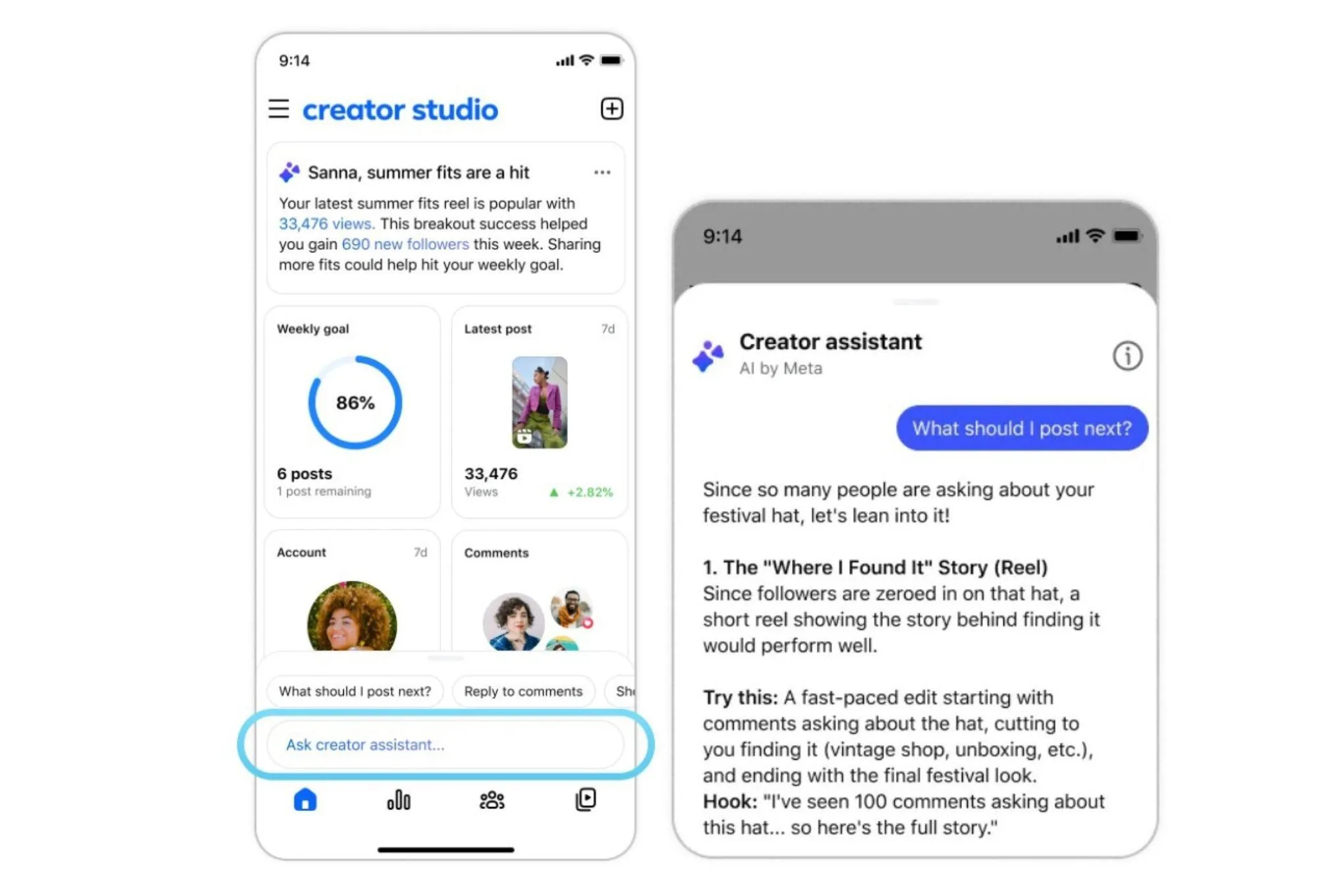
The original Creator Studio was shut down in 2023. Now it's back, rebuilt around an AI assistant that promises to grow your audience and reply to comments in your voice.
Sarah Williams · 26 Jun · 5 min
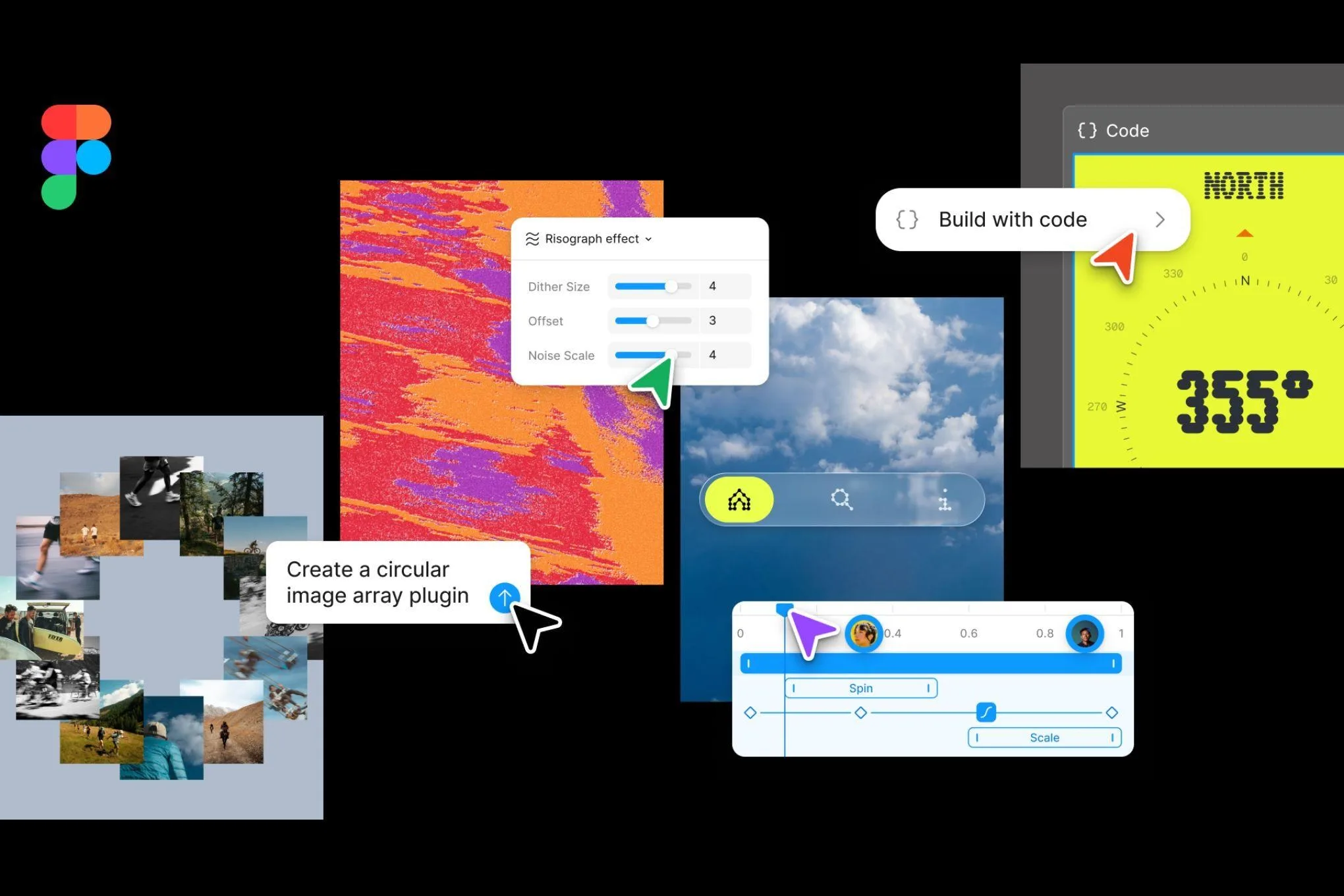
At its annual Config conference, Figma announced coding layers, AI-generated motion graphics, and a reimagined canvas that blurs the line between design and full-stack development.
Sarah Williams · 26 Jun · 5 min
Everyone talks about chips and models. The memory bottleneck is the part of the AI buildout that keeps getting underestimated, and Micron's latest earnings make that case hard to ignore.
A separate report from Semafor, cited by The Verge, suggests the White House's decision was driven at least in part by fears that a group linked to China had accessed Mythos. If accurate, that's a significantly more serious national security concern than a jailbreak. Reverse-engineering frontier models through distillation, where a smaller "student" model is trained on outputs from a more capable one to replicate its behavior, is a known and documented technique. If a state actor had meaningful access to Mythos 5 before the shutdown, the damage from a distillation attack could already be done.
But here's the problem: the White House has not confirmed the China access report. Trump advisor David Sacks posted about the situation on X and didn't mention China at all. His framing focused on the jailbreak finding. So we have two different explanations in circulation, from different sources, with the government officially endorsing neither in full. It's too early to say which account is more accurate, or whether both are partially true.
I've seen enough engineering post-mortems to know that "narrow potential jailbreak" and "state-linked access" are not the same category of problem. One is a product quality issue. The other is a geopolitical incident. Conflating them, or letting the ambiguity sit unresolved, serves no one except the people who'd rather the public not ask precise questions.
Anthropic's response, and what it reveals
Anthropic complied. They also pushed back, publicly, which is notable. The company's statement read: "We are complying with the government's legal directive and are removing access to Fable 5 and Mythos 5 for all users. However, we disagree that the finding of a narrow potential jailbreak should be cause for recalling a commercial model deployed to hundreds of millions of people."
That's a careful sentence. Anthropic is drawing a distinction between the jailbreak justification (which they're contesting as disproportionate) and whatever other factors may have driven the order (which they're not addressing directly). Reading between the lines, this looks like a company that knows more than it's saying publicly, and is choosing its words to avoid making things worse.
The shutdown was also broader than the directive required. The White House order was specifically about blocking foreign nationals. Anthropic pulled access for everyone, including domestic users and its own staff. That's either extreme caution or a signal that the company believes the underlying situation is more serious than the public-facing explanation suggests. Possibly both.
The governance problem this exposes
Look, the technical details here matter, but the structural issue is bigger. A commercial AI model was deployed to a massive user base, then recalled within 72 hours under circumstances that remain partially opaque, with competing explanations from different parts of the US government. There was, by all accounts, little warning and no clear public process.
The Verge notes that the incident has already been picked up internationally as evidence that the US government wields direct power over who gets to use frontier AI, not just who gets to build it. That framing is going to stick. Foreign governments and enterprises that have been debating whether to build critical infrastructure on American AI models now have a concrete data point. The models can be turned off. Quickly. Without much notice.
This isn't a new concern in industrial technology. From my time in hardware engineering, supply chain dependency risk was something we modeled explicitly, particularly for components sourced from a single vendor or jurisdiction. The AI industry has been slower to grapple with that kind of dependency analysis, partly because the technology moved so fast, and partly because the geopolitical dimension only recently became acute. The Anthropic shutdown is, in a way, the first major real-world demonstration of what AI supply chain risk actually looks like in practice.
What we still don't know
Several things remain unclear, and I want to be specific about what they are rather than gesture vaguely at uncertainty.
First: the extent and nature of any Chinese access to Mythos 5. Was it a small number of API calls from a linked entity, or something more systematic? That distinction matters enormously for assessing the actual security impact.
Second: the technical specifics of the jailbreak. "Could be used in cyberattacks" covers a wide range. Producing generic information about network vulnerabilities is categorically different from providing operational attack tooling. We don't have enough detail to assess severity.
Third: whether Fable 5 and Mythos 5 will come back, and under what conditions. Anthropic has said it's complying with the directive. It hasn't said anything publicly about a path to restoration.
Fourth: the legal basis for the order. The White House has not cited specific statutory authority publicly. Anthropic described it as a "legal directive" and complied, but the mechanism here sets precedent and deserves scrutiny.
The broader context Anthropic was already navigating
This didn't happen in a vacuum. Anthropic was already in a dispute with the Pentagon before the June 12th order landed. Adding a White House shutdown on top of an existing government standoff suggests a company that is, to put it plainly, having a complicated few weeks with US federal institutions.
That's an ambitious position for any AI company to be in, particularly one that has built its brand substantially around safety and responsible deployment. The irony is not subtle. Anthropic has consistently argued that safety-focused labs should be the ones building frontier models. Now the company finds itself defending a model with "safeguards lifted in some areas" against a government recall justified partly on safety grounds. Whether that's fair or not is a separate question. The optics are complicated.
What this means for industrial AI deployment
For anyone deploying AI in industrial or enterprise contexts, this incident is a practical planning problem, not just a news story. If you've built workflows or products on top of Fable 5 or Mythos 5, those workflows stopped working on June 12th. No warning, no transition period, no obvious timeline for restoration.
The real test for enterprise AI adoption has always been reliability and continuity, not benchmark scores. A model that can be pulled by government order inside 72 hours of launch, for reasons that aren't fully disclosed, is a model that introduces a category of operational risk that most enterprise risk frameworks haven't priced in yet. I'd expect to see procurement teams and legal departments start asking harder questions about AI vendor contracts and what, exactly, continuity guarantees look like when the underlying model is subject to government intervention.
This is based on limited public information, and the situation is still developing. But the structural questions it raises aren't going away regardless of how the Anthropic situation resolves. Frontier AI is now explicitly subject to the same kind of geopolitically-driven access controls that govern semiconductor exports and satellite technology. The industry is going to have to start treating it that way.