China's Chip Rally Reveals More About Investor Psychology Than Actual Technical Progress
Hong Kong semiconductor stocks surged on Huawei optimism, but the gap between market enthusiasm and verifiable research breakthroughs remains troublingly wide.
Crédito de imagen: Image via source article. Used under fair use for news commentary. · source
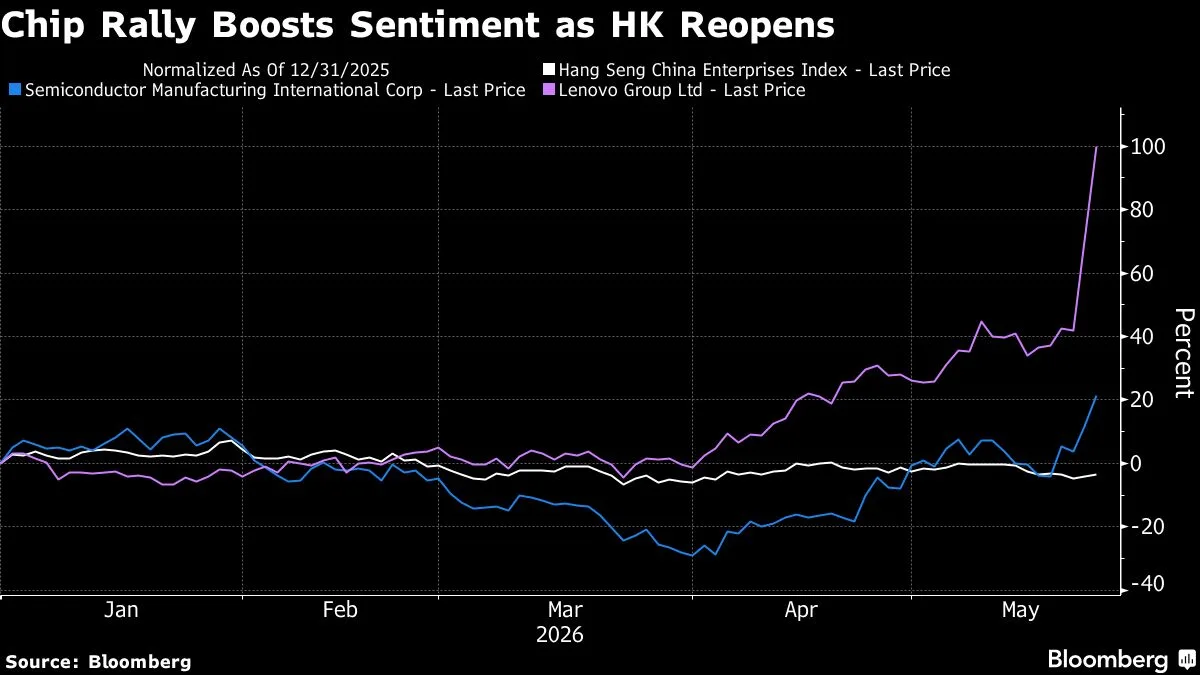
The market's enthusiasm for Chinese semiconductor stocks this week tells us something important, though perhaps not what investors think it does. Shares rose sharply in Hong Kong on what Bloomberg characterized as "optimism over a potential breakthrough in technology by Huawei Technologies Co." To be precise, that phrasing should give us pause: optimism over a potential breakthrough is several epistemic steps removed from an actual, verified technical achievement.
I want to be careful here because I've seen this pattern before, and it rarely ends where the early headlines suggest. When markets move on semiconductor news, particularly news involving Chinese firms navigating export restrictions, the signal-to-noise ratio tends to be poor. Investors are pricing in possibilities, not peer-reviewed results. The distinction matters enormously if you care about what's actually happening in chip fabrication and AI hardware, which, presumably, readers of a robotics publication do.
The broader context makes this rally more interesting, actually. Chinese stocks in Hong Kong rose even as Beijing announced what Bloomberg described as its "most forceful crackdown on illicit cross-border stock trading." Investors apparently decided that potential Huawei gains outweighed regulatory uncertainty. This is a bet on technological self-sufficiency overcoming both external restrictions and internal enforcement actions. Whether that bet is rational depends entirely on technical realities that remain, frustratingly, unclear from available reporting.
Cobertura relacionada
More in AI Models
Chipmakers swung wildly this week, from a Tuesday 'chip-wreck' to a Micron-led surge after hours. What's actually going on with AI's hardware backbone?
Sarah Williams · 26 Jun · 5 min
The original Creator Studio was shut down in 2023. Now it's back, rebuilt around an AI assistant that promises to grow your audience and reply to comments in your voice.
Sarah Williams · 26 Jun · 5 min
At its annual Config conference, Figma announced coding layers, AI-generated motion graphics, and a reimagined canvas that blurs the line between design and full-stack development.
Sarah Williams · 26 Jun · 5 min
Everyone talks about chips and models. The memory bottleneck is the part of the AI buildout that keeps getting underestimated, and Micron's latest earnings make that case hard to ignore.