Crédito de imagen: Image via Bloomberg — Technology. Used under fair use for news commentary. · source
Healthcare administration is broken in a way that's almost embarrassing. Doctors spend more time on paperwork than on patients. Insurance approvals take days when they should take minutes. And in large parts of the world, there simply aren't enough medical professionals to go around. I've always assumed AI would eventually fix this. What I didn't expect was how fast the pieces would start falling into place.
Two stories crossed my desk this week that, honestly, I think deserve to be read together.
First: an Andreessen Horowitz-backed healthcare startup, born in Latin America, wants to put its AI assistant in the hands of half the region's 1.9 million doctors by the end of 2027. That's according to Bloomberg. Half. Of 1.9 million doctors. Within 18 months or so.
That's an enormous number. And the framing matters here: this isn't about replacing doctors. It's about bridging a shortage of medical professionals across health systems that are already stretched thin. Latin America has real structural gaps in healthcare access, and the argument is that an AI assistant can help a single doctor do more, reach more patients, handle more complexity.
I initially thought this was just another "AI copilot" story dressed up with a big geographic ambition. But after sitting with it, the scale of the problem they're trying to solve is actually pretty staggering. 1.9 million doctors serving a population of roughly 650 million people, many in underserved or rural areas. If even a fraction of those doctors become meaningfully more productive, that's a real impact on real people.
Cobertura relacionada
More in AI Models
Chipmakers swung wildly this week, from a Tuesday 'chip-wreck' to a Micron-led surge after hours. What's actually going on with AI's hardware backbone?
Sarah Williams · 26 Jun · 5 min
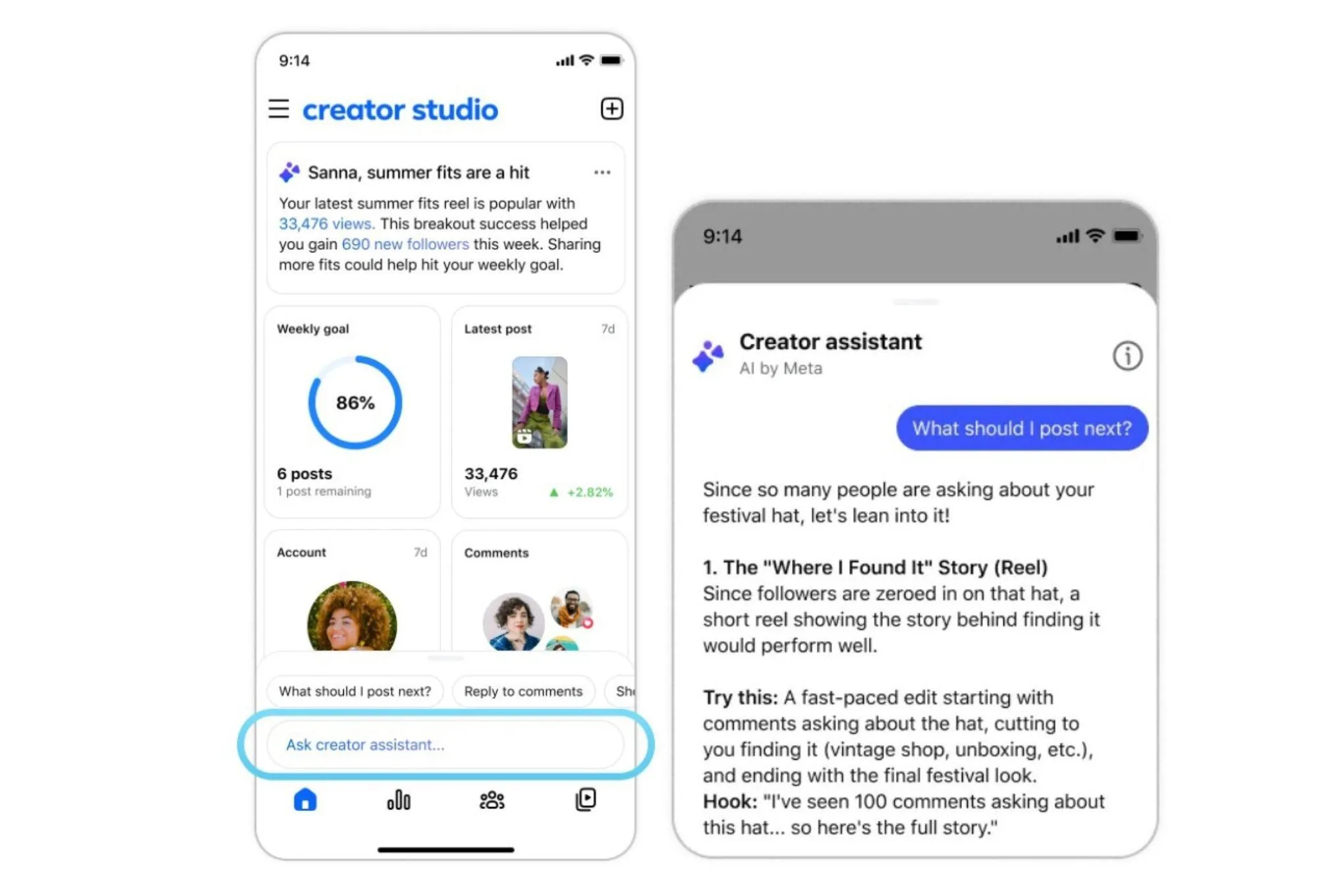
The original Creator Studio was shut down in 2023. Now it's back, rebuilt around an AI assistant that promises to grow your audience and reply to comments in your voice.
Sarah Williams · 26 Jun · 5 min
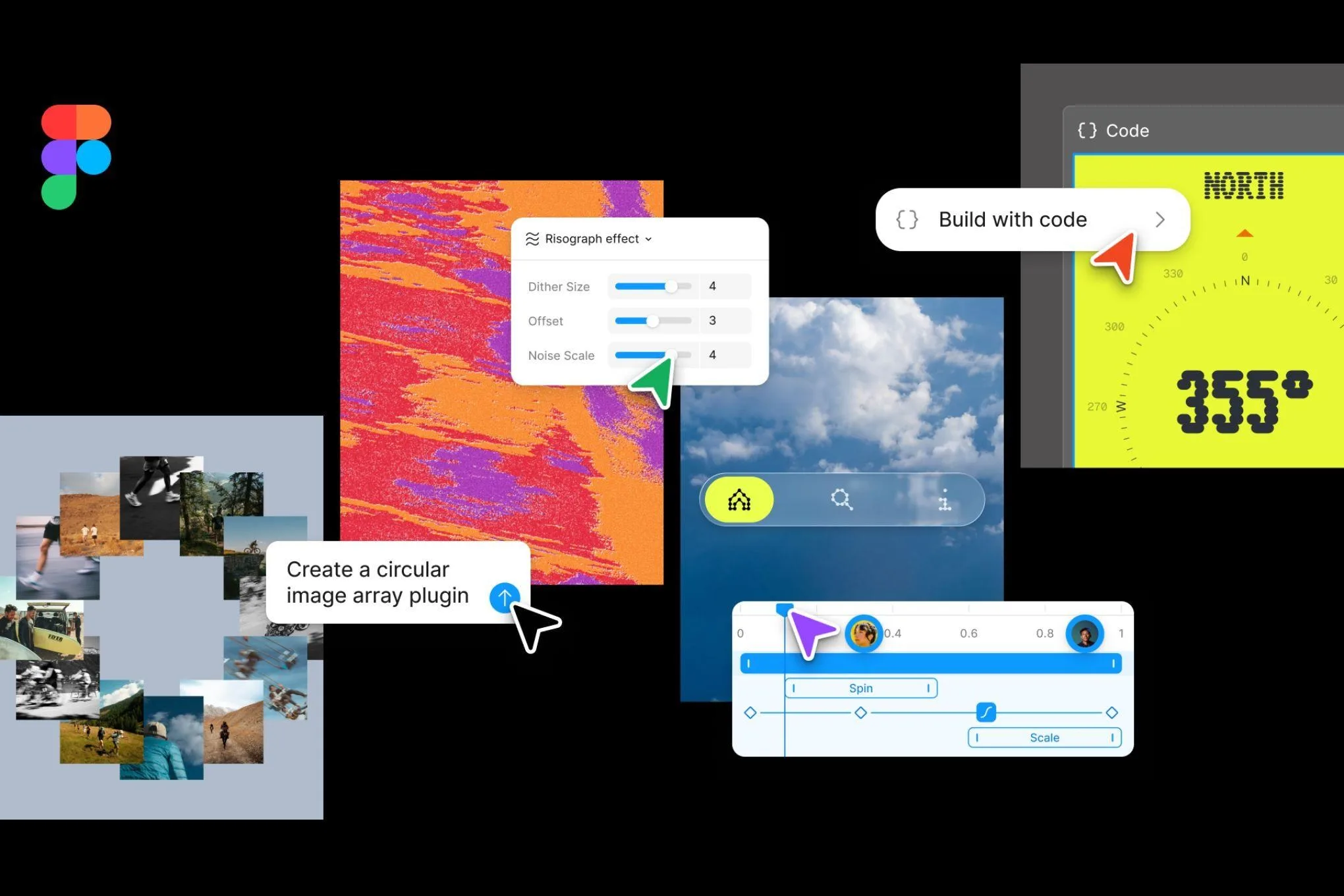
At its annual Config conference, Figma announced coding layers, AI-generated motion graphics, and a reimagined canvas that blurs the line between design and full-stack development.
Sarah Williams · 26 Jun · 5 min
Everyone talks about chips and models. The memory bottleneck is the part of the AI buildout that keeps getting underestimated, and Micron's latest earnings make that case hard to ignore.
Still, the target feels aggressive. The company didn't disclose exact adoption figures so far, and it's too early to say whether half of Latin American doctors is a genuine projection or more of a fundraising slide number.
The second story is about a different kind of ambition. Infinitus CEO Ankit Jain appeared on Bloomberg to make the case that the next generation of AI in healthcare won't be copilots or chatbots at all. It'll be autonomous agents, systems that handle healthcare tasks end-to-end, without a human in the loop for every step.
Jain specifically called out insurance approvals as a target. And honestly, if you've ever watched a doctor's office spend three days chasing a prior authorization for a procedure that takes twenty minutes, you understand why this is appealing. The inefficiency is almost theatrical.
The framing he used is interesting: focus on outcomes, not computation. That's a subtle but important shift from how a lot of AI companies talk. Usually you hear about model performance, benchmark scores, parameter counts. Outcomes-first framing puts the pressure somewhere harder to fudge.
You might be wondering, though, what "autonomous agents that handle healthcare tasks end-to-end" actually means in practice. That part remains unclear. There's a big difference between an agent that autonomously fills out a prior auth form and one that makes clinical recommendations without physician review. The former is basically fancy RPA. The latter raises serious questions about liability, accuracy, and what happens when it's wrong.
So why is a humanoids and embodied AI writer covering this?
Fair question. Tbh, neither of these stories is about robots in the physical sense. No one's building a humanoid to wheel through hospital corridors and handle discharge paperwork. Not yet, anyway.
But the underlying shift these stories point to, from AI as a tool you use to AI as an agent that acts, is exactly the same shift happening in embodied AI right now. The robots I cover are increasingly being designed around the same premise: not "here's a system that helps a human do a task" but "here's a system that does the task." The autonomy question is the same whether you're talking about a language model processing insurance claims or a bipedal robot moving boxes in a warehouse.
That's what makes this week feel like a signal rather than noise. The agent paradigm is spreading outward from software into physical systems, and healthcare is one of the first domains where the stakes are high enough that the industry can't just run a pilot and shrug.
The accountability gap is still real. When an autonomous agent denies an insurance claim incorrectly, or misroutes a patient, who's responsible? This raises questions about... well, multiple things. Legal liability, yes, but also the incentive structures of the companies building these systems. If you're optimizing for outcomes, whose outcomes? The patient's? The insurer's? The hospital's? Those don't always align.
The access argument is genuinely compelling. I don't want to be purely skeptical here. The Latin America story in particular is a reminder that "AI in healthcare" isn't only a story about wealthy health systems getting shinier tools. In places where the doctor shortage is acute, an AI that meaningfully extends a physician's capacity isn't a luxury. It's infrastructure.
I want to see actual adoption numbers from the Latin America startup as 2027 gets closer. Half of 1.9 million is a bold claim, and the proof will be in whether doctors actually use the tool or whether it sits unused like so much enterprise software before it.
I'm also watching how the "autonomous agents" framing holds up under regulatory pressure. Healthcare is one of the most regulated industries on the planet, and autonomous end-to-end task completion is a very different regulatory proposition than a copilot that surfaces information for a human to act on. The FDA, and equivalent bodies in other countries, will have opinions.
The direction of travel feels clear. The speed and the safety record? That's still an open question.