Amazon Is Investigating Employees Who Testified Against Data Centers. This Isn't a New Story.
Three Amazon engineers testified at Seattle City Council. A week later, they were called into meetings with 'Employee Relations.' Draw your own conclusions.
Bildnachweis: Image via The Verge — AI. Used under fair use for news commentary. · source
Amazon is retaliating against workers who spoke out against data centers in Seattle, according to the workers themselves, and honestly, I've seen this movie before. Big tech company, employees with a conscience, a city council hearing, then suddenly HR shows up. The details change. The playbook doesn't.
Here's what happened. Three Amazon software engineers, Patrick Schloesser, Darius Irani, and Liesl Wigand, testified at Seattle City Council hearings earlier this month in support of limits on data center construction in the city. Smart move on their part, legally speaking: they opened their testimony by citing a Seattle city ordinance that bars employers from discriminating against employees based on their political speech. They knew what they were walking into. On June 10th, one week after the hearing and one day after the City Council passed a moratorium on data centers, all three were called into unplanned meetings with Amazon's, and I'm going to quote the department name here because it tells you everything, "Employee Relations."
The engineers are now accusing Amazon of breaking that same law they cited in their testimony. They've filed a complaint with Seattle's Office for Civil Rights, alleging illegal retaliation for expressing their personal political beliefs. The Verge reported that HR representatives told the three employees the company was investigating them. WIRED confirmed the civil rights complaint. called it an "interrogation." Whatever word you use, the timing is not subtle.
Verwandte Beiträge
More in Policy
Everyone's framing this as a Windows headache, but the real story is what it means for the billion-plus devices that nobody's going to patch in time.
Mark Kowalski · 25 Jun · 6 min
The billionaire chairman of Australian logistics software giant WiseTech is under scrutiny again, and this time investors appear to be running out of goodwill.
Sarah Williams · 22 Jun · 4 min
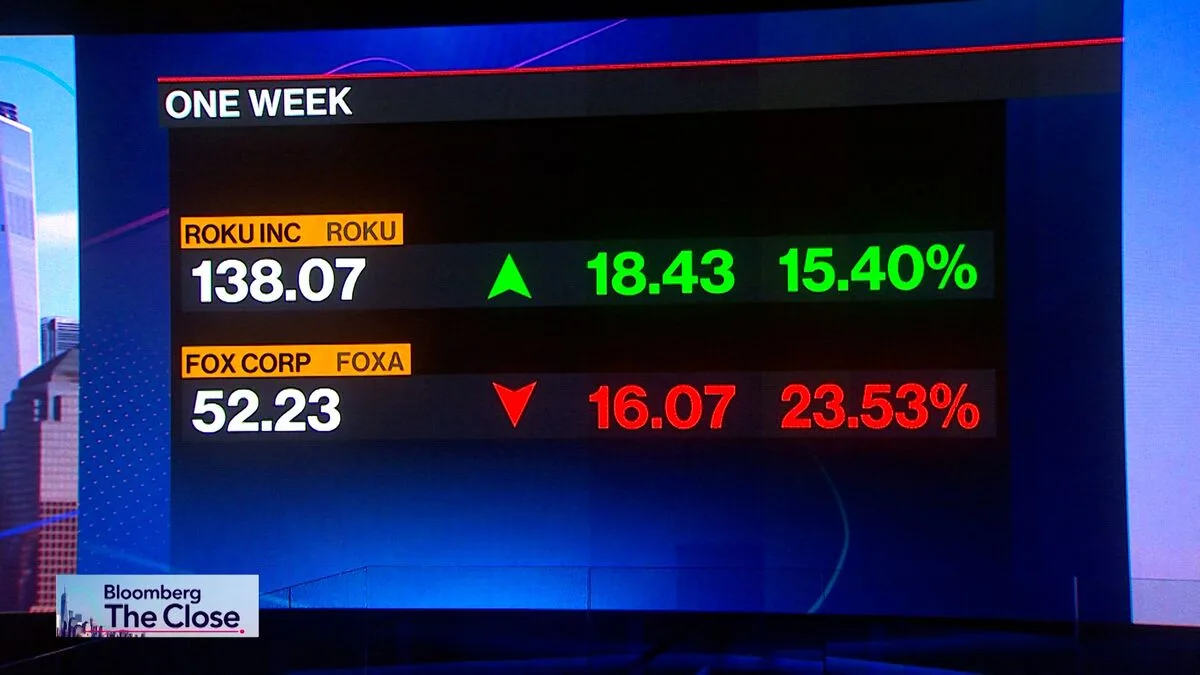
The ad-supported streaming wars just got a lot more expensive. Fox's blockbuster Roku deal is either a masterstroke or a very pricey panic move, depending on who you ask.
Mark Kowalski · 20 Jun · 7 min
The US government thinks it might have, and that's a very big deal for the future of AI hardware and anything built on top of it.
Now, Amazon hasn't confirmed or denied the specifics of what was said in those meetings. What we don't know yet is exactly what grounds the company is using for the investigation, whether termination is actually on the table for all three employees, or what the Office for Civil Rights will ultimately find. It's too early to say how this ends legally. But the sequence of events, testimony on June 3rd, moratorium passes June 9th, HR meetings June 10th, is a sequence that a reasonable person might find concerning, to put it mildly.
The data center moratorium itself is worth understanding here, because this isn't just an internal Amazon drama. Seattle's City Council passed what amounts to a significant pause on new data center construction in the city, which is a real policy intervention in a real infrastructure debate. Data centers consume enormous amounts of water and electricity, and communities near them have been raising alarms for years about environmental impact. These three engineers weren't protesting Amazon's lunch menu. They were engaging in exactly the kind of civic participation that city ordinances like Seattle's are designed to protect.
Call me old-fashioned, but the idea that a company can call you into an HR meeting the day after a city council vote that you publicly supported, and that this wouldn't look like retaliation, requires a certain kind of creative thinking I don't have. Amazon is a sophisticated operation. They have lawyers. They know what Seattle's ordinance says. And yet here we are.
I've been covering tech since the nineties and I've watched this pattern repeat itself across industries and decades. A company grows large enough that internal dissent becomes an existential threat to management, not because the dissenters are wrong, but because the appearance of internal disagreement is bad for the stock price, bad for negotiations, bad for the brand. So the machinery of HR gets deployed, quietly, in meeting rooms with no witnesses, and suddenly people who spoke at a city council hearing are being "investigated." The word investigation is doing a lot of work here. It sounds procedural and neutral. It is neither.
What makes this particular case interesting, and genuinely worth watching, is the legal specificity of it. Seattle's ordinance against political speech discrimination isn't vague. The engineers cited it before they testified, which means they anticipated this possibility and created a paper trail before any retaliation occurred. That's either very savvy or a sign that they knew their employer well enough to prepare for exactly this outcome, and I'm not sure which interpretation is more damning for Amazon.
The civil rights complaint also means there's now an official process in motion, one that goes beyond what any internal HR investigation can contain. The Office for Civil Rights will presumably look at the timeline, look at the substance of the meetings, and make some determination. That process could take months. In the meantime, the three engineers are apparently still employed, though what their day-to-day experience at work looks like right now is something I can only speculate about, and I'd rather not.
This raises questions about, well, multiple things. One is what Amazon's actual position on the data center moratorium is, and how much pressure the company is under from that policy decision. Data centers are the physical infrastructure of the cloud, and the cloud is most of Amazon Web Services, which is the part of Amazon that actually makes serious money. A moratorium on data center construction in a major city where Amazon has significant operations isn't a symbolic gesture. It's a constraint on expansion. So the stakes for Amazon aren't trivial, which might explain why the company's response to three engineers testifying at a city council hearing was apparently not to ignore it.
The other question is what this means for tech employees more broadly who want to engage in civic life. This is based on limited data, three people at one company in one city, but the chilling effect of a visible retaliation case doesn't require large sample sizes. If word gets around that testifying at a city council hearing results in an HR investigation, fewer people testify at city council hearings. That's how it works. You don't need to fire everyone. You just need to make the example visible enough.
I've watched young founders and engineers over the past decade genuinely believe that the tech industry operates by different rules than the rest of corporate America, that the values on the walls mean something, that speaking up is encouraged. Some companies actually mean it. Most are more complicated than that. What you're seeing in Seattle right now is the more complicated version.
Amazon's position, to the extent they've offered one publicly, appears to be that this is a standard HR process and that they take employee concerns seriously or something to that effect. The company didn't disclose exact details of what was discussed in the June 10th meetings, which is not surprising. HR investigations are typically confidential, which is convenient for the company being investigated and less convenient for everyone trying to evaluate what actually happened.
The engineers, for their part, seem to have made a deliberate choice to go public rather than navigate this quietly. Filing with the Office for Civil Rights is a public act. Talking to The Verge and WIRED is a public act. They're not trying to resolve this internally, and given the circumstances, I can't say I blame them. Internal resolution, in a situation like this, tends to favor the party with more lawyers and more leverage, which is not the three software engineers.
Where this lands legally is genuinely unclear. Seattle's ordinance is relatively untested in situations like this, and the specific question of whether calling employees into an HR meeting constitutes illegal retaliation for political speech is something courts and civil rights offices are going to have to work through. The law says what it says. Whether the facts fit the law is the whole argument.
What I can say with some confidence is that the timing here is going to be very hard for Amazon to explain away, and that the three engineers who cited a city ordinance before testifying and then filed a civil rights complaint the moment HR came calling did not stumble into this situation accidentally. They knew what they were doing. Whether it works out for them is another question entirely, and one I don't have an answer to. If you want to argue about it, my email's on the about page.