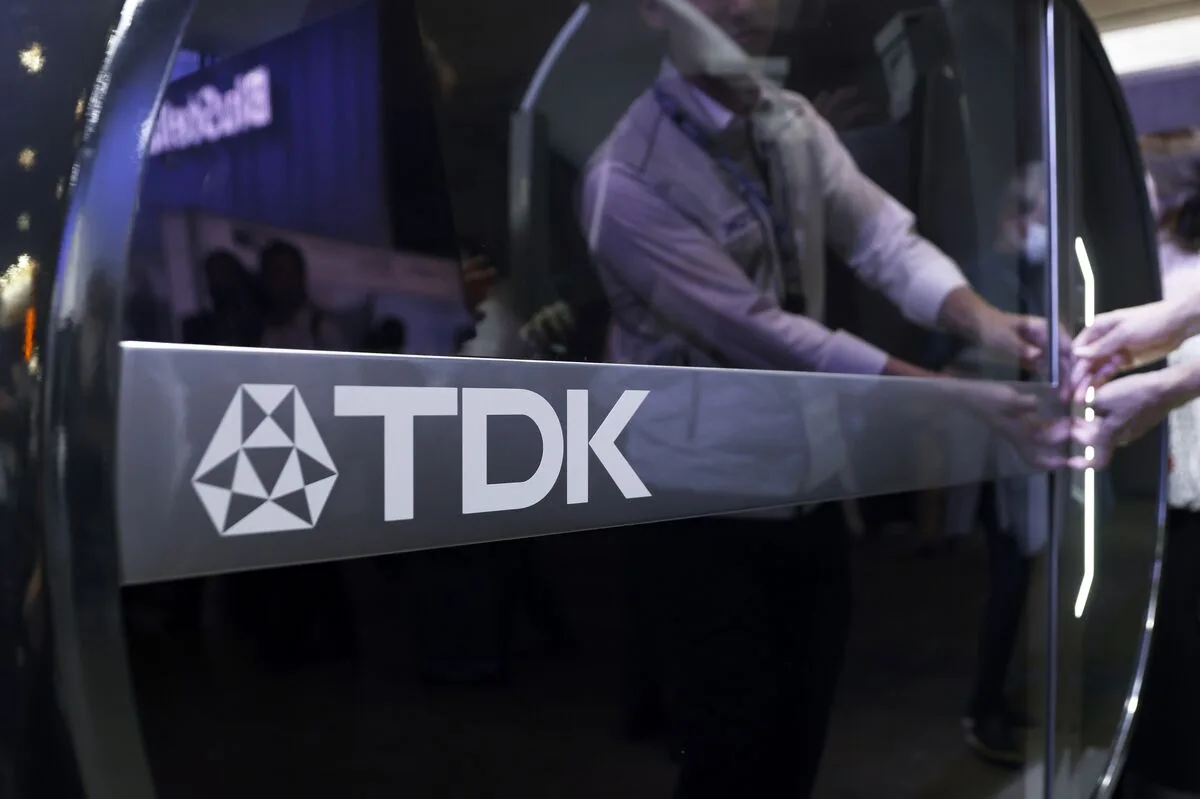
There's a photo on my desk of the first KUKA KR 150 line we commissioned back in the late nineties. Big, orange, beautiful. The reason I mention it is that the company supplying the servo components at the time was TDK, and even then you could tell they weren't content just making passive components. They always had one eye on the next thing. So when I saw the news that TDK is spending up to $400 million to acquire Bloomberg Fabric8Labs, a US startup with a novel electrochemical 3D-printing process, I wasn't shocked. I was curious.
Because look, here's the thing: this deal isn't really about 3D printing. Not at its core. Fabric8Labs has developed a technology that can manufacture copper heat-exchange components with a level of geometric complexity you simply can't get from conventional machining or casting. And right now, the people who desperately need complex copper heat exchangers are the hyperscalers. The data centres running AI inference workloads are generating heat at a rate that's making conventional air cooling look like a desk fan. TDK sees that, and they're buying their way into it.
Jim Tran, CEO of TDK USA, spoke about the acquisition on Bloomberg: The Asia Trade, framing it squarely around the company's push into its data centre business. That framing matters. This isn't a manufacturing play or an Industry 4.0 story. It's TDK telling the Nvidias and the hyperscalers of the world: we can supply you the thermal management components that keep your AI clusters from melting.
I'll be honest, the electrochemical deposition process Fabric8Labs uses is genuinely interesting from an engineering standpoint. When I was at Kuka, we spent a lot of time worrying about thermal management in motor housings, and the constraint was always manufacturability. You could design a cooling channel geometry that would work beautifully in simulation, and then your machinist would look at you like you'd asked him to carve the Sistine Chapel with a spoon. The promise of additive manufacturing for internal geometries has been real for twenty years. The execution has been patchy. Fabric8Labs apparently has something that actually scales, at least for copper, which is what makes it interesting to a components giant like TDK.
Whether $400 million is the right price is another question entirely, and it's too early to say whether this technology can be manufactured at the volumes and tolerances hyperscale data centres actually demand. Startups with promising lab results and startups with proven production lines are very different animals. I've seen enough acquisition announcements in this industry to know that the gap between those two things has swallowed more than a few corporate cheques.
What I find more telling is the strategic signal. TDK is essentially betting that the AI infrastructure buildout is going to create a sustained, long-term demand for advanced thermal components, and that the companies who own the manufacturing process for those components will sit in a very comfortable position in the supply chain. That's not a crazy bet. It's sort of the same logic that made bearing and connector manufacturers quietly rich during the automation boom of the 2000s. Nobody writes headlines about bearings, but somebody's making them.
The acquisition is part of what Bloomberg describes as TDK's broader AI ecosystem push. What that ecosystem looks like in five years remains unclear. TDK has been expanding into sensors, energy devices, and now thermal management manufacturing, which suggests they're trying to assemble a portfolio of components that touch AI hardware at multiple points. Whether that strategy coheres into something greater than the sum of its parts, or whether it ends up as a sprawling collection of loosely related bets, I genuinely don't know. The company didn't disclose a detailed integration roadmap, at least not publicly.
For the industrial and manufacturing crowd reading this: keep an eye on Fabric8Labs' process as it gets absorbed and scaled. If TDK can make it work at volume, it has implications well beyond data centres. Complex copper geometries have applications in motor cooling, power electronics, and high-performance hydraulics. The technology, if it delivers, is broadly useful. Right now though, TDK is pointed squarely at the data centre market, and honestly, given where the money is flowing, you can't blame them.