ROS 2 Emerges as the De Facto Standard for Industrial Robotics
The open-source robot operating system has quietly matured into a serious industrial platform, drawing comparisons to Linux's transformation of enterprise computing.
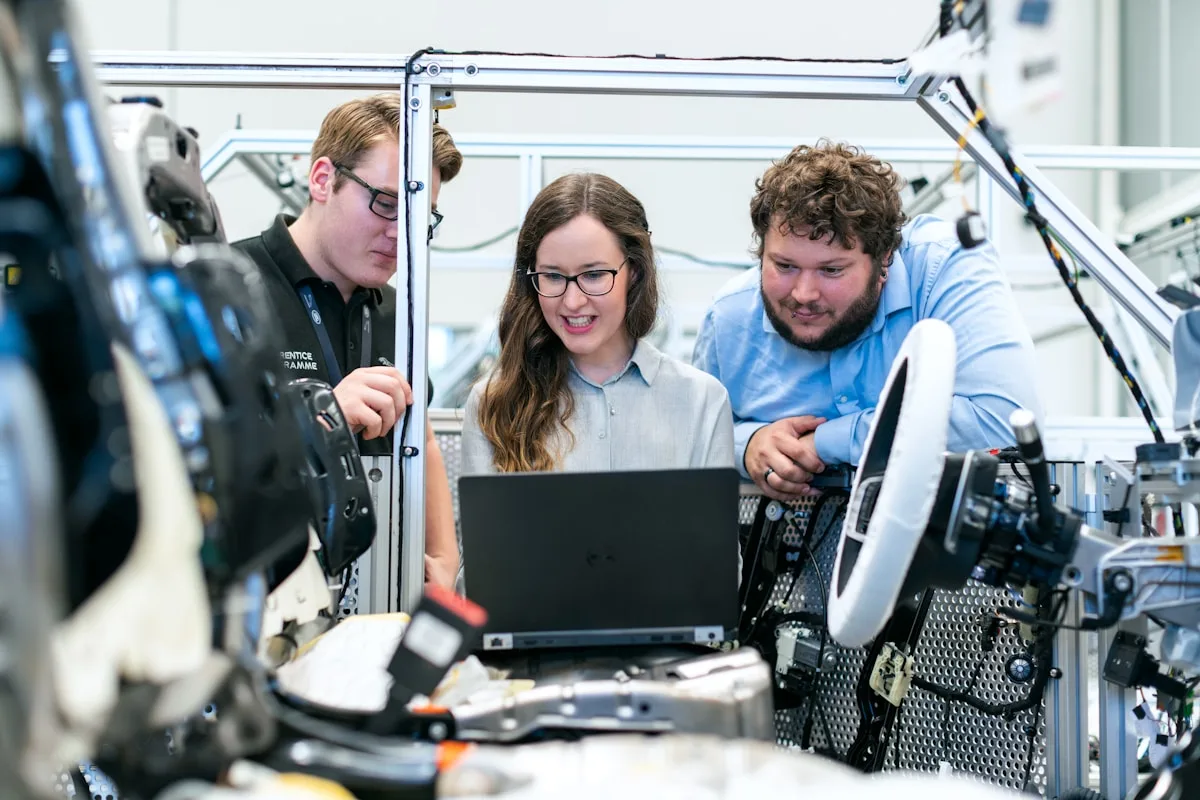
Bildnachweis: Photo via Unsplash. Free to use under Unsplash License. · source
What is happening?
ROS 2, the open-source Robot Operating System, has reached a level of maturity that is driving significant adoption across industrial robotics. Multiple industry reports this week highlighted the platform's growing footprint in manufacturing, logistics, and automation sectors.
The Information and TechCrunch both reported on the trend, noting that major players are increasingly building on the framework rather than developing proprietary alternatives.
Why does this matter?
The shift mirrors what happened with Linux in enterprise computing decades ago. An open-source foundation allows companies to share development costs, access a broader talent pool, and avoid vendor lock-in.
For robotics, this standardization could accelerate deployment timelines. Engineers familiar with ROS 2 can move between companies and projects without relearning fundamental systems. Hardware manufacturers can build components that work across multiple platforms.
The industrial sector has historically favored proprietary systems for reliability and support guarantees. ROS 2's growing acceptance signals that the platform has addressed many early concerns about stability and real-time performance.
What comes next?
Verwandte Beiträge
More in Industrial
The Apple supplier priced its shares at the maximum and still had to turn away demand, which tells you something about where hardware money is flowing right now.
James Chen · 25 Jun · 5 min
Prime Day deals on Echos and Ring cameras are fine, but let's not confuse consumer gadgets with the serious robotics work happening in warehouses.
Robert "Bob" Macintosh · 25 Jun · 3 min
Amazon's CEO made his first India trip and left behind a $13 billion AI commitment and an aggressive quick-commerce expansion. The numbers are real. The execution is the hard part.
James Chen · 25 Jun · 6 min
A wave of arXiv preprints this week tackles one of manipulation's oldest problems: how do you get a robot to learn from imperfect, incomplete, or just plain missing data?