Image credit: Image via Bloomberg — Technology. Used under fair use for news commentary. · source
China has a labor problem, and for once, the state is saying so out loud.
That is the most accurate way to read what happened this week when the Workers' Daily, the official newspaper of the All-China Federation of Trade Unions, published what Bloomberg described as an "unusually blunt call" for regulators to protect labor rights in the face of accelerating AI adoption. For context, the Workers' Daily is not an independent outlet. It is the official voice of China's state-run union apparatus. When that publication starts sounding alarms about AI displacing workers, it is worth paying attention, not because it signals imminent policy change, but because it tells us something about where the political pressure is building.
I want to be precise about what this story is and is not. It is not evidence that China has solved, or is close to solving, its AI-and-labor governance problem. It is a signal that the problem has become visible enough to require an official response, even if that response is currently limited to newspaper editorials.
What is actually happening on the ground
China's adoption of AI in workplace settings has accelerated substantially over the past two years, particularly in manufacturing, logistics, customer service, and administrative roles. This is not a secret, and it is not unique to China. What is somewhat distinctive is the scale and the speed, and the particular vulnerability of the workforce segments most affected.
China's manufacturing sector employs hundreds of millions of workers, many of whom are internal migrants with limited formal education and limited legal protections. These are exactly the workers most exposed to automation. The academic literature on this is fairly consistent: automation tends to hit middle-skill, routine-task workers hardest, and the transition costs fall disproportionately on workers with fewer resources to absorb them. Daron Acemoglu and Pascual Restrepo's work on robots and employment, published in the American Economic Review in 2020, remains one of the clearest empirical treatments of this dynamic, and while it focuses on the United States, the structural logic applies broadly.
Related coverage
More in Policy
Everyone's framing this as a Windows headache, but the real story is what it means for the billion-plus devices that nobody's going to patch in time.
Mark Kowalski · 25 Jun · 6 min
The billionaire chairman of Australian logistics software giant WiseTech is under scrutiny again, and this time investors appear to be running out of goodwill.
Sarah Williams · 22 Jun · 4 min
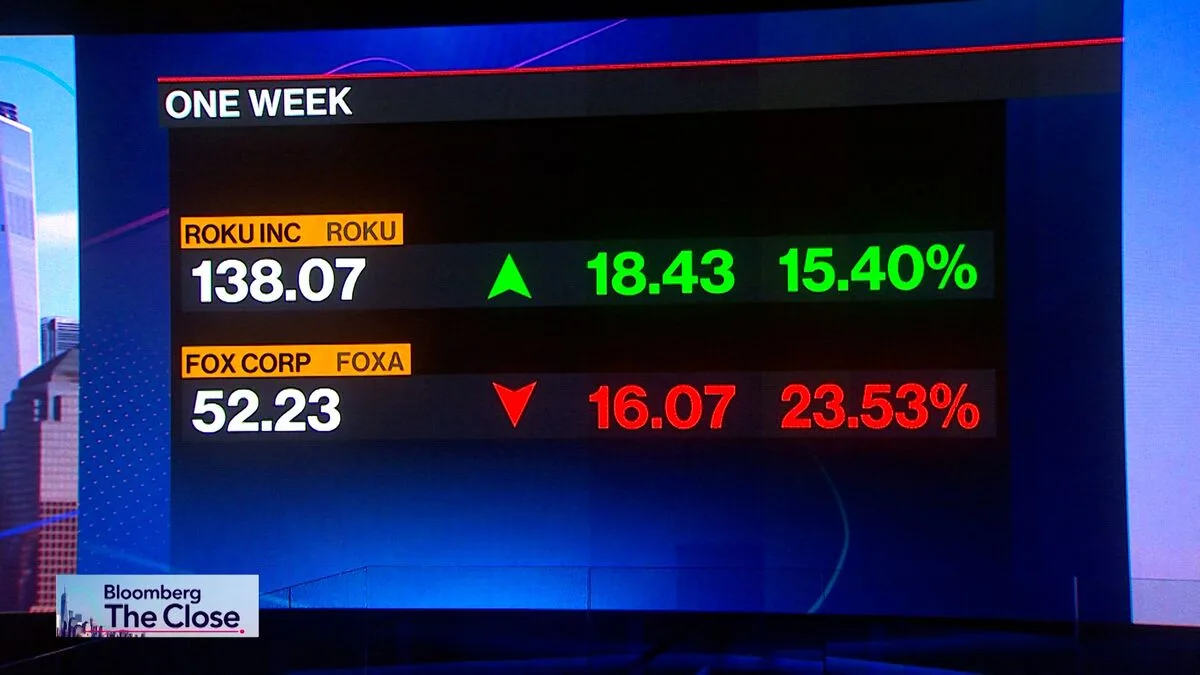
The ad-supported streaming wars just got a lot more expensive. Fox's blockbuster Roku deal is either a masterstroke or a very pricey panic move, depending on who you ask.
Mark Kowalski · 20 Jun · 7 min
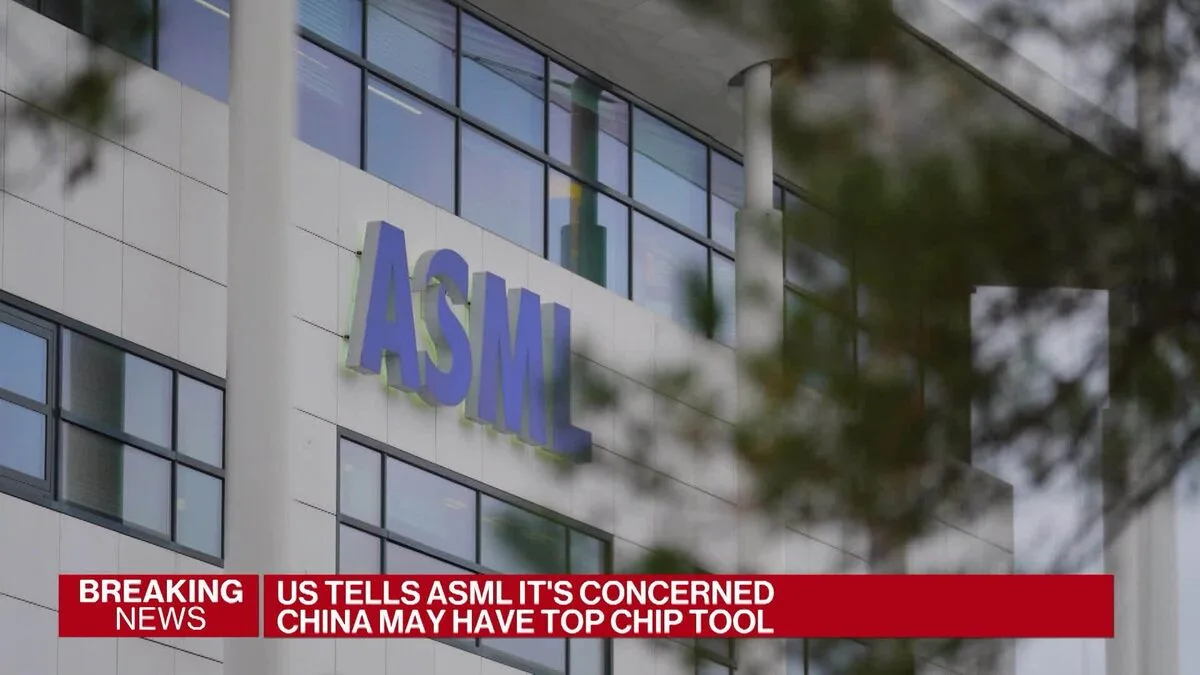
The US government thinks it might have, and that's a very big deal for the future of AI hardware and anything built on top of it.
What is less well-studied, to be honest, is the specific interaction between large language model-based AI tools and white-collar labor displacement in developing economies. That literature is still thin. Most of what we have comes from studies of OECD countries, and extrapolating to China's labor market involves assumptions that have not been rigorously tested. This is based on limited data, and I would be cautious about anyone claiming to know exactly how this plays out.
Why the Workers' Daily editorial matters
The significance of the editorial is institutional, not substantive. The Workers' Daily does not publish calls for regulatory action without some degree of coordination with, or at least tolerance from, the broader party apparatus. This is not a rogue op-ed. It is, in a sense, a permitted signal that the labor displacement issue has reached a threshold where official acknowledgment is now acceptable or perhaps necessary.
This raises questions about what comes next, well, multiple things, actually. First, whether the call for protection translates into specific regulatory proposals. Second, whether any such proposals would have meaningful enforcement mechanisms. Third, and perhaps most importantly, whether the Chinese government's stated commitment to AI-driven economic development can coexist with genuine labor protections, or whether one of those goals will quietly subordinate the other.
Beijing has been explicit about wanting to lead in AI. The 2017 New Generation Artificial Intelligence Development Plan set ambitious targets, and subsequent policy documents have reinforced the strategic importance of AI to China's economic future. That is a strong institutional headwind against any regulatory framework that meaningfully slows AI adoption in the workplace. The Workers' Daily editorial does not resolve that tension. It makes it visible.
The comparison to other regulatory contexts
It is worth noting that China is not alone in struggling with this. The European Union's AI Act, which entered into force in 2024, includes provisions relevant to AI in employment contexts, classifying certain uses as high-risk and requiring conformity assessments. But implementation is ongoing, enforcement capacity is uneven, and it remains unclear whether the Act's labor-relevant provisions will have meaningful practical effect in the near term.
The United States has taken a more fragmented approach, with executive orders, agency guidance documents, and sector-specific rules that do not add up to a coherent framework. The Biden administration's 2023 executive order on AI included some language about worker impacts, but the subsequent political transition has introduced substantial uncertainty about federal AI policy generally.
China's situation is different in one important structural way: the state has both more direct control over enterprise behavior and a stronger stated interest in social stability. The Chinese Communist Party has consistently framed its legitimacy partly in terms of managing economic disruption and preventing the kind of mass unemployment that could generate social unrest. That creates a different kind of political pressure on AI labor policy than exists in liberal democracies, where the pressure comes more from electoral accountability and civil society advocacy.
Whether that structural difference produces better outcomes for workers is genuinely unclear. State capacity to intervene is high, but so is the state's interest in AI-driven productivity growth. These are not obviously compatible goals.
What the research says about AI and labor displacement timelines
I want to push back gently on some of the more alarmist framings of this story, because the research does not uniformly support the idea that AI is about to displace enormous numbers of workers in the immediate term. Actually, the research shows a more complicated picture.
Studies like the one published by the McKinsey Global Institute in 2023, and work by economists at MIT and elsewhere, suggest that while AI will automate a significant share of tasks currently performed by humans, the timeline for widespread job displacement depends heavily on implementation rates, complementary investments in infrastructure and training, and the pace of AI capability development. None of these are fixed.
There is also a meaningful distinction between task automation and job displacement. Many jobs involve bundles of tasks, some of which are automatable and some of which are not. When AI automates part of a job, the outcome depends on whether the remaining tasks constitute a viable job, whether wages adjust, and whether workers can be retrained. The empirical evidence on these questions is mixed and context-dependent.
This does not mean the concern is overblown. For specific worker populations, particularly those in highly routine roles with limited access to retraining resources, the risks are real and near-term. The point is that "AI is going to displace workers" is not a uniform prediction but a distribution of outcomes that varies enormously by sector, skill level, geography, and policy environment.
The specific challenge for China's policy apparatus
China's situation is complicated by several factors that do not get enough attention in Western coverage of this story.
First, China's labor market is not monolithic. The hukou system, which ties social benefits to place of registration, creates structural vulnerabilities for migrant workers that have nothing to do with AI. A migrant worker displaced by automation in a Shenzhen factory faces a different set of options than an urban resident in the same situation, because their access to retraining programs, unemployment insurance, and social services may be substantially more limited.
Second, China's AI industry is not a monolith either. Large state-owned enterprises and major tech companies like Alibaba, Tencent, and Baidu operate under different regulatory pressures than smaller private firms. A regulatory framework that works for the former may be poorly suited to the latter, and vice versa.
Third, China's government has historically preferred targeted interventions over broad regulatory frameworks when it comes to labor market policy. Whether that approach is adequate for a challenge that is systemic rather than sector-specific is, I think, an open question.
I know I am being somewhat pedantic here, but these distinctions matter for evaluating whether any eventual policy response will actually protect the workers most at risk, or whether it will primarily serve to manage political optics.
What I would want to see next
If I were advising researchers or journalists covering this story, here is what I would want to see investigated.
First, what specific regulatory proposals, if any, are actually under consideration in Beijing? The Workers' Daily editorial is a signal, but signals are not policy. Understanding what is in the pipeline, if anything, requires reporting that goes beyond the editorial itself.
Second, what does enforcement look like in practice? China has passed labor protection laws before that have had limited real-world effect because enforcement capacity is uneven and local governments have strong incentives to prioritize economic growth over labor compliance. Any new AI-related labor protections would face the same structural challenges.
Third, what are workers themselves saying? This sounds obvious, but a lot of the coverage of AI and labor in China focuses on official statements and expert analysis without much direct engagement with the workers affected. That is a gap worth closing.
Fourth, and this is the researcher in me talking, we need better data on actual AI adoption rates in Chinese workplaces, actual displacement rates, and actual outcomes for displaced workers. The anecdotal and aggregate data we have is not sufficient to evaluate the scale of the problem or the adequacy of proposed responses.
The bottom line
The Workers' Daily editorial is genuinely notable, not because it solves anything, but because it represents an acknowledgment from within China's official apparatus that AI-driven labor displacement is a real problem requiring a real policy response. That acknowledgment matters.
But acknowledgment is not action, and action is not effective action. China's AI policy trajectory has been heavily weighted toward capability development and economic competitiveness. Reorienting that trajectory to give meaningful weight to worker protection would require either a significant shift in political priorities or evidence that worker displacement is generating the kind of social instability that threatens the party's legitimacy calculus.
It is too early to say which of those conditions, if either, is being met. What we can say is that the conversation is now officially happening, in a place where official conversations matter. Whether it goes anywhere is the question worth watching.