Microscopic robots that think for themselves are here, and I'm not sure we're ready
Two separate breakthroughs in microrobotics suggest we're entering genuinely new territory, not just another hype cycle.
画像クレジット: Image via Robohub. Used under fair use for news commentary. · source
I've been covering tech long enough to develop a finely tuned BS detector, and my first instinct when I see headlines about "robots smaller than a grain of salt that can think" is to reach for the delete key. We've been here before! The nanobot revolution has been five years away for about thirty years now.
But here's the thing, and call me old-fashioned for actually reading the papers before forming an opinion, these two recent developments feel different. Not revolutionary, mind you (I hate that word), but genuinely interesting in ways that the usual press release fodder isn't.
Let me explain why my skepticism is, for once, taking a back seat.
The shape-shifting Dutch and the swimming Americans
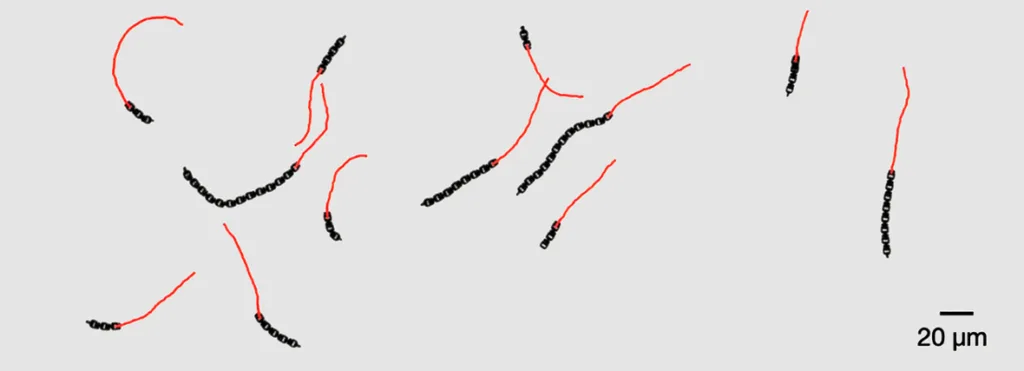
Two research teams, working independently, have cracked different pieces of the microrobot puzzle. At Leiden University, Professor Daniela Kraft and researcher Mengshi Wei have built microscopic robots that move and behave without any onboard electronics whatsoever. No sensors. No software. No external joystick. The robots' behaviour emerges entirely from their physical shape and how that shape interacts with the surrounding environment. It's elegant in a way that appeals to my preference for simple solutions, the kind of engineering that doesn't require a PhD in computer science to understand.
Meanwhile, a separate team (reported by Science Daily) has gone the opposite direction, cramming actual tiny computers into robots so small you'd need a microscope to see them. These things are powered by light, swim by manipulating electric fields rather than using moving parts, and can detect temperature changes, follow programmed paths, and coordinate in groups.
関連記事
More in Research
TurboMPC and jaxipm tackle the same bottleneck from different angles: getting constrained optimization off the CPU and onto the GPU where the rest of modern robotics already lives.
Aisha Patel · 25 Jun · 8 min
New work on exoskeletons, hybrid supervision, humanoid data collection, and vibrotactile sensing all circle the same bottleneck: getting good demonstration data into dexterous robot hands.
Aisha Patel · 25 Jun · 10 min
A flow-matching framework for cross-embodiment manipulation and a point-cloud feasibility predictor both land this week. One is genuinely novel. The other is incremental but useful.
Aisha Patel · 25 Jun · 10 min