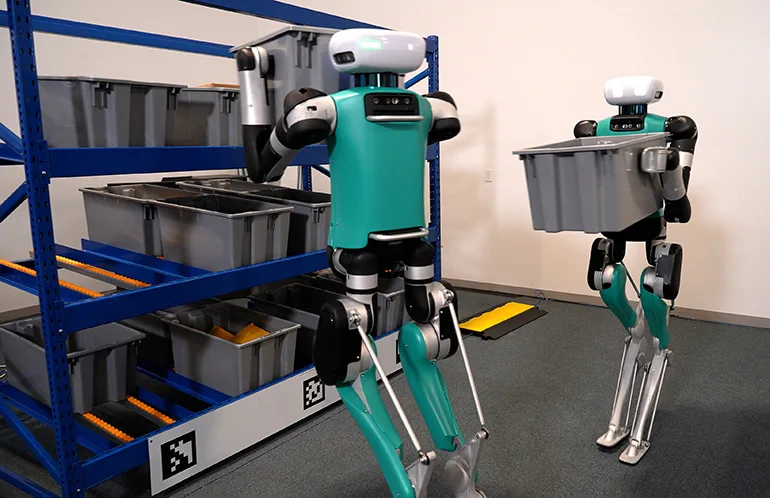
Apptronik Bets Its Future on Logistics: Why the Humanoid Maker Is Going All In on One Vertical
The Austin robotics company is abandoning its broad ambitions to focus exclusively on warehouse and logistics applications, a strategic pivot that reveals hard truths about the humanoid market.
画像クレジット: Photo via Unsplash. Free to use under Unsplash License. · source
Apptronik, the Austin-based company behind the Apollo humanoid robot, has raised fresh capital and announced a significant strategic shift: the company is narrowing its focus exclusively to logistics and warehouse applications.
The pivot, reported by both The Verge and Wired, marks a departure from the company's earlier vision of building humanoids for multiple industries. It is a move that says as much about the current state of the humanoid robotics market as it does about Apptronik's own trajectory.
Why abandon the broad approach?
Building a general-purpose humanoid robot is extraordinarily difficult. The technical challenges multiply when you try to make a single platform work across manufacturing floors, healthcare facilities, retail environments, and homes. Each setting demands different capabilities, safety certifications, and integration requirements.
By focusing on logistics alone, Apptronik can optimize Apollo for a specific set of tasks: moving boxes, picking items, navigating warehouse environments. Think of it like the difference between building a Swiss Army knife and building a really excellent screwdriver. The screwdriver will always be better at driving screws.
What does this tell us about the humanoid market?
関連記事
More in Humanoids
The headlines are celebrating a $2.5B humanoid robotics deal. I'd pump the brakes a little.
Mark Kowalski · 25 Jun · 6 min
Sometimes the sources don't pan out. Here's what happened when I tried to write a humanoids story this week and ended up with Samsung deals instead.
Sarah Williams · 25 Jun · 3 min
Diffusion models are getting good at imagining robot movements, but 'imaginable' and 'physically possible' aren't the same thing. Researchers are starting to close that gap.
Sarah Williams · 25 Jun · 6 min
A batch of fresh robotics research tackles the same underlying problem from different angles: robots that can see but don't really understand where things are.