Think of Prime Day the way engineers think about a datasheet: what's listed tells you something, but what's missing tells you more.
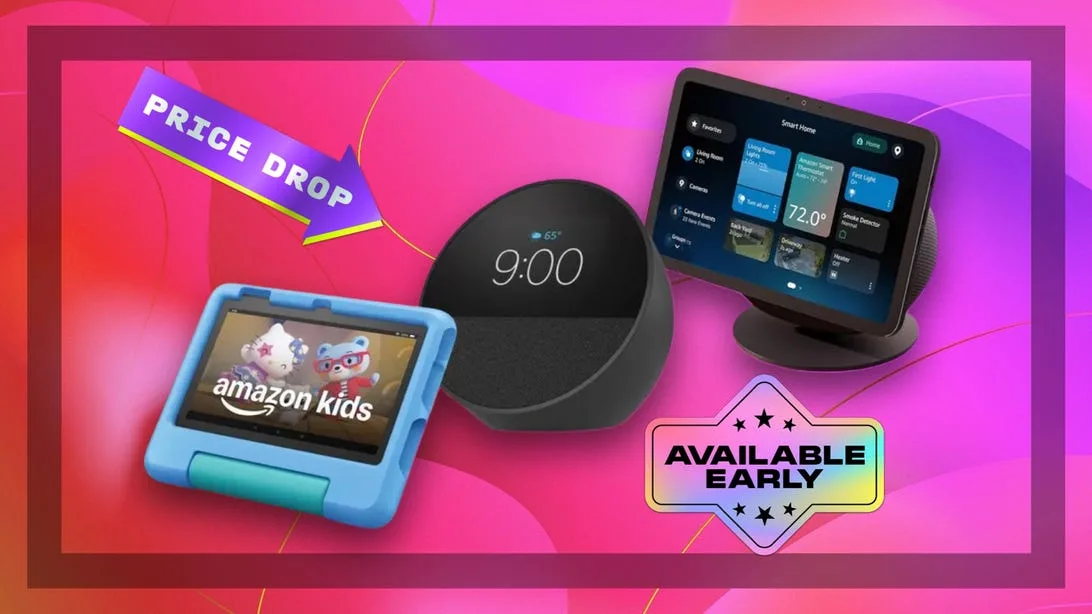
Amazon's early Prime Day device deals are live right now, and CNET is tracking more than 30 of them, with savings of up to 60% across Ring, Kindle, Echo, and the rest of the familiar lineup. The deals are real. The discounts are substantial. And honestly, if you want a Ring Video Doorbell or a Fire TV Stick, this is probably a reasonable time to buy one.
But I've seen enough spec sheets to know that a clearance event tells you as much about a product's ceiling as it does about its value. So let's talk about what Amazon's device strategy actually signals for the broader automation and smart home space, because the picture is more complicated than a sale banner suggests.
The products dominating Amazon's early Prime Day push fall into a few clear categories:
- Ring security cameras and doorbells (up to 60% off)
- Kindle e-readers (discounted across multiple generations)
- Echo smart speakers and displays (various tiers)
- Fire TV streaming devices
- Eero mesh routers
Notice what's not on that list. No Astro robot discounts. No meaningful push on the more experimental home automation hardware Amazon has been quietly developing. The company didn't disclose exact figures on unit volumes for any of these deals, which is pretty standard for Prime Day promotions, but the absence of newer, more ambitious hardware from the sale is worth noting.
Ring and Kindle are mature products. Echo devices have been around since 2014. Discounting them aggressively during a major retail event is a volume play, not a technology story. Amazon is trying to expand the install base for its ecosystem, which in turn drives Alexa usage, Prime subscriptions, and ad revenue. That's a well-understood flywheel at this point.
Let's be precise about what 60% off means in context. A Ring Video Doorbell that normally retails around $100 drops to roughly $40 at that discount level. That's a meaningful price reduction for a consumer. But the underlying technology in Ring's core lineup hasn't changed dramatically in several years. The sensors are competent, the cloud integration works, and the app is functional. It's not a bad product. It's just not a particularly new one.
From my time in hardware, I can tell you that aggressive discounting on a product line often signals one of two things: the company is clearing inventory ahead of a refresh, or the product has hit a natural saturation point in its addressable market and needs price incentives to reach the next tier of buyers. Either reading is plausible for Ring right now.
Amazon has been expanding Ring's lineup with more sophisticated features, including 3D motion detection and improved night vision on higher-end models, but those aren't the units leading the Prime Day push. The headline deals are on the entry-level hardware.
Here's where I think the consumer robotics and automation beat gets genuinely interesting, and where Prime Day deals are sort of a distraction from the actual story.
Amazon's real automation ambitions aren't in Ring doorbells. They're in fulfillment centers, where the company has deployed over 750,000 robots across its warehouse network as of recent reporting. They're in delivery, where Prime Air drone delivery is slowly expanding to more markets. And they're in Astro, the home robot that Amazon released in limited quantities in 2021 and has been quietly iterating on since.
Astro is the product I keep watching. Amazon hasn't made it widely available, pricing has stayed in the $1,600 range for the invitation-only version, and the use cases remain somewhat limited. This raises questions about... well, multiple things, including whether Amazon views it as a genuine product line or an extended R&D exercise with a consumer interface.
The company hasn't clarified its roadmap publicly, and it remains unclear whether Astro will ever see the kind of mainstream push that Echo received after its 2014 launch. The comparison matters because Echo went from a curiosity to a category-defining product within about three years. Astro hasn't shown the same trajectory, at least not publicly.
The broader smart home category that Ring, Echo, and Eero represent is genuinely mature at this point. Adoption has been steady but not explosive. A 2024 survey by Parks Associates estimated that roughly 57% of U.S. broadband households owned at least one smart home device, up from around 35% in 2019. That's meaningful growth, but it's not the kind of vertical climb that suggests we're in the early innings anymore.
What that means practically is that the battle in smart home automation is now mostly about ecosystem lock-in, interoperability standards, and incremental feature improvements rather than fundamental capability jumps. The Matter standard, which Amazon, Google, Apple, and others adopted starting in 2022, was supposed to reduce fragmentation. It has helped, but the ecosystem wars haven't ended.
For consumers, this is actually fine. The products work. The prices are dropping. Prime Day deals on Echo devices and Ring cameras are legitimate value for people who want to automate parts of their homes without a lot of complexity.
For anyone tracking where automation technology is actually advancing, the smart home aisle is not where the action is right now.
Look, I don't want to be dismissive of consumer automation entirely. There's real engineering in these products, and the scale at which Amazon deploys and maintains connected hardware is genuinely impressive from an infrastructure standpoint.
But the industrial and commercial automation space is where the more consequential developments are happening. Warehouse robotics, surgical assistance systems, agricultural automation, and humanoid robots aimed at manufacturing environments are all seeing levels of investment and capability development that dwarf what's happening in the consumer smart home market.
Boston Dynamics, Figure AI, Agility Robotics, and a handful of others are in various stages of deploying bipedal robots into real production environments. The timelines are still uncertain, the unit economics are still being worked out, and I'd be cautious about any company claiming imminent mass deployment. That's an ambitious number from anyone right now. But the technical progress is real in a way that a Ring doorbell refresh is not.
Amazon's own warehouse robotics program is probably the most directly relevant comparison to the Prime Day device story. The same company selling you a discounted Echo Show is also one of the largest operators of autonomous mobile robots in the world. Those two facts exist in the same organization, but they represent very different levels of technological ambition.
If you're a consumer who wants a smart doorbell or an e-reader, the early Prime Day deals are straightforward: the discounts are real, the products are well-reviewed, and the timing is fine.
If you're trying to understand Amazon's trajectory as a hardware and automation company, Prime Day is a data point but not a particularly revealing one. It tells you that Amazon's mature device lineup is healthy enough to anchor a major retail event. It doesn't tell you much about where the company's more experimental hardware bets are going.
The more useful questions are ones Amazon hasn't answered publicly. What's the current production volume for Astro, and is it increasing? What's the timeline for Prime Air drone delivery to reach meaningful scale? How is Amazon planning to integrate its warehouse robotics capabilities with its consumer-facing hardware ambitions, if at all?
This is based on limited public information, since Amazon doesn't break out hardware unit economics or robotics program details in its earnings reports in any useful granular way. But the pattern of what gets discounted and what doesn't is at least a small signal.
A 60% discount on a Ring camera is a retail strategy. The absence of any equivalent push on more ambitious hardware is, in its own quiet way, also a statement.
Prime Day starts Tuesday. The deals are live now if you want them. Just don't mistake a sale for a roadmap.