Picture a crowded room where one person starts speaking very loudly. Everyone turns to look. The other conversations do not stop, exactly, but they get harder to hear. That is, more or less, what happened to the space sector on Friday, June 13, 2026, when SpaceX launched what is being described as the largest initial public offering in history.
The numbers from that single trading session are instructive. According to Bloomberg, rocket, satellite, and space-linked companies saw a broad selloff as investors redirected capital toward SpaceX. Not a gentle rotation. A tumble. The kind of single-day move that tends to concentrate minds at board level.
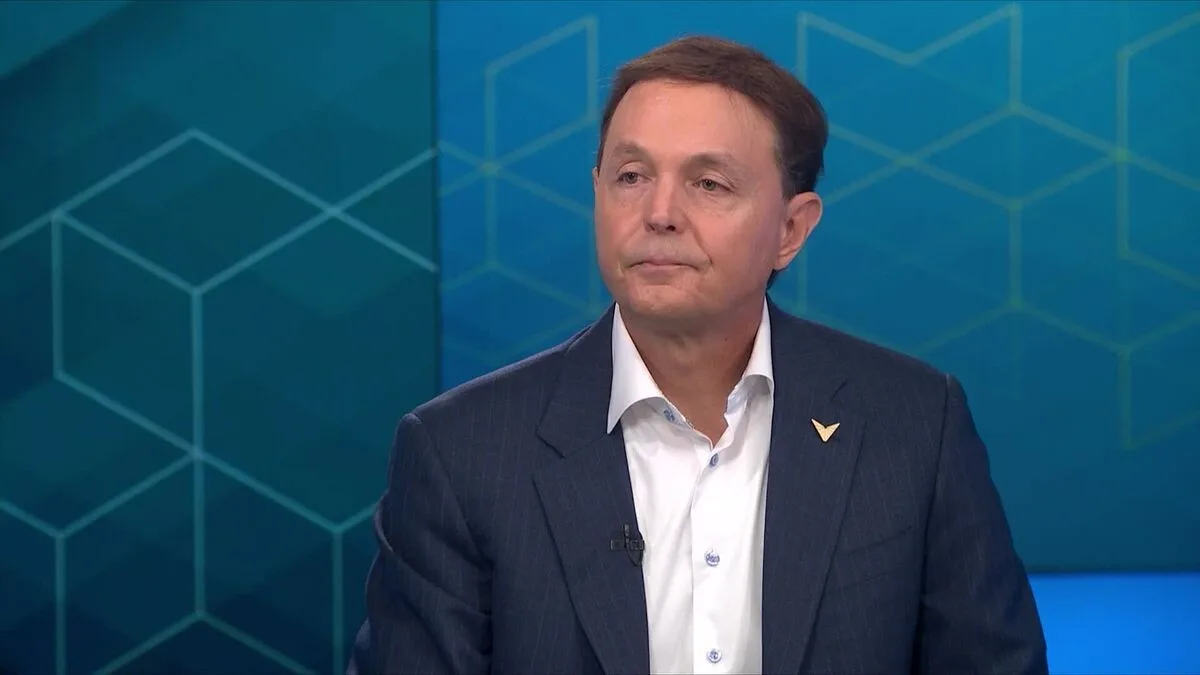
The optimist case, stated plainly. Two days before the IPO, Dylan Taylor, Chairman and CEO of Voyager Technologies, an aerospace and defense company, sat down with Bloomberg TV's Francine Lacqua and made the bullish argument. He said he was "bullish and optimistic" about what the SpaceX listing would mean for the industry, and predicted that capital raised around the IPO would flow broadly, arguing it "flows back into other space names as well." The logic is familiar: a high-profile listing generates media coverage, retail investor interest, and institutional attention that the sector would not otherwise attract. A rising tide, in the conventional framing.
It is worth noting that Taylor is not a disinterested observer here. Voyager Technologies is itself a publicly traded aerospace and defense company operating in the same capital markets that SpaceX is now entering. His incentive to frame the SpaceX IPO as sector-positive rather than sector-disruptive is real, and readers should weigh his comments accordingly. That is not a criticism of Taylor specifically; it is just the appropriate epistemic posture when evaluating commentary from someone with skin in the game.
What the first trading day actually showed. The selloff on Friday cuts against the rising-tide thesis, at least in the short run. Investors do not appear to have used SpaceX's IPO as an on-ramp to broader space exposure. They appear to have used it as a destination. Capital that might have been spread across a basket of space-adjacent equities concentrated instead into the single most prominent name. This is, actually, the research shows, a fairly well-documented pattern around mega-IPOs in nascent sectors. The listing of a dominant player often functions as a substitution event rather than a catalytic one, at least initially.
Whether that dynamic persists is genuinely unclear. The honest answer is that it is too early to say whether Friday's selloff represents a temporary reallocation or a sustained repricing of the competitive landscape for publicly traded space companies. I have found only limited data covering a single trading session, which is not nearly enough to draw structural conclusions. One day of market movement is noise. A quarter of it might be signal.
What this has to do with robotics and AI, since that is ostensibly my beat. The connection is less tenuous than it might appear. SpaceX's ambitions in autonomous systems are substantial. Starship's autonomous flight and landing capabilities represent some of the more demanding real-world deployments of robotic control systems operating at scale. The company's approach to hardware-software integration, rapid iteration on physical systems, and tolerance for failure as a learning mechanism have influenced how researchers and engineers think about autonomous robotics more broadly. A publicly traded SpaceX, subject to quarterly earnings calls and analyst scrutiny, will face new pressures on how it communicates progress on those systems. That is a meaningful change in the information environment for anyone tracking autonomous systems research.
Beyond SpaceX itself, the capital dynamics matter for the robotics sector. Several of the companies caught in Friday's selloff sit at the intersection of space and autonomous systems: satellite operators relying on increasingly sophisticated onboard compute, launch providers whose vehicles depend on autonomous guidance, and defense-adjacent firms building robotic platforms for orbital and lunar operations. A sustained compression in their valuations tightens the capital available for R&D in exactly the kinds of long-horizon, high-uncertainty research programs that produce genuinely novel results rather than incremental improvements on existing methods.
The Artemis dimension. Taylor also discussed lunar habitation and the Artemis mission in his Bloomberg interview, and this is where his optimism is, I think, more structurally grounded. The Artemis program, whatever its delays and budget complications, represents a genuine demand signal for autonomous systems operating in environments where human intervention is severely constrained. Lunar surface operations, habitat construction, resource extraction: these are problems that cannot be solved by teleoperation alone given signal latency, and they are pushing serious investment into autonomous decision-making under uncertainty. If SpaceX's IPO accelerates the broader commercialization of cislunar space, the downstream demand for capable autonomous systems is real.
To be precise, though, the connection between a successful IPO and accelerated Artemis-adjacent commercial activity involves several steps that are not guaranteed. SpaceX going public does not automatically mean more lunar missions, more commercial contracts, or faster development of the robotic systems those missions require. The causal chain runs through regulatory approvals, NASA budget cycles, and the actual performance of Starship as a launch vehicle, none of which are resolved by a successful stock market listing.
The structural question that Friday raised. There is a more uncomfortable version of Taylor's argument that is worth taking seriously. If SpaceX's IPO does generate sustained retail and institutional interest in the space sector, the companies best positioned to capture that attention will be those with the clearest narratives, not necessarily those doing the most technically rigorous work. Public market dynamics tend to reward legibility. A company with a compelling story about moon bases and Mars colonization may attract capital that a company doing careful, incremental work on orbital debris mitigation or satellite autonomy cannot easily compete for, even if the latter's work is more immediately tractable and more likely to produce near-term returns.
This raises questions about... well, about the relationship between narrative capital and technical capital in a sector that is suddenly much more visible to generalist investors. It is not a new problem. It is the same problem that has periodically distorted investment in AI, in autonomous vehicles, and in synthetic biology. Sectors that capture public imagination tend to attract money faster than they can deploy it productively, and the resulting misallocation can set serious research programs back when the correction comes.
What I would want to see next. A few things would sharpen the picture considerably. First, data on capital flows across the sector over the next two to three quarters, not just a single trading day, would allow a more credible assessment of whether the substitution effect is temporary or structural. Second, it would be useful to track whether the SpaceX IPO changes the terms on which private space and autonomous systems companies can raise venture funding, since public market sentiment and private market valuations are not perfectly correlated but they are not independent either. Third, and this is the part that is most directly relevant to this publication's readers, someone should be watching whether the increased scrutiny that comes with public market status changes how SpaceX communicates about its autonomous systems capabilities. Companies that have operated in relative opacity on technical details sometimes become more forthcoming when they have quarterly earnings calls to fill. That would be genuinely useful for the research community.
For now, the picture is mixed in a way that resists clean summary. Taylor's optimism may prove correct over a longer time horizon. The first trading day suggests the transition will be bumpier than the rising-tide framing implies. Both things can be true. The space sector got its most prominent public company on Friday. What that actually means for everyone else in the room is a question that will take considerably longer than one trading session to answer.