SpaceX's S-1 Filing Reveals an AI Company Hiding Inside a Rocket Business
The 36 pages of risk factors are interesting, but the real story is how SpaceX is positioning itself to compete directly with AI infrastructure giants.
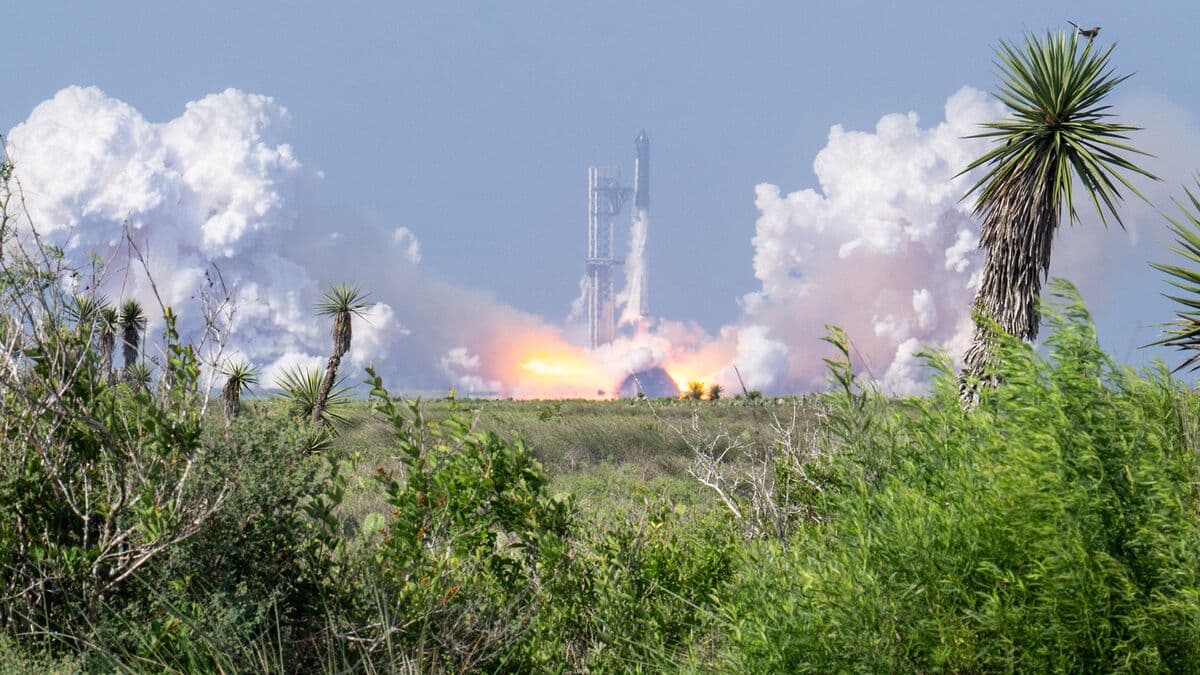
画像クレジット: Image via source article. Used under fair use for news commentary. · source
Most coverage of SpaceX's S-1 filing has focused on the headline numbers: the $1.75 trillion target valuation, the Mars colony compensation clause, the sheer audacity of claiming a $28 trillion total addressable market. These are, admittedly, attention-grabbing figures. But the more interesting story, the one that actually matters for understanding where this company is headed, is buried in how SpaceX is framing its competitive positioning. To be precise, SpaceX is no longer pitching itself primarily as a launch company. It is pitching itself as an AI infrastructure play.
Bloomberg reported that SpaceX is "marketing itself to IPO investors as an artificial intelligence" company targeting a $26.5 trillion market opportunity. That framing is not accidental. And it represents a significant, if underexamined, pivot in how the company wants to be valued.
The actual business model shift becomes clearer when you read the S-1 alongside SpaceX's recent technical announcements. Starlink's constellation now provides not just consumer broadband but edge computing capacity at scale. The company has been quietly deploying inference hardware on second-generation satellites since late 2025, though the exact specifications remain undisclosed. What we do know is that the latency characteristics of low Earth orbit, combined with global coverage, create an infrastructure layer that terrestrial data centers cannot easily replicate.
This is where it gets interesting from a technical standpoint. Traditional cloud AI inference requires data to travel to centralized facilities, process, and return. For applications requiring real-time response (autonomous vehicles, industrial robotics, augmented reality), that round trip introduces latency that can be prohibitive. SpaceX appears to be betting that distributed orbital compute, while more constrained in raw capacity, offers latency advantages for specific use cases that justify premium pricing.
関連記事
More in AI Models
The companies keep announcing 'extended partnerships' but the technical and financial details remain frustratingly opaque.
Aisha Patel · 33 mins ago · 7 min
While everyone focused on model capabilities, OpenAI quietly built the plumbing that could make AI agents actually useful.
Sarah Williams · 33 mins ago · 4 min
The partnership isn't about research anymore. It's about who controls the infrastructure when AI agents actually work.
Mark Kowalski · 33 mins ago · 6 min
The general availability launch, Figma integration, and enterprise partnerships represent a significant scaling effort, but the real question is whether this changes how software actually gets built.
I should note that we don't have detailed technical specifications for what SpaceX is actually deploying. The S-1 is notably vague on this point, which is frustrating. The company references "AI-enabled services" and "edge intelligence infrastructure" without providing the kind of architectural detail that would let us evaluate whether this is genuinely novel or marketing language wrapped around conventional satellite services.
The $26.5 trillion market claim deserves scrutiny. Actually, the research shows that total addressable market figures in S-1 filings are almost always aspirational rather than analytical. SpaceX appears to be summing the entire global markets for telecommunications, cloud computing, AI services, and space launch, then presenting that aggregate as if it represents realistic revenue potential. This is standard practice for IPO filings, but it's worth being explicit about what it means: very little.
What matters more is the $28 trillion figure mentioned in TechCrunch's coverage of the filing, which appears to include space-based manufacturing and resource extraction markets that don't yet exist in any meaningful commercial sense. The company is essentially asking investors to price in optionality on industries that remain speculative.
I know I'm being picky here, but the difference between a $26.5 trillion and $28 trillion TAM is itself larger than most companies' entire market opportunity. The fact that different sources are reporting different numbers suggests either inconsistent disclosure in the S-1 or inconsistent reading of it. Neither inspires confidence in the precision of these projections.
The robotics angle is underreported. SpaceX's manufacturing operations have become increasingly automated over the past three years, with the Starship production line at Starbase reportedly operating with roughly 340 robots across welding, inspection, and materials handling. The company has developed proprietary control systems for these robots, and there's been persistent speculation that this technology could eventually be spun out or licensed.
The S-1, according to available reporting, does not directly address robotics as a business line. But the AI positioning creates a logical pathway. If SpaceX is building inference infrastructure for external customers, the same infrastructure could support robotics applications. Autonomous systems operating in remote or connectivity-constrained environments (mining, agriculture, maritime, actually anywhere outside dense urban coverage) could benefit from orbital edge computing in ways that stationary applications would not.
This remains speculative. SpaceX has not announced any robotics-focused products or services. But the infrastructure they're building, and more importantly, the way they're describing it to investors, suggests they're at least thinking about these adjacencies.
The competitive dynamics are genuinely interesting. Bloomberg's Larry Tabb noted that SpaceX's positioning signals "intention to wrest business from investor darlings whose valuations have soared." The obvious targets are the hyperscale cloud providers (Amazon, Microsoft, Google) and the AI infrastructure companies (Nvidia, to some extent). SpaceX is essentially arguing that space-based infrastructure represents a structural advantage that terrestrial competitors cannot easily replicate.
This is not obviously true. The physics favor SpaceX for latency-sensitive applications at the network edge, but the economics favor terrestrial data centers for most compute-intensive workloads. A single hyperscale facility can deploy more GPU capacity than SpaceX's entire constellation. The question is whether there are enough high-value, latency-critical applications to justify SpaceX's infrastructure investment.
It's too early to say. We don't have reliable data on how much inference workload is actually latency-constrained in ways that orbital infrastructure would address. The autonomous vehicle market, which would be a natural customer, remains smaller than projections from five years ago suggested. Industrial robotics is growing but most deployments are in facilities with reliable terrestrial connectivity. The use cases that obviously benefit from orbital edge compute exist, but their aggregate market size is unclear.
The 36 pages of risk factors tell their own story. I haven't seen the full filing, but TechCrunch's reporting emphasizes the length of the risk section. This is partly boilerplate (every S-1 includes extensive risk disclosure for liability reasons) but partly substantive. SpaceX faces regulatory risk from multiple agencies across multiple jurisdictions. The Starlink business depends on spectrum allocations that could be contested. The launch business faces increasing competition from domestic and international providers. And the Mars ambitions, which are apparently tied to executive compensation, introduce governance questions that public market investors may find uncomfortable.
The compensation structure is worth noting specifically. Tying executive pay to "establishing a Mars colony" creates incentive alignment problems that are, to put it mildly, unusual for a public company. What constitutes "establishing"? Who determines whether the milestone has been met? How do you value progress toward a goal that may take decades? These are not standard compensation committee questions.
What this means for robotics and AI more broadly is that SpaceX's entry as a major AI infrastructure player could reshape competitive dynamics in ways that extend beyond the direct services they offer. If orbital edge compute becomes a viable product category, it creates opportunities for robotics companies building systems that operate in connectivity-constrained environments. It also creates pressure on terrestrial cloud providers to improve their edge offerings.
The more speculative possibility is that SpaceX eventually becomes a direct participant in robotics markets. The company has the manufacturing expertise, the control systems experience, and now (apparently) the AI infrastructure ambitions. A SpaceX robotics division is not announced or even rumored, but the strategic logic exists.
Open questions remain substantial. We don't know the actual technical specifications of SpaceX's orbital compute infrastructure. We don't know the unit economics of space-based inference versus terrestrial alternatives. We don't know how much of the S-1's AI positioning reflects current capabilities versus aspirational roadmap. And we don't know how public market investors will respond to a company that is simultaneously a profitable launch provider, a growing telecommunications business, and a speculative bet on AI infrastructure and interplanetary colonization.
The $1.75 trillion valuation target suggests SpaceX believes investors will pay for all of these optionalities simultaneously. Whether that belief is justified depends on details that the S-1, at least as reported so far, does not fully provide.
What I'd want to see next is a more detailed technical breakdown of the Starlink compute architecture. Specifically: what inference hardware is actually deployed, what workloads it can support, and what the latency and throughput characteristics are compared to terrestrial alternatives. Without this information, the AI positioning remains more narrative than substance.
I'd also want to see clearer segmentation of the revenue projections. How much of the claimed market opportunity comes from launch services (where SpaceX has demonstrated dominance), how much from telecommunications (where Starlink is growing but faces real competition), and how much from AI services (where the company is essentially a new entrant)? Lumping these together into a single TAM figure obscures more than it reveals.
The IPO will likely proceed regardless of these analytical gaps. SpaceX has enough demonstrated success and enough investor enthusiasm to command the valuation it's seeking. But for those of us trying to understand what this means for the broader AI and robotics landscape, the S-1 raises as many questions as it answers. That's not a criticism, exactly. It's just an acknowledgment that we're watching a company try to define a new category in real time, and the definition isn't complete yet.