Warehouse robotics isn't about robots anymore, and that's the point
After decades of chasing throughput numbers, the industry is finally figuring out what I've been saying since the 90s: the software matters more than the hardware.
Image credit: Image via source article. Used under fair use for news commentary. · source
I've seen this movie before. Back in the early 2000s, everyone was obsessed with server rack density, cramming as many physical machines as possible into data centers. Then virtualization came along and suddenly the conversation shifted from "how many boxes" to "how smart is your orchestration layer." We're watching the exact same thing happen in warehouse automation right now, and honestly it's about time.
The robotics industry has spent the better part of a decade selling warehouses on throughput metrics. How many picks per hour. How many units moved. How fast can the robot zip down an aisle. And look, those numbers matter, I'm not saying they don't. But they're table stakes at this point. The real competitive advantage, the thing that separates operations that actually work from expensive science projects, is system intelligence.
Daifuku, one of the bigger names in material handling (they've been around since 1937, which in this industry makes them practically ancient), recently put out some thinking on this that caught my attention. Their argument is essentially that we need to stop evaluating warehouse automation as a collection of individual robot capabilities and start thinking about it as an integrated system. Which, call me old-fashioned, sounds obvious. But apparently it isn't, because most warehouse operators are still buying robots like they're shopping for appliances.
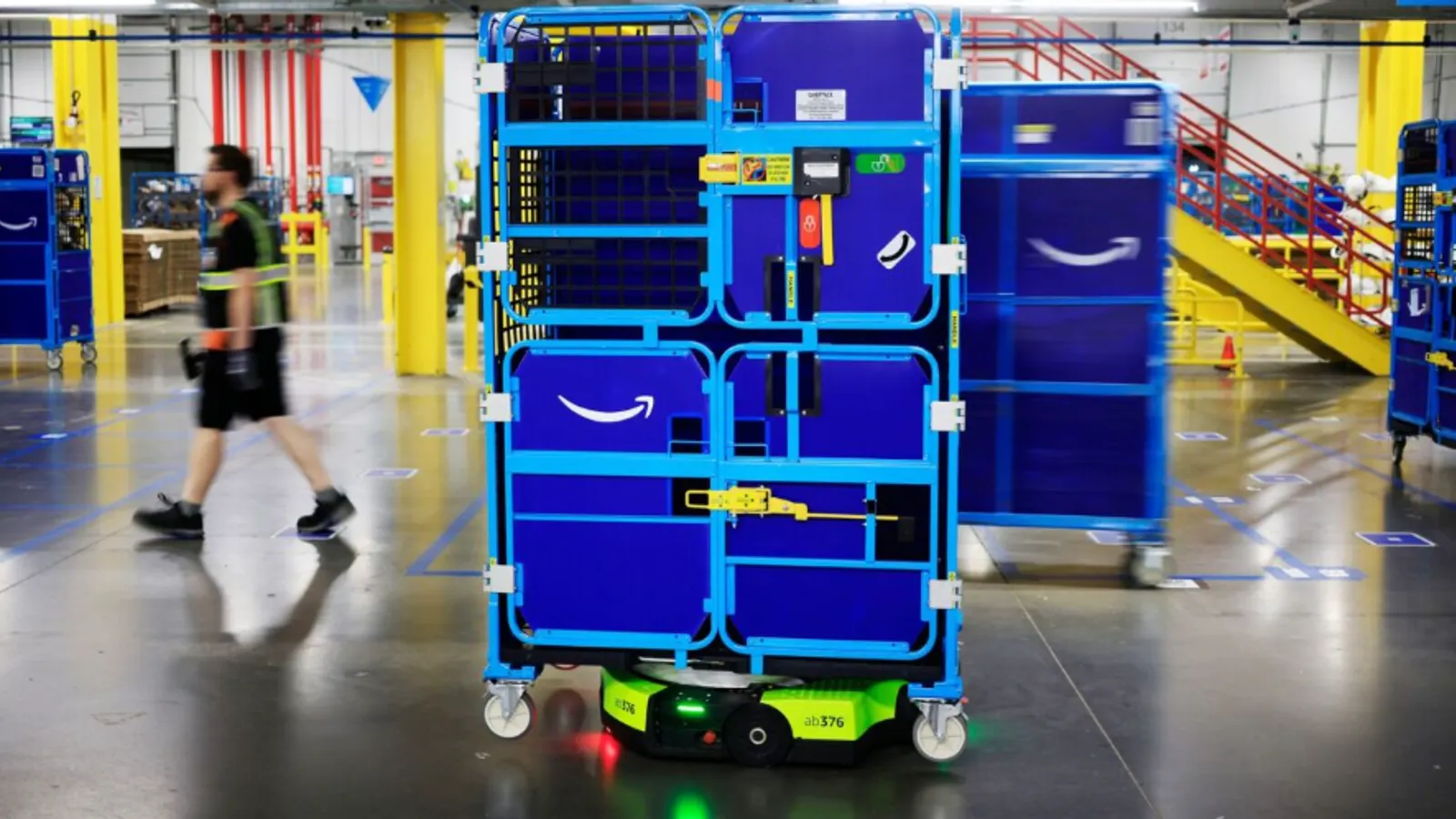
Here's what's actually happening on the ground. A warehouse buys a fleet of autonomous mobile robots from one vendor. They've got a warehouse management system from another vendor. Maybe some conveyor systems from a third. And then they're shocked, shocked! when these things don't play nice together. The robots are technically capable of moving faster, but the WMS can't feed them tasks quickly enough. Or the robots cluster in certain zones because nobody optimized for traffic flow across the whole facility.
Related coverage
More in Industrial
The Apple supplier priced its shares at the maximum and still had to turn away demand, which tells you something about where hardware money is flowing right now.
James Chen · 25 Jun · 5 min
Prime Day deals on Echos and Ring cameras are fine, but let's not confuse consumer gadgets with the serious robotics work happening in warehouses.
Robert "Bob" Macintosh · 25 Jun · 3 min
Amazon's CEO made his first India trip and left behind a $13 billion AI commitment and an aggressive quick-commerce expansion. The numbers are real. The execution is the hard part.
James Chen · 25 Jun · 6 min
A wave of arXiv preprints this week tackles one of manipulation's oldest problems: how do you get a robot to learn from imperfect, incomplete, or just plain missing data?
According to Supply Chain Dive, investing in intelligent software systems is becoming crucial for warehouse operators that employ robotics. That's a polite way of saying that a lot of folks bought expensive hardware without thinking through the integration layer, and now they're scrambling.
The shift happening now is from measuring individual robot performance to measuring system-level outcomes. Things like:
Order fulfillment accuracy across the entire operation, not just robot pick accuracy
System uptime and resilience when individual components fail (because they will fail)
Adaptability to demand fluctuations without manual intervention
Energy consumption and operational costs at the facility level
How well human workers and robots actually coordinate in practice
This is where AI enters the picture, and I want to be careful here because "AI" has become one of those words that means everything and nothing. What we're talking about specifically is machine learning systems that can optimize across multiple variables simultaneously, predict maintenance needs before failures happen, and dynamically reallocate resources based on real-time conditions. Not robots that think, but systems that learn.
Automated Warehouse frames this as moving from throughput to system intelligence, which is a decent way to put it. The idea is that you stop asking "how fast is my robot" and start asking "how well does my entire operation respond to changing conditions." That's a fundamentally different question, and it requires fundamentally different metrics.
Now, I should note that a lot of this thinking is coming from vendors who, surprise surprise, want to sell you more software. Daifuku isn't pushing this framework out of pure altruism, they've got integration services and software platforms to move. So take the evangelism with appropriate skepticism. But the underlying point is sound even if the messenger has obvious interests.
The challenge for warehouse operators, especially the mid-sized ones who don't have armies of systems engineers on staff, is that this stuff is genuinely hard to evaluate. When you're buying a robot, you can watch it work. You can measure its speed, its accuracy, its uptime. When you're buying "system intelligence," what exactly are you getting? How do you compare vendor claims? The metrics are mushier, the outcomes are harder to attribute to specific investments, and the sales pitches are full of jargon that obscures more than it illuminates.
I've talked to a few warehouse managers over the past year (my email's on the about page if you want to add your perspective) and the common thread is confusion. They know they need better software. They know their current systems aren't talking to each other properly. But they don't know how to evaluate solutions, and they're wary of getting locked into proprietary platforms that will be expensive to escape from later. Which, having lived through enterprise software cycles before, is a completely reasonable fear.
What I think is actually useful here is separating two different problems that often get conflated. The first is orchestration, basically getting your various automated systems to work together coherently. This is largely a solved problem from a technical standpoint, though implementation remains messy. The second is optimization, using data and learning systems to continuously improve performance over time. This is where the genuinely new capabilities are emerging, and also where the hype is most likely to outpace reality.
The honest truth is that most warehouses would see significant gains just from better orchestration, from getting their existing systems to communicate properly and eliminating the bottlenecks that come from poor integration. The fancy AI optimization layer is nice to have but it's not going to help much if your baseline coordination is a mess. And yet the industry marketing tends to focus on the sexy AI stuff because that's what gets attention and justifies premium pricing.
I'm not saying the AI capabilities are fake or useless. They're real and they matter, especially for high-volume operations where even small percentage improvements translate to meaningful dollars. But I am saying that a lot of warehouse operators would be better served by boring integration work than by chasing the latest machine learning platform. Sometimes the unsexy solution is the right one.
The other thing worth mentioning is that this shift toward system-level thinking has implications for how we evaluate the warehouse robotics market more broadly. If the value is increasingly in the software layer rather than the hardware, that changes the competitive dynamics. Companies that started as robot manufacturers need to become software companies, which is a very different organizational muscle. Meanwhile, software-native companies can potentially partner with commodity hardware providers and still capture most of the value. We're seeing some of this play out already, though it remains unclear how it'll shake out.
I'll be watching to see whether the "system intelligence" framing actually changes purchasing behavior or whether it's mostly marketing language layered over business as usual. My guess, based on how these things typically go, is that it'll take longer than the vendors hope but shorter than the skeptics expect. The underlying economics are real even if the adoption curve is slow.
But what do I know. I've only been watching technology hype cycles for thirty years.