NVIDIA and HPE Are Betting the Farm on Agentic AI Infrastructure. Here's Why That Matters for the Factory Floor.
The HPE AI Factory expansion announced at HPE Discover isn't just a server upgrade. It's a signal that agentic AI is moving out of the lab and into production environments.
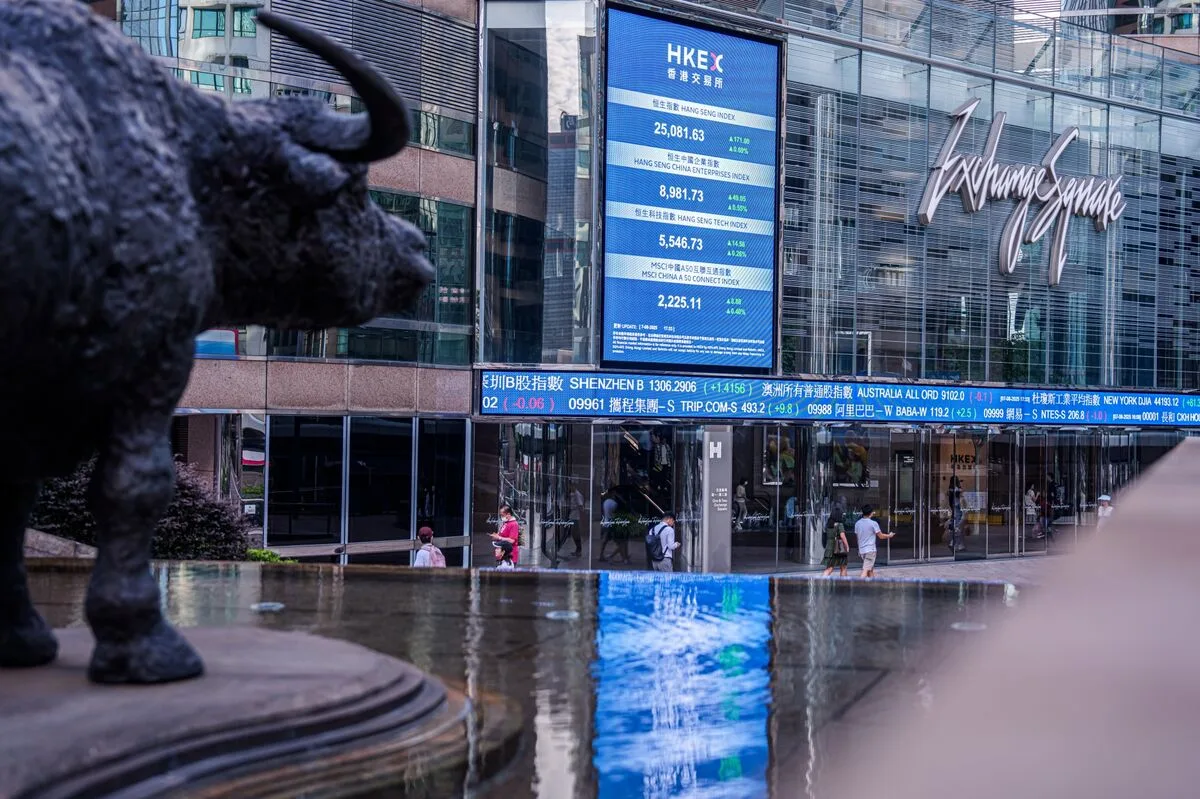
Image credit: Image via NVIDIA Blog — AI & Robotics. Used under fair use for news commentary. · source
Forty-three percent. That's roughly how much of enterprise AI projects never make it out of proof-of-concept stage, according to figures that have been floating around the industry for a couple of years now. I don't know if that number's still accurate, but I'll be honest, it matches what I've seen. When I was at Kuka, we'd get vendors through the door every few months with something that was going to transform our production lines. Most of it stayed in the demo room.
So when NVIDIA and HPE announced they're expanding the HPE AI Factory specifically for what they're calling "the era of agents," I paid attention. Not because the press release was exciting, which it wasn't, but because the framing is different this time. They're not selling a concept. They're selling infrastructure for production.
The term "AI factory" gets thrown around a lot these days, and it means different things depending on who's saying it. In this context, the HPE AI Factory with NVIDIA is essentially a pre-integrated stack of compute, networking, and software designed to run AI workloads at scale. Think of it less like a single product and more like a reference architecture that enterprises can actually deploy without spending eighteen months figuring out how all the pieces fit together.
The expansion announced at HPE Discover in Las Vegas includes support for the NVIDIA Vera CPU and the NVIDIA Agent Toolkit. The Vera CPU is NVIDIA's own Arm-based processor, which is a relatively new direction for them. The Agent Toolkit is the piece that's more relevant to anyone thinking about industrial applications. It's a set of tools for building, deploying, and managing AI agents, which are basically autonomous software systems that can take actions, not just generate responses.
Related coverage
More in Industrial
Three new papers on LiDAR-inertial navigation caught my eye this week, and if you run autonomous vehicles in large facilities, you should probably pay attention.
Robert "Bob" Macintosh · 15 hours ago · 4 min
Three new papers on offline-to-online reinforcement learning suggest robots are getting much better at picking up skills without starting from scratch every time.
Robert "Bob" Macintosh · Yesterday · 4 min
A pair of arxiv papers on robot planning caught my eye this week. One's about object-aware decision-making, the other about robots refining their own plans mid-thought. Both point in the same direction.
Robert "Bob" Macintosh · Yesterday · 4 min
For warehouse and factory environments, the distinction matters. A chatbot answers questions. An agent can, in theory, monitor a conveyor system, flag an anomaly, reroute a workflow, and log the incident without a human in the loop. Whether that actually works reliably at scale is a different question, and it's too early to say based on what's been disclosed publicly.
Somewhat unexpectedly, yes. NVIDIA also put out material around France's AI infrastructure buildout, tied to VivaTech and the anniversary of GTC Paris. The French angle is worth noting because it illustrates something broader: the AI factory concept is being adopted at a national infrastructure level, not just by individual enterprises.
According to the NVIDIA Blog, the AI infrastructure that France announced a year ago is now coming online, with agents running in production and startups deploying real applications. That's a faster timeline than I would have expected, frankly. European industrial firms tend to move carefully, and for good reason. I've worked with German and French automation engineers who would spend six months validating a sensor before signing off on it. Cautious people. Good engineers.
The fact that production deployments are happening in France's industrial and enterprise sector suggests the technology has crossed some threshold of reliability, or at least perceived reliability. This is based on NVIDIA's own reporting, so take it with appropriate salt.
This raises questions about... well, multiple things. The Agent Toolkit, as described in the NVIDIA Blog's HPE AI Factory piece, is positioned as the connective tissue between AI models and real-world enterprise systems. In a manufacturing context, that means integrating with MES platforms, SCADA systems, ERP backends, the whole alphabet soup.
I called an old contact who works in automation integration, not going to name him, and his take was cautious but not dismissive. His concern, which I share, is the middleware problem. Getting an AI agent to make a decision is one thing. Getting it to talk reliably to a 15-year-old Siemens S7 PLC running a production line is another thing entirely. NVIDIA's toolkit presumably handles the modern stack cleanly. What happens at the legacy interface is where things get interesting, and not always in a good way.
When I was at Kuka, we spent more engineering hours on integration work than on the robots themselves. That ratio hasn't changed much. Any vendor telling you their agentic AI solution drops straight into your existing infrastructure without pain is selling you something.
Look, here's the thing. The HPE AI Factory expansion is real infrastructure from two serious companies. This isn't vaporware. NVIDIA's been building toward this for years, and HPE has the enterprise relationships to actually get this stuff deployed. The combination of Vera CPU compute and agentic tooling, if it performs as described, is a meaningful step up from what most enterprises have been running AI workloads on.
But the use cases that matter most for industrial robotics, real-time control, safety-critical decision-making, autonomous coordination across large robot fleets, those remain the hard problems. Agentic AI is well suited to planning and orchestration layers. It's less proven at the millisecond-level control layer where most of the interesting stuff in factory automation actually happens.
My read: this is worth watching closely, worth piloting in non-critical workflows, and worth having your infrastructure team evaluate seriously. It's not worth ripping out your existing automation stack to chase it. Not yet.