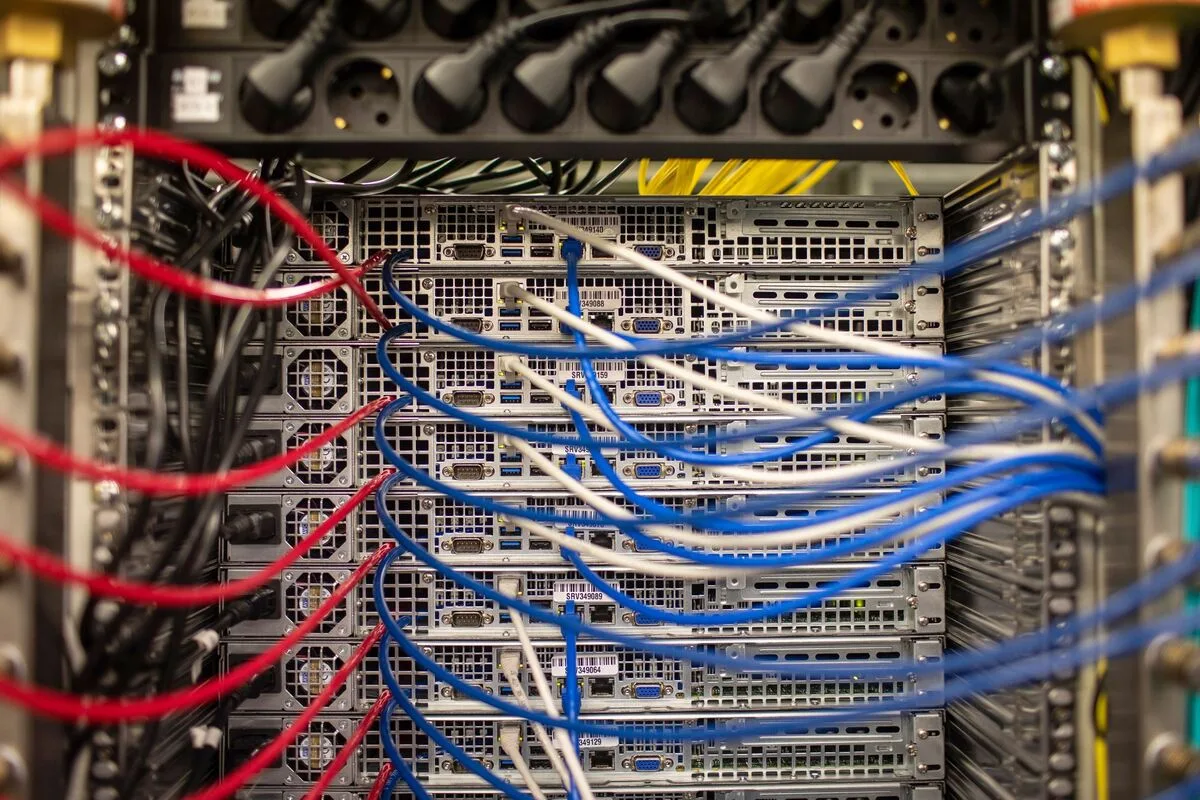
Is anyone else starting to wonder where all this power is actually going to come from?
I'll be honest, I've been watching the data center buildout with the same mix of fascination and mild alarm I used to feel watching a customer spec out a robot cell with no thought given to the electrical infrastructure. You'd get the call six months later. "Bob, the floor transformer can't handle it." Same energy here, if you'll pardon the pun.
So this week Bloomberg reported that Microsoft and Chevron have signed a 20-year power deal for a proposed data center in West Texas. Twenty years. That's not a contract, that's a marriage. The project, which Chevron is calling Project Kilby, is being developed in collaboration with investment fund Engine No. 1, and it's expected to start producing power by 2028. At full ramp, it'll push out 2.67 gigawatts. To put that in terms that mean something: that's enough to run more than 530,000 Texas homes.
For one data center. Potentially.
Now, I want to be careful here because this is based on limited public information, and Chevron hasn't made a final investment decision yet. That's supposed to happen later this year. So there's still a version of this where it doesn't happen, or happens smaller than advertised. Projects of this scale slip, get redesigned, get cancelled. I've seen it. But the fact that two companies of this size are willing to publicly commit to a 20-year natural-gas arrangement tells you something about the confidence level on the demand side.
And the demand side is AI. Specifically, the compute infrastructure that makes large language models and everything downstream of them actually run. When I was at Kuka, we used to talk about the "hidden costs" of automation, the stuff customers didn't budget for until it bit them. Power was always on that list. Cooling too. The joke was that the robot was the cheap part. Well, the same logic applies here at a scale that would've seemed absurd to me fifteen years ago.
Microsoft has been on a data center spending tear for a while now. The Chevron deal is in some ways just the logical endpoint of that trajectory. You need compute, compute needs power, power in West Texas means natural gas. That's the chain of reasoning, and it's pretty hard to argue with the engineering logic even if you've got concerns about the climate implications.
And people do have concerns. This raises questions about, well, multiple things. The obvious one is whether locking in 20 years of gas-fired power is compatible with the net-zero commitments that Microsoft and others have been making publicly. I'm not going to pretend I have a clean answer to that. The company's position, as best I can tell from the reporting, is that this is about meeting demand that has to be met somehow. Whether that framing holds up to scrutiny is genuinely unclear to me, and I suspect it'll be a live debate for a while.
What I find more interesting from a pure infrastructure standpoint is the 2028 timeline. That's not far off. If you're building something that could be one of the largest data centers in the United States, getting power generation stood up in roughly two years is aggressive. Natural gas plants can move faster than wind or solar at this scale, which is almost certainly part of why this particular arrangement makes sense to both parties. Engine No. 1, for what it's worth, has positioned itself as a kind of energy transition investor, which makes this pairing a bit unusual. But money finds its way.
I called my old colleague Dave, who spent years on industrial power systems before moving into facilities consulting, and his read was that 2.67 gigawatts is a number that should get people's attention. "That's not a data center," he said, "that's a small city." He's not wrong. The biggest industrial plants I worked around during my time in manufacturing were drawing maybe a few hundred megawatts on a heavy day. We're talking about an order of magnitude beyond that for what is essentially a building full of servers.
Look, here's the thing. Whether you think this is exciting or alarming probably depends on where you sit. If you're building AI infrastructure, this is exactly the kind of long-term supply certainty you need to justify the capital expenditure. If you're a climate researcher or a grid operator in Texas, you're probably looking at this and doing some nervous arithmetic.
From where I sit, which is basically a guy who spent his career watching industrial energy consumption grow every decade and never quite fast enough to meet the next thing, I think the honest answer is: the AI buildout is real, the power demand is real, and the industry is going to keep finding ways to meet it. Whether those ways are the right ones is a separate conversation. It's too early to say how this particular project lands, but the direction of travel seems pretty clear.