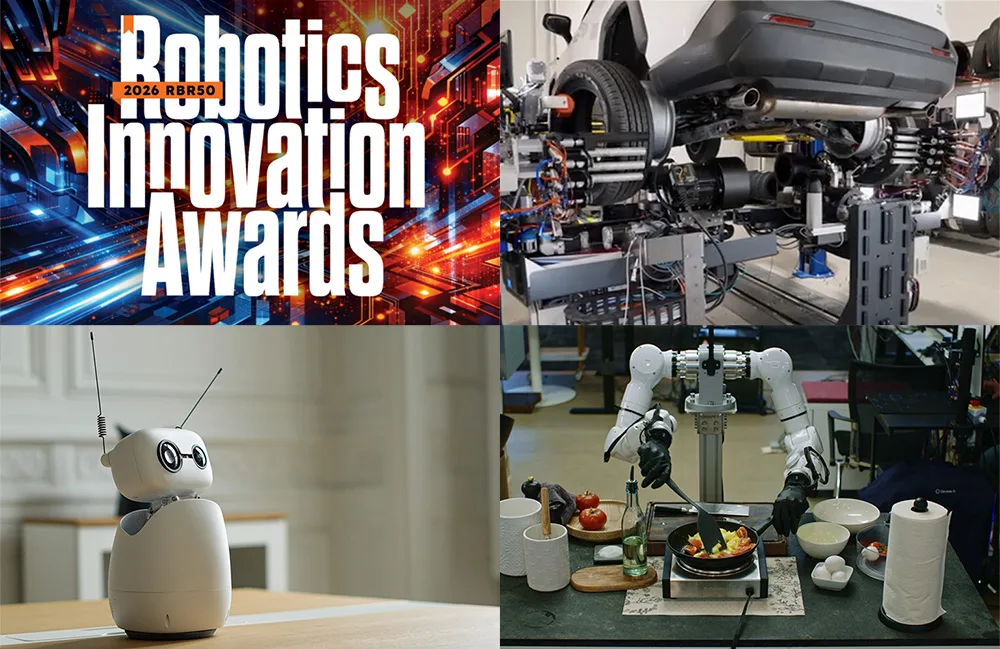
Image credit: Image via The Robot Report. Used under fair use for news commentary. · source
The robotics industry had a busy May, and if you read the headlines, you might think we're on the cusp of something transformative. I'm not so sure. After reviewing the coverage from The Robot Report and Automated Warehouse, what strikes me is the gap between the breathless announcements and the actual technical substance underneath.
To be precise, this isn't cynicism. Some of what happened in May represents real progress. But the field has a pattern of conflating incremental engineering improvements with fundamental breakthroughs, and May 2026 was no exception.
The Robotics Summit & Expo anchored the month's news cycle, with Boston hosting what has become one of the industry's more substantive gatherings. Unlike some conferences that function primarily as marketing exercises, the Summit tends to attract working engineers and researchers alongside the business development crowd. The timing meant that companies saved their announcements for maximum visibility, which is understandable but makes it harder to evaluate claims on their merits rather than their PR timing.
What we actually saw was a concentration of product launches and partnership announcements that, stripped of their superlatives, amount to steady iteration. This is fine. Iteration is how engineering works. But the framing matters because it shapes investment decisions, policy conversations, and public expectations about what robots can actually do.
Related coverage
More in Industrial
The Apple supplier priced its shares at the maximum and still had to turn away demand, which tells you something about where hardware money is flowing right now.
James Chen · 25 Jun · 5 min
Prime Day deals on Echos and Ring cameras are fine, but let's not confuse consumer gadgets with the serious robotics work happening in warehouses.
Robert "Bob" Macintosh · 25 Jun · 3 min
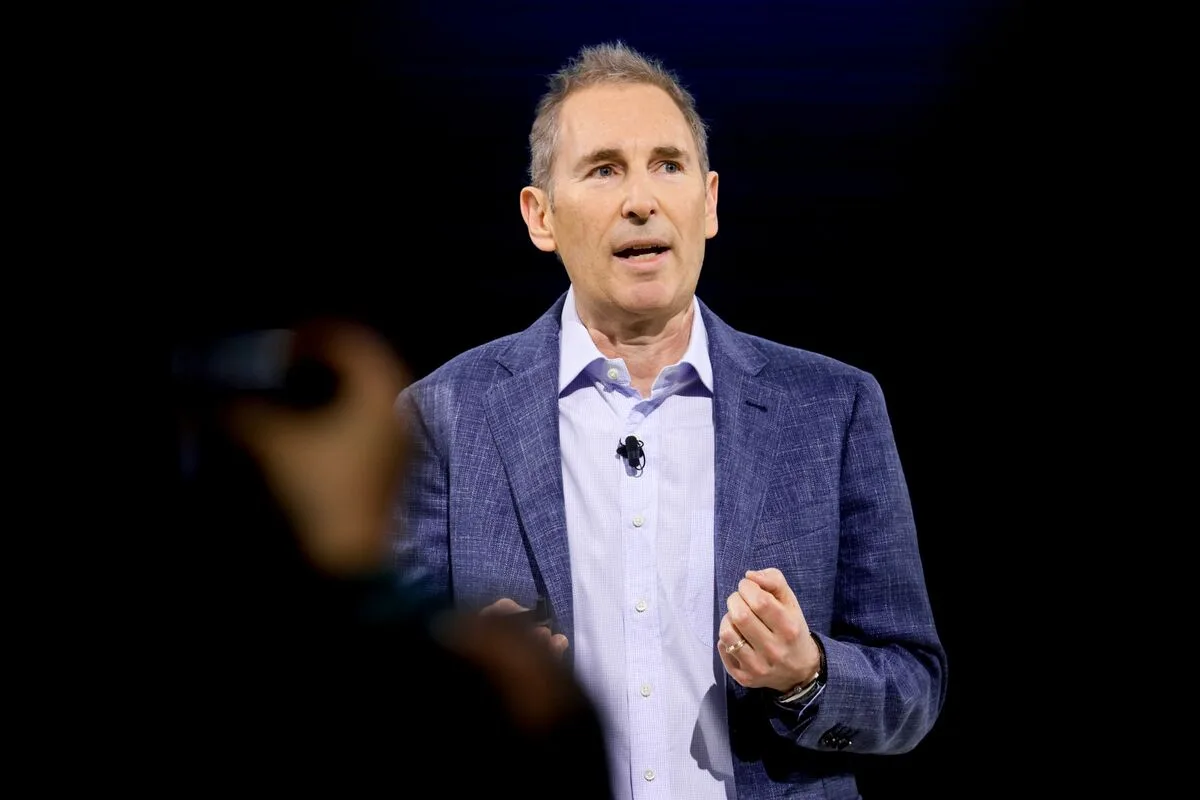
Amazon's CEO made his first India trip and left behind a $13 billion AI commitment and an aggressive quick-commerce expansion. The numbers are real. The execution is the hard part.
James Chen · 25 Jun · 6 min
A wave of arXiv preprints this week tackles one of manipulation's oldest problems: how do you get a robot to learn from imperfect, incomplete, or just plain missing data?
The warehouse automation sector dominated the funding news, and here the pattern is clearer. Capital continues flowing into logistics robotics at a pace that suggests investors remain confident in near-term returns. The specific figures weren't disclosed in the coverage I reviewed, which is frustrating (I know I'm being picky here, but funding announcements without dollar amounts are essentially meaningless noise). What we can infer is that the automated warehouse space remains one of the few robotics verticals with a proven path to profitability, which explains the continued investor interest even as other sectors struggle.
Actually, the research shows that warehouse robotics has benefited from unusually favorable conditions: constrained labor markets, e-commerce growth that shows no signs of reversing, and relatively structured environments that play to current robotic capabilities. These aren't transferable advantages. A company that can navigate a warehouse doesn't automatically know how to navigate a construction site or a hospital.
The AI integration claims require the most careful parsing. Multiple stories referenced artificial intelligence as a key differentiator, but the coverage I found didn't specify what that means in technical terms. Are we talking about improved perception models? Better motion planning? More sophisticated task allocation? These are very different capabilities with very different implications.
It's worth noting that the term "AI" in robotics marketing has become almost meaningless. A system using a simple neural network for object detection gets described the same way as one using foundation models for generalizable manipulation. The former is mature technology deployed in production systems; the latter remains largely a research proposition despite considerable progress in the past two years. Without access to technical documentation or peer-reviewed publications, I can't evaluate which category these May announcements fall into. My suspicion, based on historical patterns, is that most fall closer to the former.
The new product announcements were genuinely interesting in aggregate, even if individual claims were hard to verify. What I noticed was a shift toward modularity and interoperability. Companies seem to be moving away from fully integrated solutions toward components that can work within existing infrastructure. This is a sign of market maturation. Early-stage industries sell complete systems because customers don't know what they need; mature industries sell components because customers have learned what works and want flexibility.
This hasn't been replicated yet in rigorous academic studies, but anecdotally, the shift suggests that warehouse operators are becoming more sophisticated buyers. They're no longer willing to rip out existing systems for a vendor's preferred architecture. They want robots that can integrate with their current warehouse management software, their existing conveyors, their established workflows. This is good for the industry long-term, even if it makes individual company differentiation harder.
What remains unclear is the actual deployment scale. Coverage mentioned various pilot programs and partnerships, but converting pilots to production remains the industry's persistent challenge. I would estimate that fewer than 30% of announced warehouse automation pilots reach full-scale deployment within two years, though I should note this is based on limited data and informal tracking rather than systematic research. The gap between "we're testing this" and "this is running 24/7 in our facility" is where most robotics companies stumble.
The reasons are well-documented: integration costs exceed projections, edge cases multiply in production environments, maintenance requirements prove more demanding than anticipated, and the promised labor savings don't materialize cleanly because you still need humans to handle exceptions. None of this is insurmountable, but it explains why the gap between announcement and reality persists.
On the research front, May was quieter than I expected. The Summit presumably featured academic presentations, but these didn't make the top-10 lists from either publication. This is a structural issue with how robotics news gets covered. Papers presenting genuinely novel manipulation techniques or perception advances don't generate the same clicks as a funding announcement or a partnership with a recognizable brand. The result is that the public conversation about robotics skews heavily toward commercial developments while the foundational research that enables those developments remains invisible.
I'd want to see more coverage of what actually presented at the Summit's technical sessions. Were there new results on sim-to-real transfer? Progress on dexterous manipulation? Novel approaches to human-robot collaboration? These questions matter more for understanding where the field is heading than another announcement about a warehouse pilot.
The policy dimension was notably absent from May's coverage, which concerns me. Automated warehouse systems raise genuine questions about workforce displacement, safety standards, and the concentration of logistics infrastructure in the hands of a few large players. These aren't hypothetical concerns; they're playing out in real time in facilities across the country. Yet the top stories focused almost exclusively on technology and business developments.
Some argue that robotics journalism should stick to technical and commercial coverage, leaving policy to other beats. Others counter that you can't understand the technology's significance without understanding its social context. I lean toward the latter view, though I recognize reasonable people disagree.
What I'd want to see next is more granular data. How many robots are actually operating in production environments versus sitting in pilot programs? What are the actual productivity gains, measured rigorously rather than claimed in press releases? How do maintenance costs compare to projections after 12 months of operation? This information exists inside companies but rarely makes it into public coverage.
The industry's opacity serves short-term interests (no company wants to admit its robots require more maintenance than promised) but hurts long-term credibility. When every announcement is framed as a breakthrough and every deployment is described as successful, observers lose the ability to distinguish genuine progress from marketing. Eventually, this breeds the kind of skepticism that makes it harder to recognize actual advances when they occur.
May 2026, in sum, was a month of consolidation rather than transformation. The warehouse automation sector continues its steady maturation. The Summit provided a venue for announcements that would have happened anyway. AI remained a marketing term more than a technical descriptor. And the gap between what companies claim and what we can verify remained as wide as ever.
This sounds more negative than I intend. Consolidation is progress. Maturation is progress. The fact that warehouse robotics has become boring enough to generate routine funding rounds rather than breathless feature stories is, in a way, the best evidence that the technology actually works. But we should be honest about what we're seeing. May 2026 wasn't a month of breakthroughs. It was a month of incremental improvements dressed in breakthrough language, which is how most months in robotics actually look once you strip away the press releases.
The field will advance. Genuinely new capabilities will emerge. But they'll emerge from research labs and careful engineering, not from PR cycles timed to industry conferences. The challenge for those of us covering the space is to maintain enough skepticism to identify real progress when it happens, while remaining open enough to recognize it. May's coverage, heavy on announcements and light on verification, didn't make that task any easier.