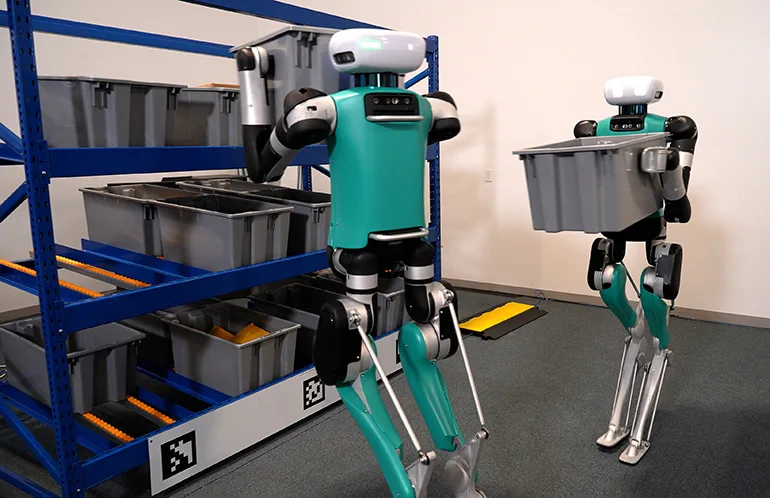
Why Humanoid Hands Remain Robotics' Most Stubborn Engineering Challenge
Walking robots make headlines, but the real commercial barrier lies in building hands that can actually do useful work.
Image credit: Photo via Unsplash. Free to use under Unsplash License. · source
What's the gap between robot demos and real deployments?
Humanoid robots have become remarkably good at walking, running, and even performing backflips. Yet the path from viral demonstration to commercial contract remains frustratingly narrow. The bottleneck, according to recent industry analysis from TechCrunch and IEEE Spectrum, is not legs. It is hands.
The distinction matters enormously for anyone tracking where robotics investment will actually pay off. Locomotion generates attention. Manipulation generates revenue.
Why are hands so much harder than legs?
The engineering challenge comes down to degrees of freedom and contact complexity. A bipedal robot's legs need to manage perhaps six to twelve joints, with ground contact that follows predictable physics. Hands, by contrast, pack 20 or more degrees of freedom into a compact space, and must handle objects of wildly varying shapes, weights, textures, and fragility.
Think of it this way: walking is like playing a piano piece where you know every note in advance. Grasping an unknown object is like improvising a duet with a partner who changes instruments mid-song.
The sensing requirements compound the difficulty. Human fingertips contain roughly 2,500 mechanoreceptors per square centimeter. Replicating even a fraction of that tactile resolution, while maintaining durability in industrial settings, remains an open problem.
Related coverage
More in Humanoids
The headlines are celebrating a $2.5B humanoid robotics deal. I'd pump the brakes a little.
Mark Kowalski · 25 Jun · 6 min
Sometimes the sources don't pan out. Here's what happened when I tried to write a humanoids story this week and ended up with Samsung deals instead.
Sarah Williams · 25 Jun · 3 min
Diffusion models are getting good at imagining robot movements, but 'imaginable' and 'physically possible' aren't the same thing. Researchers are starting to close that gap.
Sarah Williams · 25 Jun · 6 min
A batch of fresh robotics research tackles the same underlying problem from different angles: robots that can see but don't really understand where things are.