The Four-Hour Wall: Why Humanoid Robots Keep Running Out of Juice
Current battery technology gives humanoid robots about half the runtime they need for practical deployment. Three emerging approaches could finally break through this bottleneck.
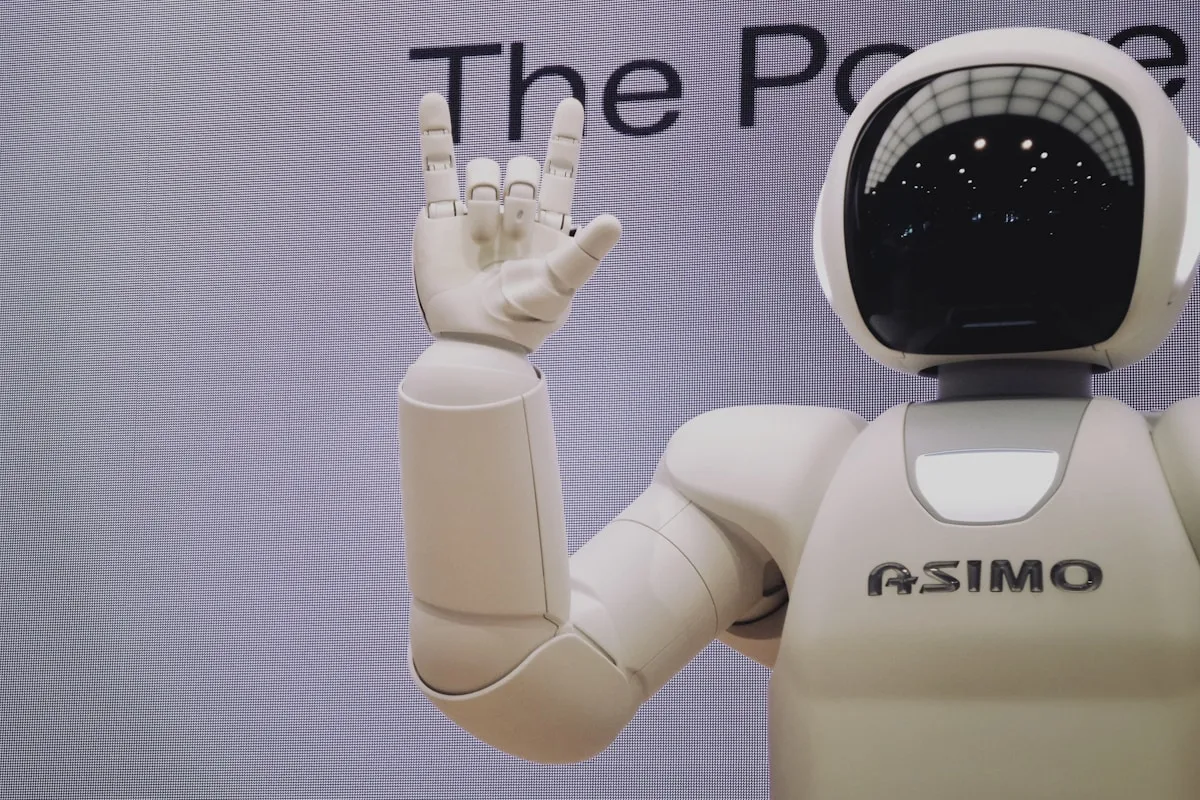
Image credit: Photo via Unsplash. Free to use under Unsplash License. · source
What is the battery problem facing humanoid robots?
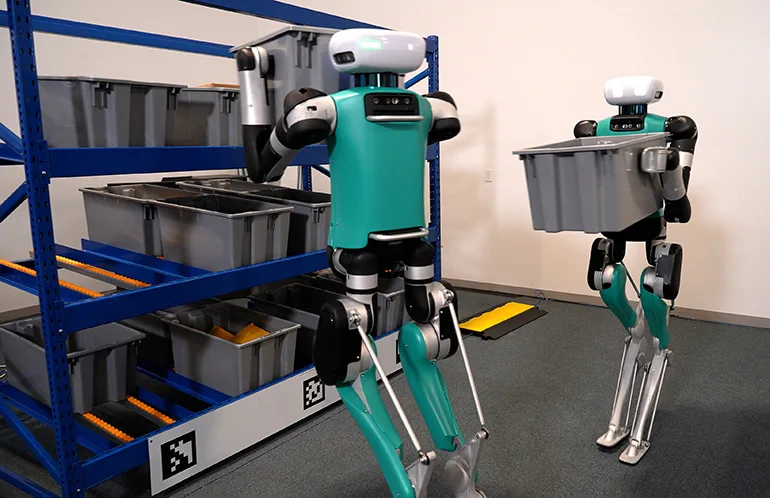
Humanoid robots have a stamina problem that their makers would rather not discuss. Current lithium battery technology provides roughly four hours of useful work before these machines need to recharge, according to reporting from Nikkei Asia and Reuters. The industry consensus is that eight hours represents the minimum threshold for practical commercial deployment.
That gap matters enormously. A robot that cannot complete a standard work shift without interruption becomes far less attractive to warehouse operators, manufacturers, and logistics companies evaluating automation investments.
Why is this so difficult to solve?
Humanoid robots face a uniquely challenging energy equation. Unlike wheeled robots that roll efficiently across flat surfaces, humanoids must constantly fight gravity. Walking upright requires continuous power to dozens of motors, each making micro-adjustments to maintain balance. Add manipulation tasks (lifting, carrying, placing objects) and the energy demands multiply.
Think of it like the difference between riding a bicycle and walking while carrying groceries. The bicycle converts your energy into forward motion with minimal waste. Walking demands constant muscular effort just to stay upright, and carrying weight compounds the problem. Humanoid robots are perpetually carrying their own weight in the least efficient way possible.
Related coverage
More in Humanoids
The headlines are celebrating a $2.5B humanoid robotics deal. I'd pump the brakes a little.
Mark Kowalski · 25 Jun · 6 min
Sometimes the sources don't pan out. Here's what happened when I tried to write a humanoids story this week and ended up with Samsung deals instead.
Sarah Williams · 25 Jun · 3 min
Diffusion models are getting good at imagining robot movements, but 'imaginable' and 'physically possible' aren't the same thing. Researchers are starting to close that gap.
Sarah Williams · 25 Jun · 6 min
A batch of fresh robotics research tackles the same underlying problem from different angles: robots that can see but don't really understand where things are.