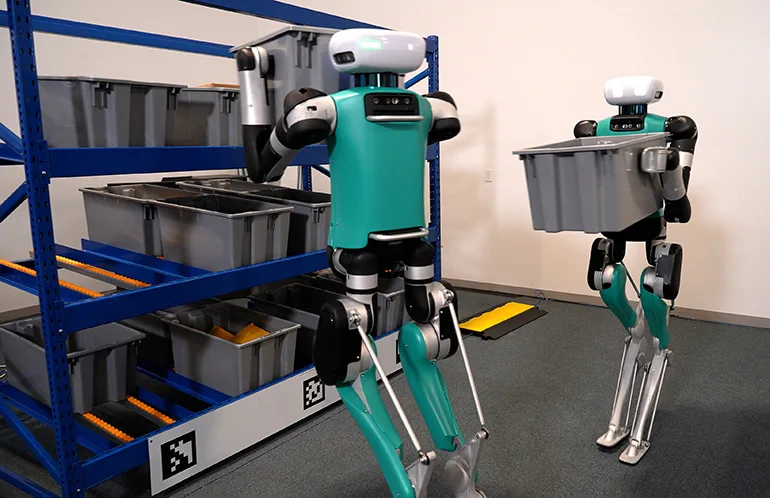
Sim-to-Real Transfer Cracks Locomotion. Manipulation Is Next.
A decade of training robots in simulation before deploying them in the real world is finally delivering results for walking and running. Now researchers are applying the same playbook to the harder problem of dexterous hands.
Image credit: Photo via Unsplash. Free to use under Unsplash License. · source
What just happened?
Simulation-to-reality transfer, the technique of training robots in virtual environments before deploying them in the physical world, has reached a turning point for locomotion tasks. After roughly ten years of incremental progress, robots trained primarily in simulation can now walk, run, and navigate uneven terrain with impressive reliability.
The breakthrough has been confirmed across multiple industry sources, with POLITICO Europe and Reuters both reporting on the development and its implications for the broader robotics industry.
How does sim-to-real transfer work?
Think of it like a flight simulator for robots. Instead of risking expensive hardware through thousands of hours of trial and error in the real world, engineers create detailed virtual environments where robots can practice movements millions of times. The physics engine simulates gravity, friction, and collisions. The robot's control software learns from its virtual mistakes.
The challenge has always been the "reality gap." Simulations, no matter how sophisticated, cannot perfectly replicate every quirk of the physical world. A policy that works flawlessly in simulation might stumble on a real floor with slightly different friction properties.
Related coverage
More in Humanoids
The headlines are celebrating a $2.5B humanoid robotics deal. I'd pump the brakes a little.
Mark Kowalski · 25 Jun · 6 min
Sometimes the sources don't pan out. Here's what happened when I tried to write a humanoids story this week and ended up with Samsung deals instead.
Sarah Williams · 25 Jun · 3 min
Diffusion models are getting good at imagining robot movements, but 'imaginable' and 'physically possible' aren't the same thing. Researchers are starting to close that gap.
Sarah Williams · 25 Jun · 6 min
A batch of fresh robotics research tackles the same underlying problem from different angles: robots that can see but don't really understand where things are.