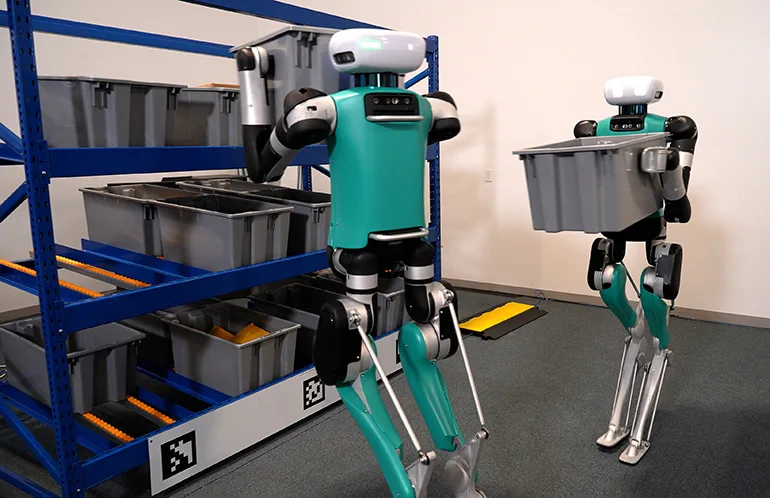
Japan Sets National Target for 100,000 Humanoid Robots by 2030
A government white paper outlines an ambitious deployment goal that would position Japan as the global leader in humanoid manufacturing integration.
Image credit: Photo via Unsplash. Free to use under Unsplash License. · source
Japan has proposed a national target to deploy 100,000 humanoid robots in manufacturing settings by 2030, according to a government white paper reported by Reuters and confirmed by Nikkei Asia.
The target represents one of the most concrete national commitments to humanoid robotics anywhere in the world. While other countries have announced broad AI and automation strategies, Japan's approach sets a specific number tied to a specific timeline.
Why is Japan making this move now?
The country faces a demographic reality that makes automation not just attractive but necessary. Japan's working-age population continues to shrink, and manufacturing sectors are struggling to fill positions. Humanoid robots, which can theoretically operate in environments designed for human workers, offer a path forward that does not require completely redesigning factory floors.
Japan also has something many countries lack: an existing industrial base capable of actually building these machines. The country's robotics sector, which already dominates in industrial arms and automation equipment, provides a foundation that makes the target ambitious but not fantastical.
How does 100,000 compare to current deployment?
To put the number in perspective, the global population of humanoid robots in active industrial use today is measured in the hundreds, perhaps low thousands. Reaching 100,000 units in a single country within five years would require manufacturing capacity that does not yet exist anywhere.
Related coverage
More in Humanoids
The headlines are celebrating a $2.5B humanoid robotics deal. I'd pump the brakes a little.
Mark Kowalski · 25 Jun · 6 min
Sometimes the sources don't pan out. Here's what happened when I tried to write a humanoids story this week and ended up with Samsung deals instead.
Sarah Williams · 25 Jun · 3 min
Diffusion models are getting good at imagining robot movements, but 'imaginable' and 'physically possible' aren't the same thing. Researchers are starting to close that gap.
Sarah Williams · 25 Jun · 6 min
A batch of fresh robotics research tackles the same underlying problem from different angles: robots that can see but don't really understand where things are.