Figure and 1X Are Making a Lot of Humanoids. But For Who, Exactly?
Both companies are scaling up production fast, but the question of who's actually buying these robots remains weirdly unclear.
Image credit: Image via IEEE Spectrum — Robotics. Used under fair use for news commentary. · source
Here's a question I keep coming back to: if humanoid robots aren't ready for commercial deployment yet, why are companies racing to build so many of them?
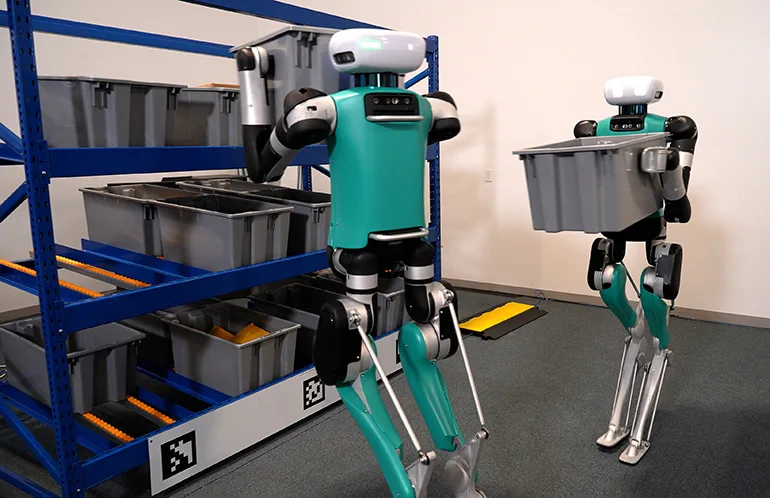
Figure announced it can now produce 55 robots per week. That's not a typo. Fifty-five humanoids, rolling off the line, every single week. According to the company, these units will be "allocated to internal research and development groups, data collection, efforts for robots to perform end-to-end housework, and commercial use-case development." Meanwhile, 1X just opened what they're calling the most vertically integrated robot factory in the United States, a 58,000 square foot facility in Hayward, California, with over 200 employees. They're making everything in-house (motors, batteries, transmissions, sensors, the works) and planning consumer shipments for 2026.
I initially thought this was straightforward good news. More robots means more data, more iteration, faster progress. But after reading through the announcements more carefully, something feels off.
Let's start with Figure. They're explicit that commercial use cases are still "in development." So where are 55 robots per week going? Internal R&D and data collection can only absorb so many units before you're just... stockpiling humanoids? I should know this better, but I genuinely don't understand the economics here. Are they burning through investor money to build inventory for a market that doesn't exist yet? Or is there something happening behind the scenes, pilot programs or enterprise deals that haven't been announced?

1X's pitch is slightly different. They're betting on the consumer market, specifically home robots. Their factory opening statement talks about "abundant, general-purpose home robots" becoming reality. The optimism is infectious, honestly. But I've covered enough robotics launches to know that "consumer shipments planned for 2026" can mean anything from "we'll ship ten units to friendly beta testers" to "we're going mass market." The company hasn't disclosed exact figures on how many NEO units they expect to ship, or at what price point.
Related coverage
More in Humanoids
The headlines are celebrating a $2.5B humanoid robotics deal. I'd pump the brakes a little.
Mark Kowalski · 25 Jun · 6 min
Sometimes the sources don't pan out. Here's what happened when I tried to write a humanoids story this week and ended up with Samsung deals instead.
Sarah Williams · 25 Jun · 3 min
Diffusion models are getting good at imagining robot movements, but 'imaginable' and 'physically possible' aren't the same thing. Researchers are starting to close that gap.
Sarah Williams · 25 Jun · 6 min
A batch of fresh robotics research tackles the same underlying problem from different angles: robots that can see but don't really understand where things are.