Wall Street's Robotics Bet Holds Steady as Macro Uncertainty Clouds Near-Term Outlook
Despite geopolitical whiplash and conflicting signals on Iran, institutional investors are keeping their automation positions largely intact, though the reasons why tell us more about the sector than any earnings call.
Crédit photo: Image via source article. Used under fair use for news commentary. · source
Robotics and automation stocks barely flinched this week even as broader markets swung on conflicting US-Iran diplomatic signals, a resilience that says something important about how institutional money now views the sector.
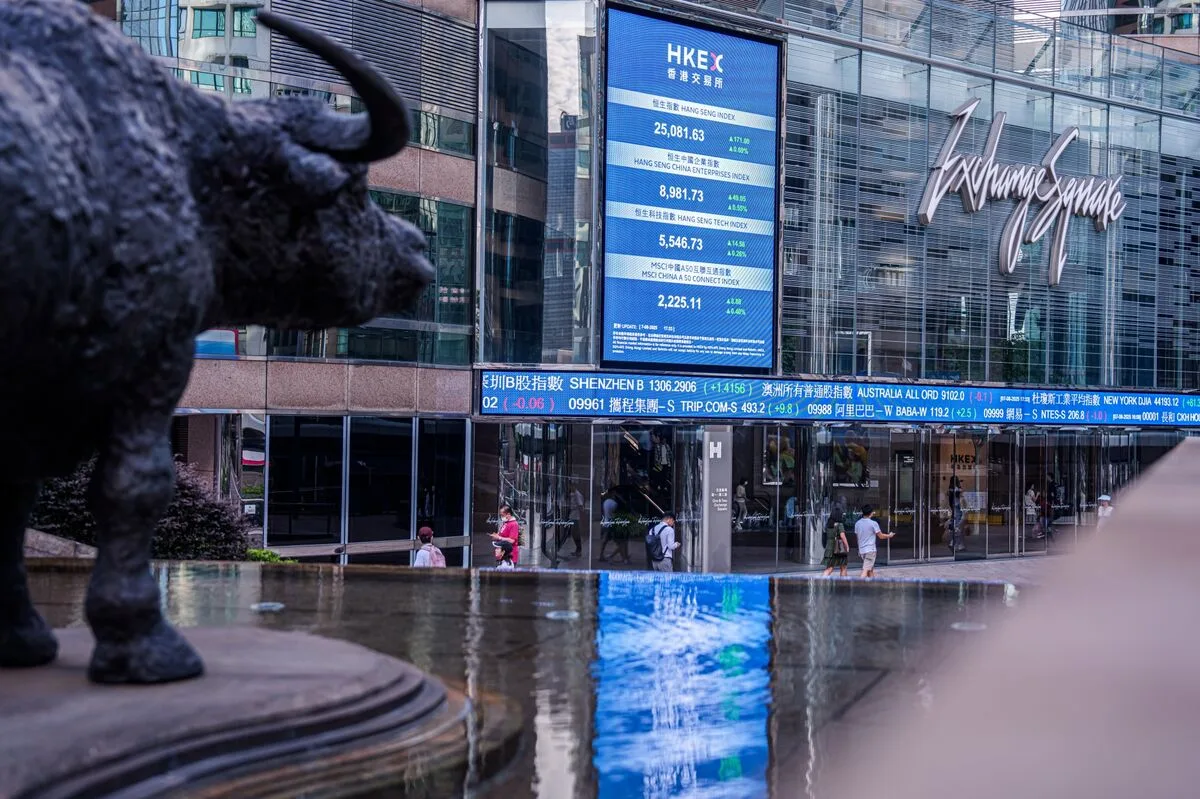
The S&P 500 pushed toward record territory on Monday following Iran peace hopes, then halted its rally Tuesday when those signals turned contradictory. Through it all, major automation plays held their ground. That's not nothing.
The short answer: institutional investors have largely decoupled their robotics thesis from short-term macro noise. The longer answer is more interesting.
From my time in hardware, I learned that manufacturing capex decisions operate on 18-to-36-month cycles. A factory doesn't cancel a $2 million robot cell because oil prices moved 3% on Iran headlines. The equipment is already on order, the integration timeline is locked, and the labor arbitrage math hasn't changed.
BlackRock's Jeffrey Rosenberg and State Street's Aakash Doshi both appeared on Bloomberg this week discussing portfolio positioning. Neither specifically addressed robotics, but their broader commentary on industrial allocation suggested a continued overweight in automation-adjacent sectors. The thesis remains intact: demographic pressures, reshoring momentum, and labor cost inflation all point the same direction.
Look, I've seen enough quarterly reports to know that "long-term thesis" is often code for "we're underwater and hoping." But the data here actually supports the conviction. US manufacturing job openings remain elevated. Warehouse vacancy rates in logistics corridors are still tight. The fundamental demand drivers haven't budged.
À lire aussi
More in Industrial
The Apple supplier priced its shares at the maximum and still had to turn away demand, which tells you something about where hardware money is flowing right now.
James Chen · 25 Jun · 5 min
Prime Day deals on Echos and Ring cameras are fine, but let's not confuse consumer gadgets with the serious robotics work happening in warehouses.
Robert "Bob" Macintosh · 25 Jun · 3 min
Amazon's CEO made his first India trip and left behind a $13 billion AI commitment and an aggressive quick-commerce expansion. The numbers are real. The execution is the hard part.
James Chen · 25 Jun · 6 min
A wave of arXiv preprints this week tackles one of manipulation's oldest problems: how do you get a robot to learn from imperfect, incomplete, or just plain missing data?
Industrial robot orders in North America were up roughly 12% year-over-year through Q1, according to the latest Association for Advancing Automation data
Warehouse automation backlogs at major integrators remain at 8-to-14 month lead times
Labor force participation in manufacturing-heavy age cohorts (25-54) has plateaued despite wage increases
The last point matters most. You can't hire workers who don't exist. And while immigration policy remains a wildcard, the baseline demographic math is, basically, locked in for the next decade.
State Street's Doshi noted that commodity-sensitive sectors face the most near-term uncertainty from geopolitical developments. Robotics doesn't fit that profile cleanly. Yes, supply chains for motors and sensors have China exposure. Yes, tariff policy matters. But the demand side is domestic, and that's what institutional allocators are pricing.
This is where my skepticism kicks in. The consensus view on automation is almost too comfortable right now.
A few things that concern me:
Integration capacity constraints. Everyone talks about robot demand, but the bottleneck is increasingly the systems integrators who actually install and commission this equipment. There are maybe 200 firms in North America with the capability to deploy complex automation at scale. That's an ambitious number to support the projected growth rates.
Software maturity gaps. The hardware is often the easy part. I've watched enough deployments stall because the vision system couldn't handle part variability, or the PLC programming took three times longer than quoted. These delays don't show up in order books, but they affect realized ROI.
The AI hype crossover. There's a growing tendency to conflate industrial automation with generative AI momentum. They're not the same thing. A welding robot doesn't care about large language models. When the AI narrative corrects (and it will, at some point), there's risk of collateral damage to adjacent sectors that got swept into the same basket.
It remains unclear how much of the current institutional positioning reflects genuine automation-specific conviction versus a broader "future of work" trade that bundles disparate technologies together.
Here's what struck me about this week's market coverage: despite multiple segments featuring chief strategists and sector analysts, nobody specifically addressed robotics or automation. Bloomberg ran through retail, consumer spending, tech broadly defined, and macro positioning. Automation was conspicuously absent from the conversation.
That could mean a few things. Maybe the sector is boring now, which is actually healthy. Boring means it's priced as infrastructure rather than speculation. Or maybe the analysts covering these names don't have strong near-term views, which suggests we're in a holding pattern until Q2 earnings provide fresh data points.
D.A. Davidson's Gil Luria and Constellation Research's Ray Wang both appeared discussing technology trends, but their focus was enterprise software and AI applications. The hardware layer, the actual robots and sensors and actuators, didn't come up. That's a gap in coverage that, frankly, I find frustrating. The physical automation layer is where the real constraints and opportunities live.
The honest answer: we don't know yet. Geopolitical uncertainty could resolve quickly or drag on for months. Interest rate expectations keep shifting. The consumer spending data that Kikoff's Cynthia Chen discussed suggests some softness in discretionary categories, which could eventually flow through to manufacturing demand.
But the structural case for automation hasn't changed. Labor is scarce and expensive. Reshoring requires productivity gains to be economically viable. Warehouse throughput demands keep rising with e-commerce penetration.
The real test for this sector isn't whether stocks hold up during a two-day macro wobble. It's whether the companies can actually deliver on their backlogs, train enough technicians to service the installed base, and prove that the ROI models work outside of controlled pilot environments.
I've been covering this beat long enough to know that press release numbers and production reality often diverge. The order books look healthy. The question is execution. And on that, we'll need to wait for the next round of earnings to get any real signal.
For now, the market seems content to hold its automation positions and wait. That's probably the right call. But I'd watch the integrator capacity numbers closely. If lead times start extending past 18 months, that's not a bullish signal. That's a bottleneck that eventually becomes a demand problem.