Standard Bots Raises $200M to Build Robot Arms in America. Here's What the Coverage Missed.
Everyone's reporting the number. Not many are asking whether the timing actually makes sense.
Crédit photo: Image via Bloomberg — Technology. Used under fair use for news commentary. · source
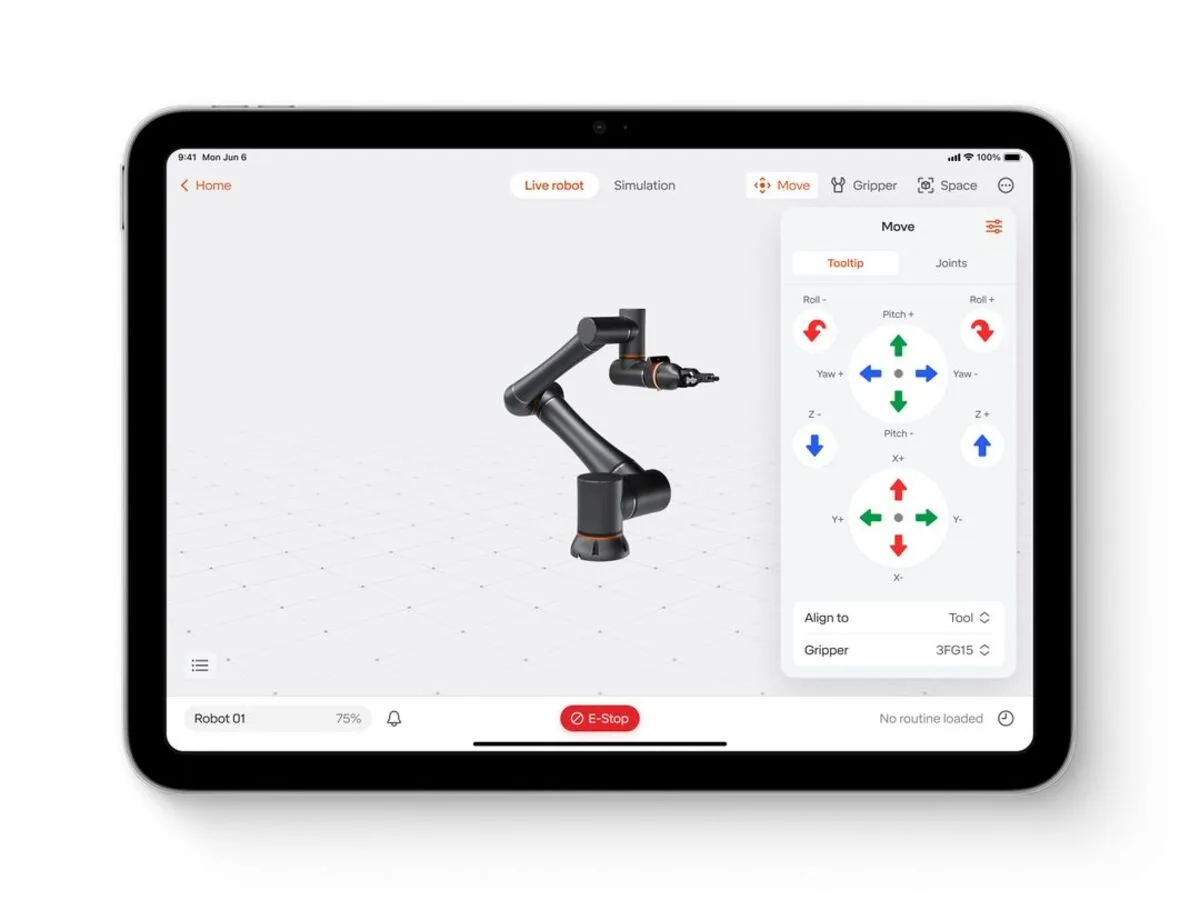
Most of the coverage on Standard Bots' $200 million raise has been pretty breathless. 'US takes on China.' 'Domestic robotics manufacturing surges.' You know the drill. What I haven't seen anyone ask is the more uncomfortable question: is this the right moment to be betting that hard on American robot arm manufacturing, or is it just a very expensive piece of industrial policy theatre?
I'll be honest, I've been watching this space since before most of these startup founders were in high school. Twelve years at Kuka will do that to you.
The numbers
The raise is real and it's significant. $200 million, announced June 9th, specifically earmarked to ramp up manufacturing of robotic arms on US soil. Bloomberg broke the story, and Standard Bots co-founder and CEO Evan Beard went on television to say that robots are, quote, critical to US manufacturing. He said it on "Bloomberg Tech." So it's out there.
The Robot Report added that Standard Bots is framing this as essential to making US manufacturing competitive globally. That framing isn't wrong, exactly. It's just incomplete.
Here's what $200 million actually buys you in this industry. It buys you a decent production line, maybe two if you're scrappy about it. It buys you tooling, which is expensive and slow to set up. It buys you engineers, if you can find them, and right now that's a genuine constraint. When I was at Kuka, we used to joke that the hardest part of scaling wasn't the capital, it was finding people who actually understood the mechanical tolerances on a six-axis arm well enough to supervise production. That problem hasn't gone away. It's arguably gotten worse.
À lire aussi
More in Industrial
The Apple supplier priced its shares at the maximum and still had to turn away demand, which tells you something about where hardware money is flowing right now.
James Chen · 25 Jun · 5 min
Prime Day deals on Echos and Ring cameras are fine, but let's not confuse consumer gadgets with the serious robotics work happening in warehouses.
Robert "Bob" Macintosh · 25 Jun · 3 min
Amazon's CEO made his first India trip and left behind a $13 billion AI commitment and an aggressive quick-commerce expansion. The numbers are real. The execution is the hard part.
James Chen · 25 Jun · 6 min
A wave of arXiv preprints this week tackles one of manipulation's oldest problems: how do you get a robot to learn from imperfect, incomplete, or just plain missing data?