Masa Son Is Probably Right About Space Data Centers, But the Reasoning Matters More Than the Conclusion
SoftBank's founder dismissed Elon Musk's orbital compute vision this week. The physics and economics mostly back him up, but the debate obscures what actually determines AI leadership.
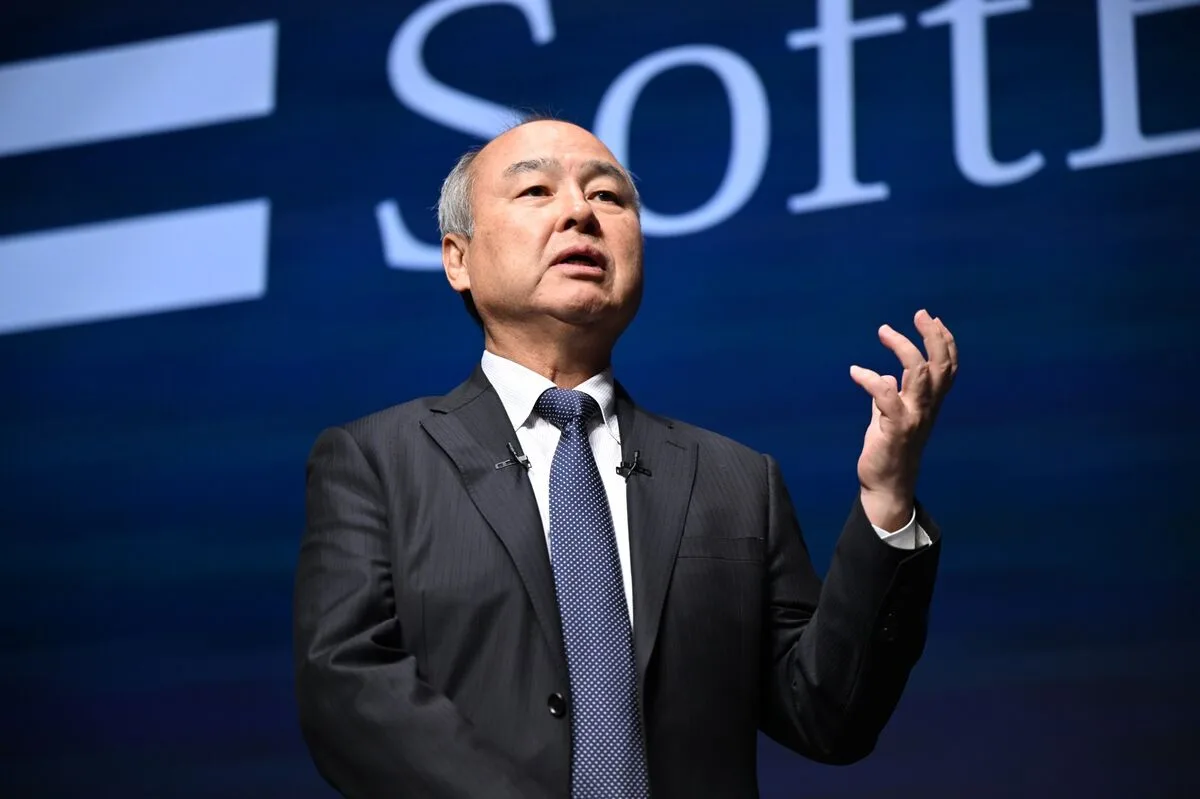
Crédit photo: Image via Bloomberg — Technology. Used under fair use for news commentary. · source
Think of the space data center debate the way you would think about arguments over where to put a library. The location matters, obviously. But if you are losing the knowledge race, the building's address is not your core problem.
That analogy is imperfect, I know, but it captures something real about the exchange that played out this week. Masayoshi Son, founder of SoftBank Group, publicly dismissed Elon Musk's vision for orbital data centers, telling observers that the AI race will be won by compute on Earth. Bloomberg reported that Son sees little merit in the concept Musk has championed. Son is, in the narrow technical and economic sense, almost certainly correct. But the conversation is worth pulling apart, because the question of where AI compute lives is genuinely interesting, and the reflexive dismissal from both sides tends to flatten a more complicated picture.
My position, stated plainly: orbital data centers are not a near-term competitive factor in AI development, and treating them as such is a distraction. But the reasons why matter enormously, and they are not the reasons that usually get cited in these headline-level disputes.
To be precise, the case against space-based AI compute is not primarily about rocket costs, though that is the argument you will most often encounter. The deeper issue is thermal management and latency, two constraints that become dramatically harder to engineer around when your hardware is in low Earth orbit.
À lire aussi
More in AI Models
Chipmakers swung wildly this week, from a Tuesday 'chip-wreck' to a Micron-led surge after hours. What's actually going on with AI's hardware backbone?
Sarah Williams · 26 Jun · 5 min
The original Creator Studio was shut down in 2023. Now it's back, rebuilt around an AI assistant that promises to grow your audience and reply to comments in your voice.
Sarah Williams · 26 Jun · 5 min
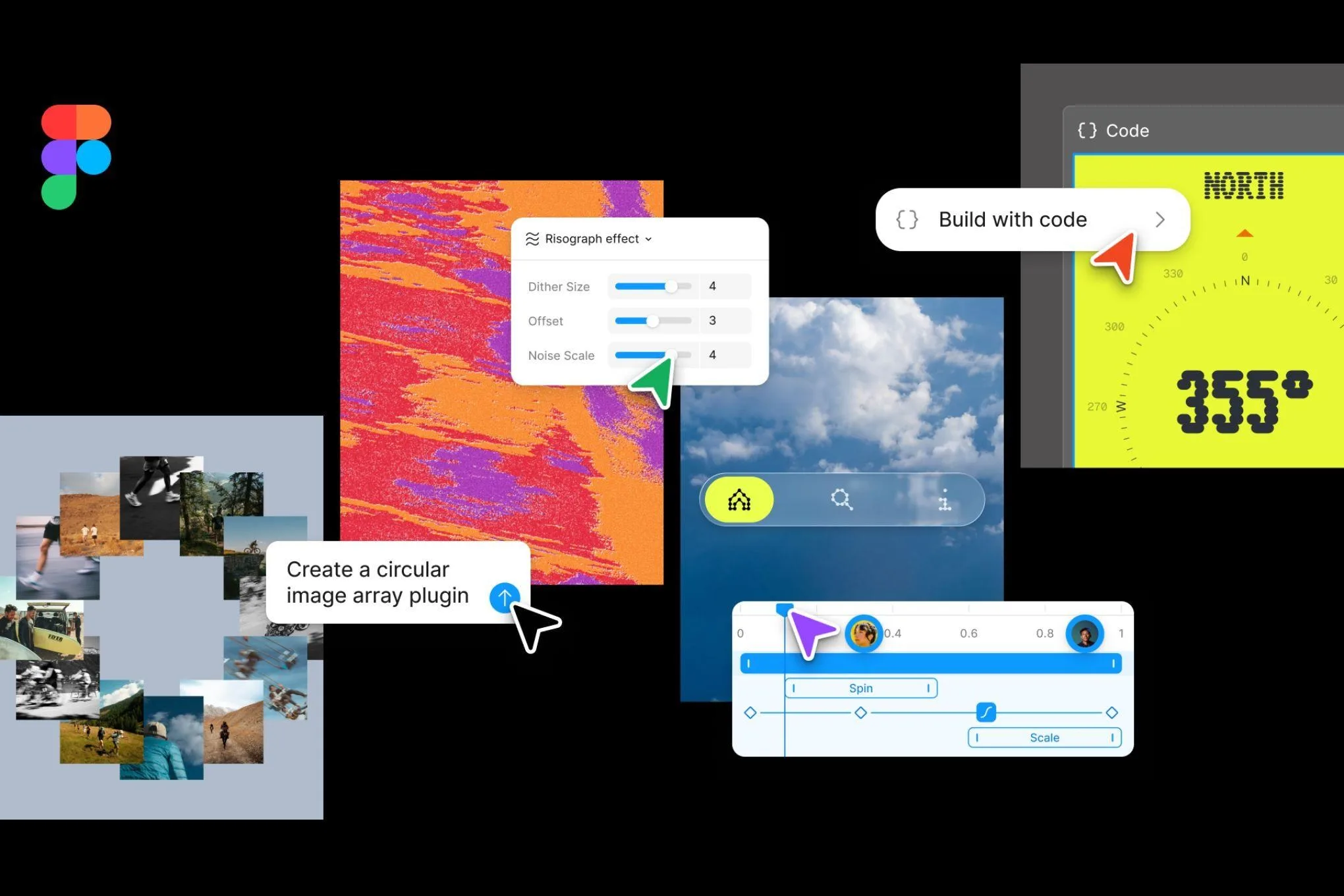
At its annual Config conference, Figma announced coding layers, AI-generated motion graphics, and a reimagined canvas that blurs the line between design and full-stack development.
Sarah Williams · 26 Jun · 5 min
Everyone talks about chips and models. The memory bottleneck is the part of the AI buildout that keeps getting underestimated, and Micron's latest earnings make that case hard to ignore.
Data centers generate enormous heat. On Earth, you manage this with air cooling, liquid cooling, proximity to cold water sources, and increasingly sophisticated thermal architectures. The hyperscalers have spent billions optimizing this. In space, you have no convective cooling at all. Thermal radiation is your only mechanism, and it is slow. A facility running the kind of GPU clusters that current large model training requires would need radiator surface areas that are, frankly, enormous relative to anything we have launched. This is not an insurmountable engineering problem in principle, but it is a very expensive one in practice, and the cost curve does not obviously improve the way launch costs have.
Latency is the second constraint. Training large models is not a problem that benefits from being in space. The data has to get up there, the gradients have to propagate across distributed nodes, and the results have to come back down. For inference at scale, the latency introduced by the orbital path, even at low Earth orbit distances of roughly 550 kilometers, adds round-trip delays that compound badly when you are serving millions of simultaneous requests. The milliseconds matter.
Actually, the research on distributed training across high-latency links makes this pretty clear. Work on bandwidth-efficient distributed learning, including the line of research that runs from Horovod through more recent gradient compression schemes, has consistently shown that communication overhead is already a dominant bottleneck in large-scale training. Adding orbital latency to that problem is not a direction any serious ML infrastructure team would choose voluntarily.
Son's instinct that Earth-based compute wins the AI race is therefore well-grounded, even if the public framing does not always engage with these specifics.
Here is where I want to push back slightly on the framing of Son's dismissal, not because he is wrong, but because the conversation risks obscuring what is genuinely at stake in AI infrastructure competition.
The real competition for AI leadership is not about exotic compute locations. It is about three things: total compute available, energy access to run that compute, and the regulatory and physical geography that determines where large facilities can be built quickly. These are the actual bottlenecks, and they are deeply terrestrial problems.
Energy access is arguably the binding constraint right now. The hyperscalers and the large AI labs are not limited primarily by chip availability anymore, or at least not only by that. They are limited by the rate at which they can bring new power capacity online. Building a gigawatt-scale data center in a jurisdiction that can actually deliver that power, with the grid stability and the permitting timelines that allow construction to complete in two to three years rather than five to seven, is the genuine competitive moat. This is why you see serious capital flowing into nuclear power agreements, why Microsoft's deal with Constellation Energy to restart Three Mile Island generated so much attention, and why the geographic distribution of new data center investment tracks so closely with energy infrastructure maps.
It's worth noting that this framing also explains why the space data center concept is not completely without logic, even if it is impractical now. If terrestrial energy and land constraints become severe enough, and if launch costs continue to fall, the calculus could shift. Space offers essentially unlimited solar power collection area and the absence of land-use conflicts. The engineering problems are real, but they are not physically impossible. The question is whether the cost curves converge before the terrestrial constraints become truly binding. My read is that they do not converge on any timeline relevant to the current AI race, but it remains unclear whether that assessment holds over a fifteen or twenty year horizon.
I want to be careful here about what kind of claim Son is making, because the distinction matters for how seriously to take it.
If Son is arguing that orbital data centers will not determine who wins the AI race in the next five years, that is close to a tautology. No serious proposal for orbital compute is on a timeline that would affect competitive positioning before 2030 at the earliest, and even that would require a pace of development that has no obvious precedent. The claim is true but not very informative.
If Son is arguing that orbital compute has no long-run strategic merit, that is a stronger claim and one that is harder to defend with confidence. The same people who were dismissing the idea of reusable orbital launch vehicles in 2010 were not wrong on the physics; they were wrong on the engineering trajectory and the cost curves. I am not saying orbital data centers follow the same path. I am saying that confident long-run dismissals of hardware concepts that are physically plausible deserve some epistemic humility.
What I would want to see, before taking either position very firmly, is a serious engineering analysis of the thermal management problem at relevant scales, a cost model that accounts for declining launch costs over a ten-year horizon, and a comparison against the projected cost of terrestrial energy constraints. I have not found a publicly available analysis that does all three rigorously. This is based on limited public information, and the actual technical assessments happening inside SoftBank, SpaceX, or the major AI labs are not visible from the outside.
The sample size of serious public technical analyses on this specific question is genuinely small. I know I am being picky here, but the level of confidence in the public discourse on both sides seems to outrun the available evidence.
The Son-versus-Musk framing is, in a way, a proxy for a more interesting question: what does the infrastructure layer of AI competition actually look like at scale, and who controls the chokepoints?
The answer to that question is not primarily about geography, orbital or otherwise. It is about chip design and manufacturing concentration, energy access and grid infrastructure, the regulatory environment for large-scale construction, and the talent pipelines that determine whether you can actually operate these facilities effectively. SoftBank has made large bets on several of these dimensions, including through its investment in Arm and its involvement in the Stargate infrastructure project in the United States.
Musk's orbital compute concept, whatever its long-run merits, is also not disconnected from his business interests in ways that should be ignored. SpaceX would be the obvious launch provider for any such infrastructure. That does not make the idea wrong, but it is context worth holding.
For researchers and engineers working on AI infrastructure, the more productive questions are probably about energy efficiency at the hardware level, about better distributed training algorithms that reduce communication overhead, and about the policy and permitting environments that will determine where the next generation of large facilities gets built. Those are the variables that will actually move the needle on AI competitive positioning over the next decade.
Orbital data centers are a fascinating engineering concept and a reasonable long-term research question. They are not, as things stand, a factor in who wins the current AI race. Son is right about that. The reasons why he is right are more interesting than the headline.