Crédit photo: Image via source article. Used under fair use for news commentary. · source
Most coverage of Bloomberg's new iOS 27 renders has fixated on the visual redesign: the pill-shaped chat bubble, the Liquid Glass aesthetic, the drop-down menu. And yes, it looks like ChatGPT. That's the easy observation. But the renders, and the reporting around them, reveal something more interesting that's been largely glossed over: Apple appears to be building a routing layer that sits between users and multiple AI backends.
To be precise, the renders show a menu containing options for "Ask," "Siri," and "ChatGPT." This isn't just a UI choice. It suggests Apple is architecting a system where different queries get handled by different models, either automatically or through user selection. That's a fundamentally different approach than what OpenAI, Google, or Anthropic are doing with their consumer products.
Let me back up. When you ask ChatGPT a question, it goes to one model (or a family of models that OpenAI controls). When you ask Google's Gemini something, same deal. The model provider controls the entire stack. Apple's apparent approach, if these renders are accurate, breaks that assumption.
The renders are "based on information viewed by Bloomberg and people with knowledge of [Apple's] plans," which is the standard sourcing language for pre-announcement leaks. Mark Gurman, who has a strong track record on Apple predictions, says the final designs could differ from what we're seeing. So take all of this with appropriate uncertainty.
À lire aussi
More in AI Models
Chipmakers swung wildly this week, from a Tuesday 'chip-wreck' to a Micron-led surge after hours. What's actually going on with AI's hardware backbone?
Sarah Williams · 26 Jun · 5 min
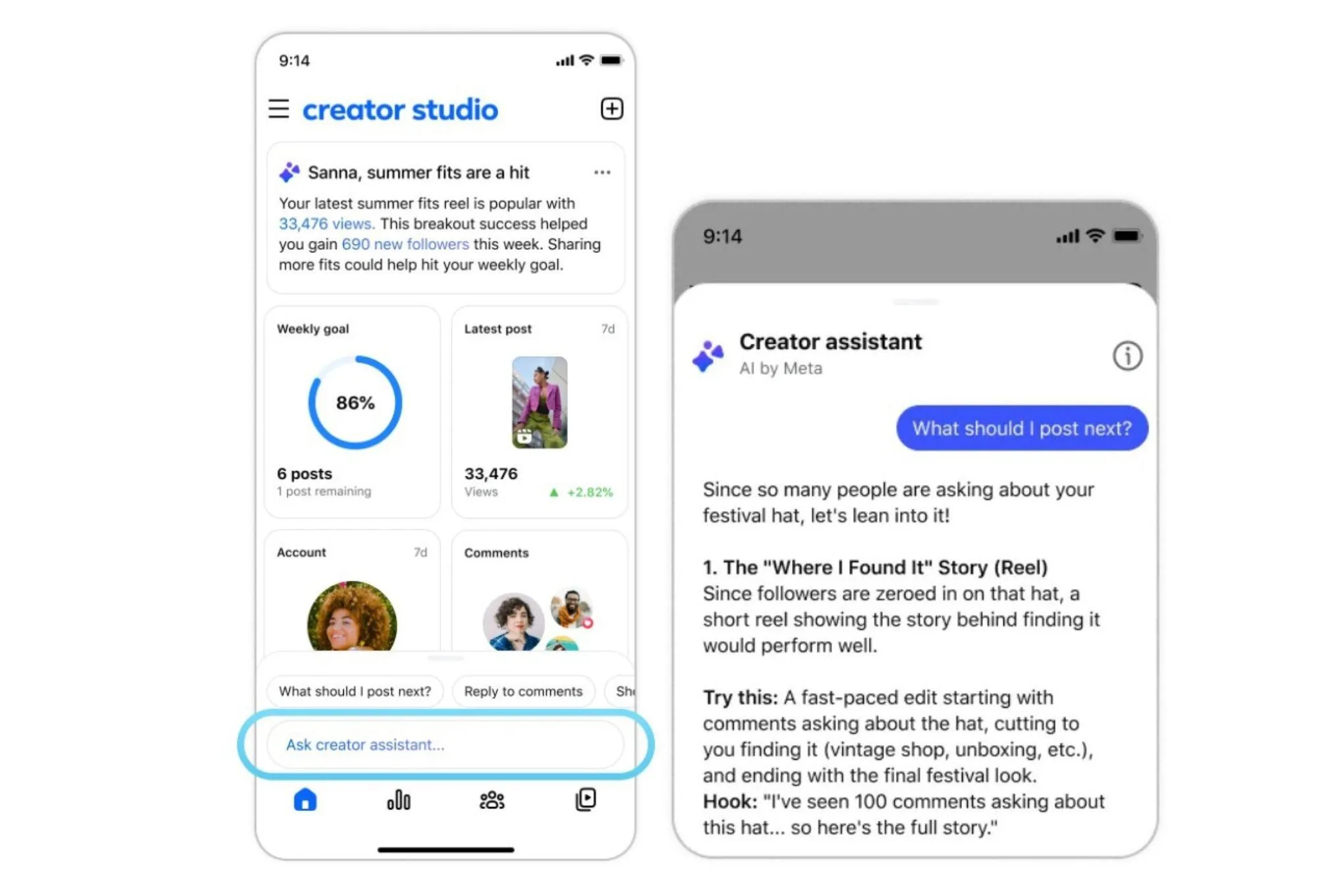
The original Creator Studio was shut down in 2023. Now it's back, rebuilt around an AI assistant that promises to grow your audience and reply to comments in your voice.
Sarah Williams · 26 Jun · 5 min
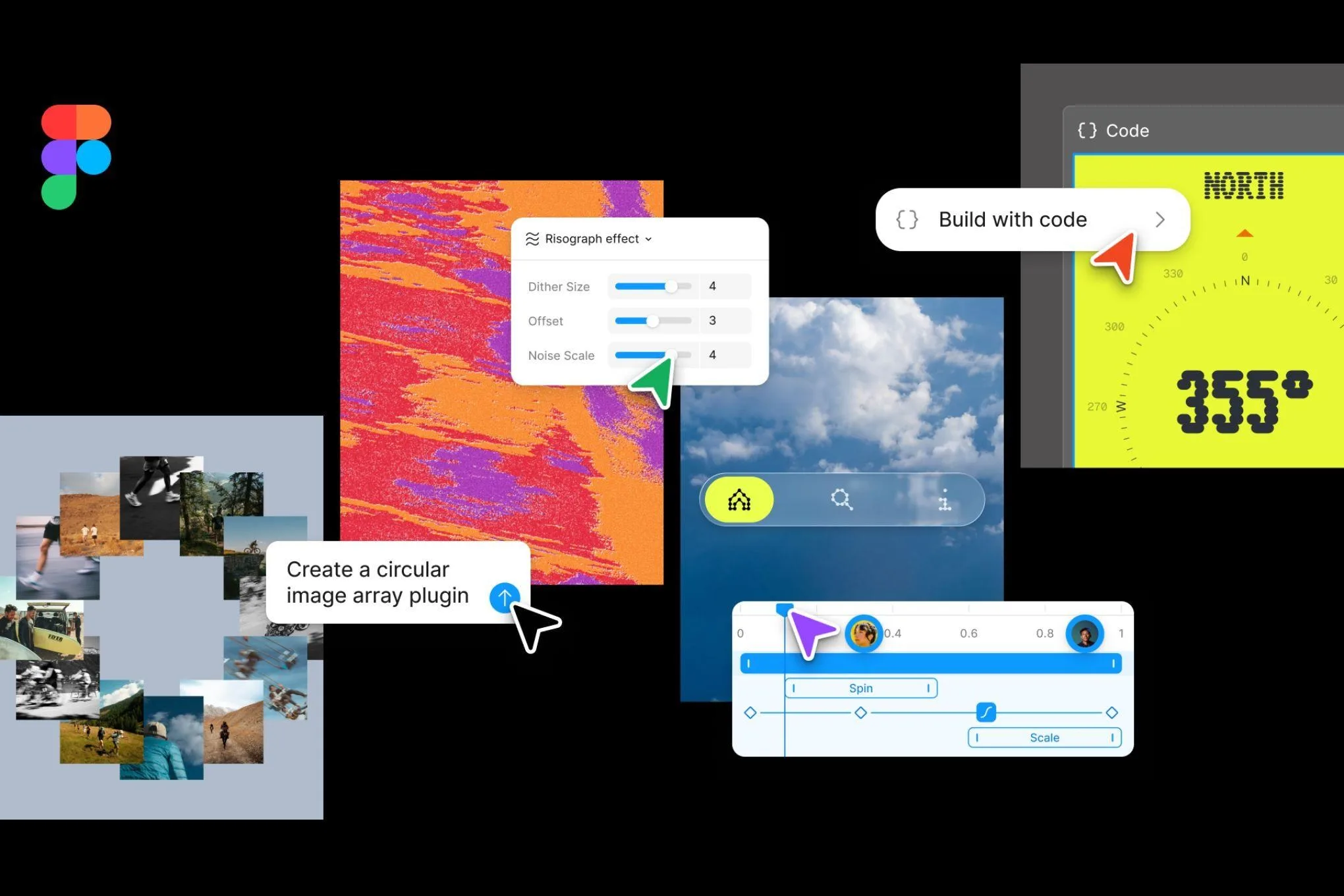
At its annual Config conference, Figma announced coding layers, AI-generated motion graphics, and a reimagined canvas that blurs the line between design and full-stack development.
Sarah Williams · 26 Jun · 5 min
Everyone talks about chips and models. The memory bottleneck is the part of the AI buildout that keeps getting underestimated, and Micron's latest earnings make that case hard to ignore.
But if the architecture is roughly what these renders suggest, Apple is positioning itself as an AI intermediary rather than an AI provider. That's worth sitting with for a moment.
Here's what we can infer from the available information:
A unified interface layer: The Siri app appears to present a consistent chat experience regardless of which backend handles the query. This means Apple controls the UX even when ChatGPT does the actual work.
Explicit model selection: The drop-down menu suggests users can choose their AI backend, at least in some contexts. This is unusual. Most AI products hide the model from users entirely.
The mysterious "Ask" option: This third option in the menu hasn't been explained. It could be Apple's own on-device model, a search integration, or something else entirely. The reporting doesn't clarify.
Dynamic Island integration: The pill-shaped bubble emerging from the Dynamic Island suggests tight system-level integration, not just another app.
The technical implications here are significant. Building a good routing layer is genuinely hard. You need to decide, in real-time, which queries should go to which backend. A simple factual question might route to search. A creative writing request might go to ChatGPT. A request involving personal data might stay on-device. Getting this wrong means either privacy leaks or capability gaps.
I know I'm being picky here, but the distinction between "Apple built an AI assistant" and "Apple built an AI router" matters enormously for understanding their strategy. The former competes directly with OpenAI. The latter competes with the concept of a single AI provider having all your data and context.
The Verge notes that Apple will reveal final designs at WWDC in June, which gives us roughly three weeks until we know whether these renders reflect reality. TechCrunch frames this as Apple "taking on ChatGPT," which is true in a surface-level sense but misses the architectural nuance.
The research question I find most interesting is whether Apple has developed any novel techniques for query routing. The academic literature on this is surprisingly thin. Most work on mixture-of-experts architectures focuses on routing within a single model, not routing between entirely separate AI systems with different capabilities, privacy properties, and latency characteristics.
There's been some work on cascading systems, where a smaller model handles easy queries and a larger model handles hard ones. Microsoft Research published on this in 2024 with their "FrugalGPT" approach. But that's still within a single provider's ecosystem. What Apple appears to be building is cross-provider routing, which raises questions about how you even evaluate whether a query was routed correctly.
It's worth noting that we have very limited information here. The renders show UI concepts, not system architecture. I'm inferring the routing layer from the presence of multiple backend options in the interface, but Apple could implement this in ways that are much simpler (user manually picks every time) or much more complex (automatic routing with fallbacks) than what I'm describing.
The privacy angle is where this gets genuinely interesting from a research perspective. Apple has historically emphasized on-device processing for privacy reasons. Their neural engine chips are designed specifically for running ML models locally. But large language models, the kind that power ChatGPT, are too big to run on-device with current hardware. So Apple faces a fundamental tension: they want to offer competitive AI capabilities, but their privacy-first brand requires them to minimize data sent to external servers.
A well-designed routing layer could, in theory, resolve this tension. Simple queries stay on-device. Complex queries go to external providers but with minimal context. Sensitive queries (involving health data, financial information, personal relationships) either stay local or get explicit user consent before routing externally.
But we don't know if Apple has actually built this. The renders show a UI. They don't show the decision logic underneath.
There's also the question of what Apple's own models can actually do. The "Siri" option in the menu presumably routes to Apple's internal AI, whatever that is. Apple has been notably quiet about their foundation model capabilities. They've published some research (the "LLM in a Flash" paper on efficient inference was solid work), but they haven't released anything comparable to GPT-4 or Claude or Gemini.
This could mean several things. Maybe Apple's internal models are genuinely behind and they're relying on the ChatGPT partnership to bridge the gap. Maybe Apple has capable models but is waiting for the right hardware to run them efficiently on-device. Maybe Apple's models are specialized for specific tasks (Siri-style commands, on-device summarization) rather than general-purpose chat.
The honest answer is: we don't know yet. And I'd be skeptical of anyone claiming certainty about Apple's AI capabilities based on leaked UI renders.
What I'd want to see next is any information about the actual model architectures Apple is using. Are they training their own foundation models? Fine-tuning open-source models? Using a mixture of both? The UI tells us about user experience. It tells us almost nothing about underlying capability.
I'd also want to understand the latency characteristics of the routing system. If every query has to go through a classification step before routing, that adds latency. If the classification itself requires a model call, you might be adding hundreds of milliseconds before the actual response even starts generating. For a voice assistant, that delay matters.
And I'd want to see how Apple handles the inevitable cases where routing goes wrong. What happens when a query gets sent to ChatGPT but the user expected it to stay on-device? What happens when the on-device model tries to handle something beyond its capabilities? Error handling in multi-model systems is a genuinely unsolved problem in the research literature.
The broader context here is that Apple is late to the generative AI moment. Siri has been, frankly, stagnant for years while ChatGPT captured public imagination. The iOS 27 redesign is clearly a response to that competitive pressure. But Apple being late doesn't mean Apple is wrong. Their wait-and-see approach might result in a more thoughtfully architected system than the rush-to-market products we've seen from others.
Or it might result in a mediocre product with a pretty interface. We genuinely don't know yet.
The June WWDC announcement will presumably clarify much of this. Until then, I'd suggest treating these renders as interesting hints rather than definitive evidence of Apple's AI strategy. The visual design is likely close to final. The underlying architecture remains unclear.
What I can say with more confidence is that the framing of "Apple takes on ChatGPT" misses the more interesting story. Apple appears to be building something architecturally different: a system that incorporates ChatGPT rather than replacing it. Whether that's a strategic masterstroke or a tacit admission of capability gaps, well, that depends on execution details we simply don't have access to yet.