Crédito de imagen: Image via Bloomberg — Technology. Used under fair use for news commentary. · source
How does a machine that's not supposed to be in China end up in China? That's the question sitting at the center of a genuinely alarming story that broke this week, and honestly, the more I read about it, the more unsettled I get.
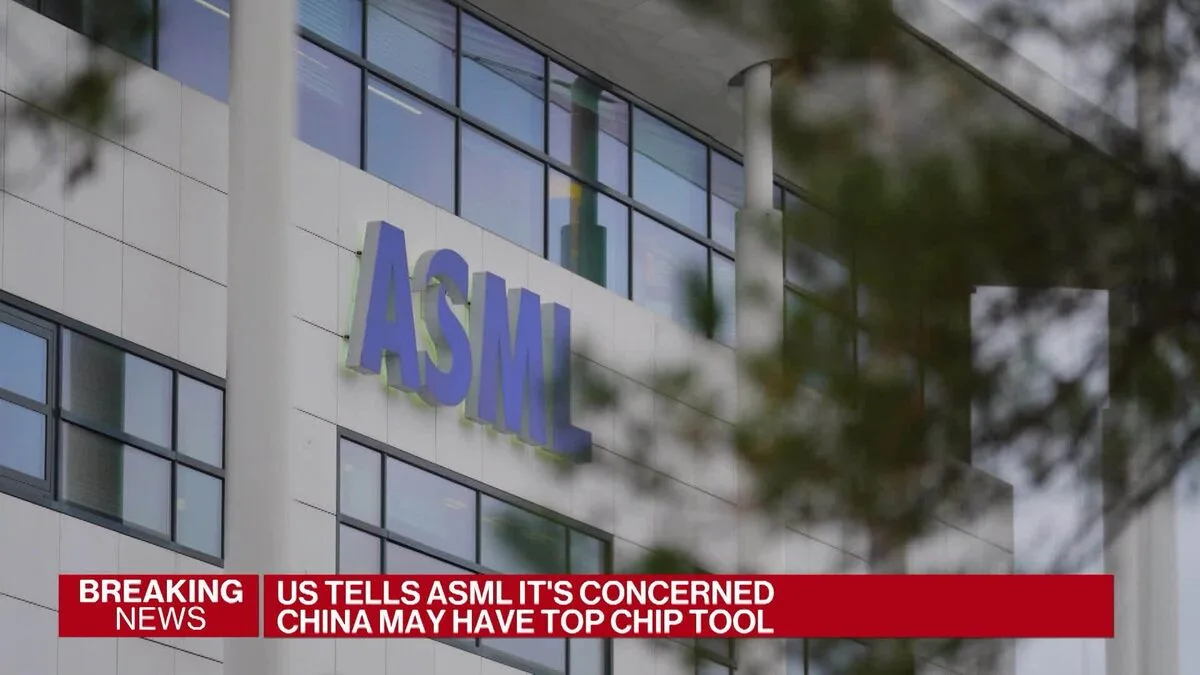
Bloomberg reported on Thursday that US Commerce Secretary Howard Lutnick has been meeting with senior leaders at ASML, the Dutch company that makes the lithography machines that basically underpin all advanced chip manufacturing, to flag a serious concern. One of ASML's top-of-the-line machines may have made its way into China, in violation of US-led export restrictions. Lutnick apparently outlined this in a series of recent meetings. That's not a press release. That's the government sitting down with a company and saying: we think you have a problem.
For anyone not deep in the chip world, you might be wondering why this matters so much. ASML makes something called extreme ultraviolet lithography machines, or EUV machines. These are the tools that etch the incredibly fine patterns onto silicon that make modern processors possible. There is no meaningful workaround for them at the frontier. If you want to make the most advanced chips in the world, you need ASML's EUV equipment. Full stop. That's why export controls on these machines have been such a central part of US strategy to limit China's ability to develop cutting-edge AI hardware.
I initially thought this story was going to be another round of the usual chip export control drama, the kind of thing where a rule gets tightened and companies scramble to comply. But this is different. This isn't about a policy change. This is about the possibility that the policy already failed. That's a much harder problem.
Cobertura relacionada
More in Policy
Everyone's framing this as a Windows headache, but the real story is what it means for the billion-plus devices that nobody's going to patch in time.
Mark Kowalski · 25 Jun · 6 min
The billionaire chairman of Australian logistics software giant WiseTech is under scrutiny again, and this time investors appear to be running out of goodwill.
Sarah Williams · 22 Jun · 4 min
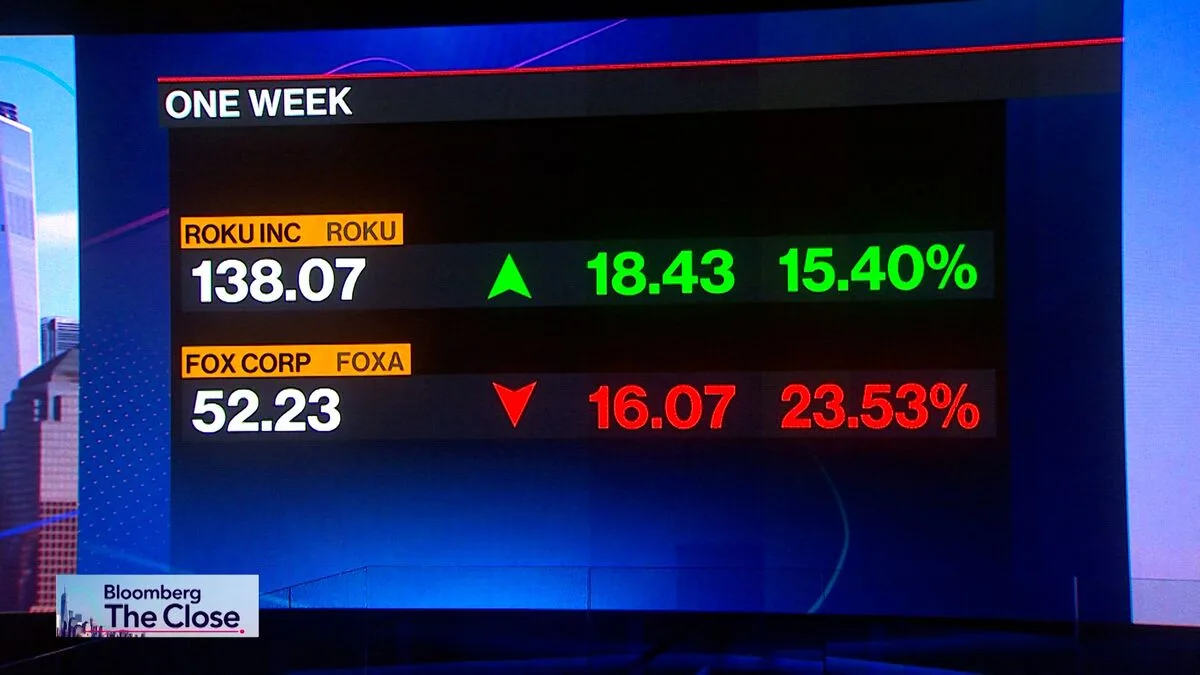
The ad-supported streaming wars just got a lot more expensive. Fox's blockbuster Roku deal is either a masterstroke or a very pricey panic move, depending on who you ask.
Mark Kowalski · 20 Jun · 7 min
Three Amazon engineers testified at Seattle City Council. A week later, they were called into meetings with 'Employee Relations.' Draw your own conclusions.
The details of how a machine might have reached China remain unclear. These aren't small devices you can slip past a customs official. EUV machines are enormous, complex, and require ASML's own engineers to install and service them. They weigh roughly 180 tonnes and cost around $200 million each. The logistics of moving one anywhere, let alone somewhere it's not supposed to go, are genuinely staggering. So the question of how this could have happened, if it did happen, raises questions about... well, multiple things. Supply chain workarounds, third-party intermediaries, shell companies, transshipment routes. The full picture isn't public yet.
ASML is already operating under significant restrictions. The Dutch government, under pressure from Washington, has been limiting ASML's export licenses for years. The company can't ship its most advanced EUV machines to China at all, and restrictions on its older deep ultraviolet machines have been tightening too. ASML has been caught in the middle of a geopolitical fight that it didn't start and can't fully control, and its leadership has been pretty vocal about the business impact of those restrictions.
Tbh, I think that context matters here. ASML isn't a rogue actor. It's a company that has been, by most accounts, trying to comply with an increasingly complex web of rules from multiple governments. If one of its machines did end up in China, the more interesting question isn't whether ASML was negligent, it's how the machine got there despite the controls that were supposed to prevent exactly this. That's a systemic question, not just a corporate one.
What this means for the broader AI hardware race is genuinely hard to assess right now. This is based on limited public information, and we don't know yet whether the machine in question is operational, who has it, or what it's being used for. There's a meaningful difference between a machine sitting in a warehouse somewhere and a machine that's been successfully integrated into a working fab. The former is a diplomatic incident. The latter is a strategic shift.
But even the possibility is significant. The entire logic of the US chip export control strategy rests on the idea that you can create a chokepoint at the equipment layer. If that chokepoint has been breached, even once, it changes the calculus. It suggests that determined actors can find routes around controls that were supposed to be airtight. And it puts enormous pressure on the US government and its allies to figure out not just what happened here, but how to close whatever gap allowed it.
For people covering humanoids and embodied AI, which is my usual territory, this kind of story can feel a bit removed. But I think it's worth paying attention to. The capabilities of the next generation of AI systems, including the ones that will power humanoid robots, depend entirely on the chips that run them, and those chips depend entirely on equipment like ASML's. The hardware layer is the foundation everything else is built on. If that foundation is more porous than we thought, that has downstream effects that reach well beyond semiconductor policy.
I should know the chip manufacturing world better than I do, honestly. It's one of those areas where every time I dig in, I realize how much I've been taking for granted. What I do know is that this story is going to get more complicated before it gets clearer, and the US government's next moves, whether that's sanctions, new restrictions, or something else entirely, will be worth watching closely.